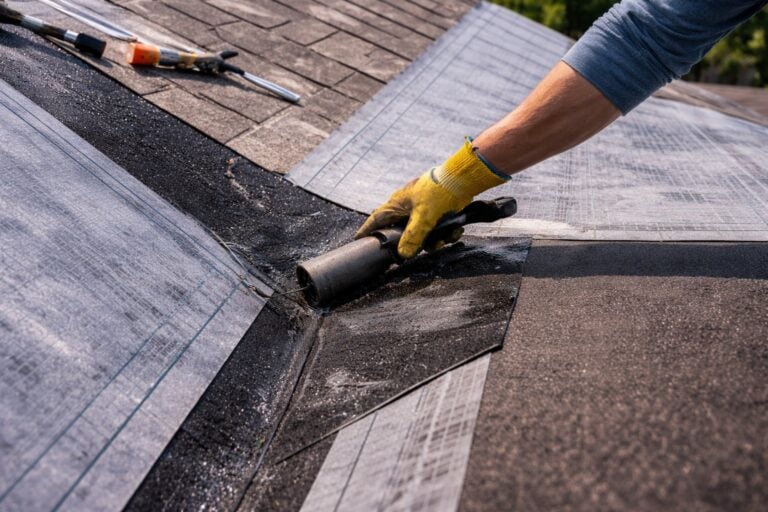
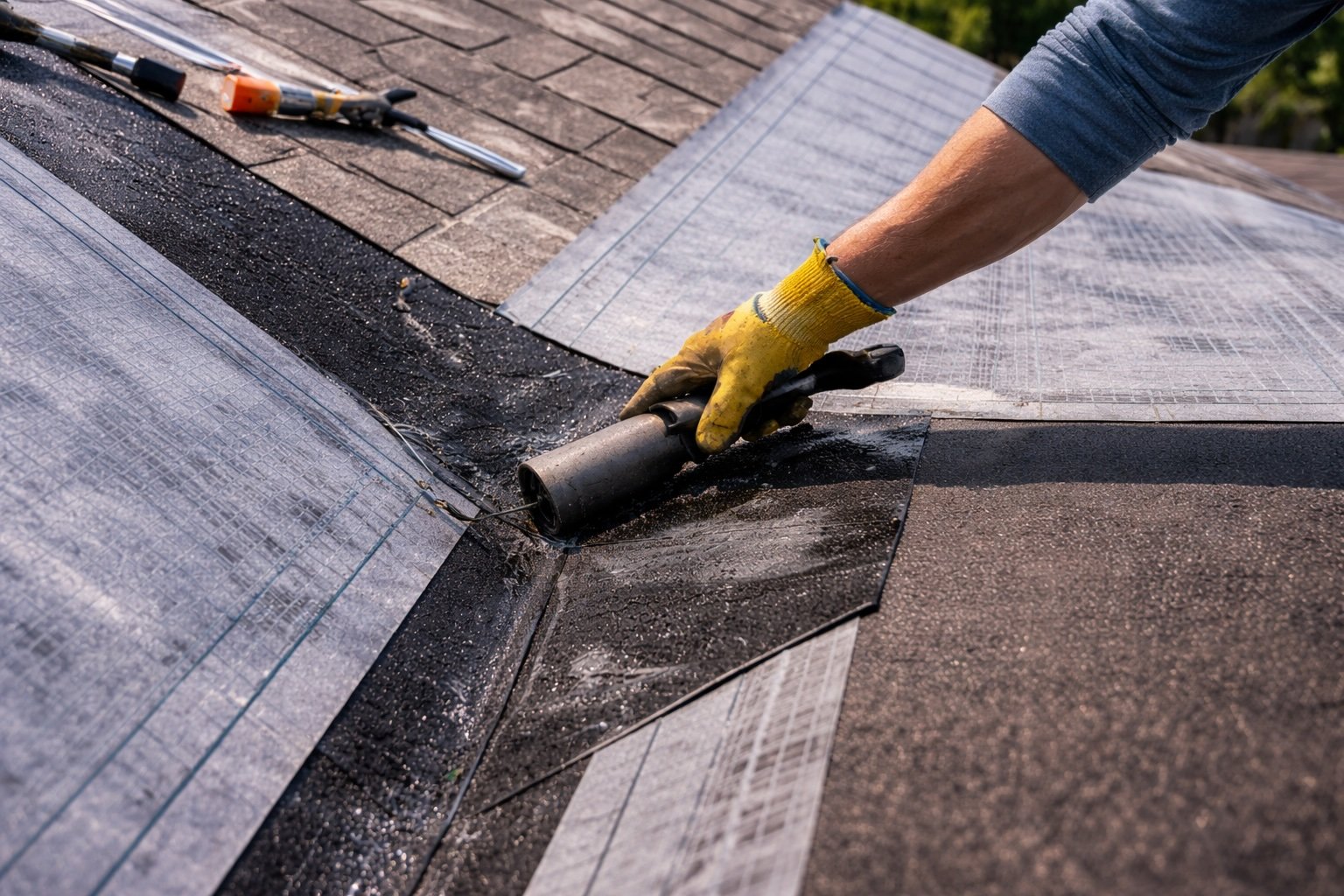
In Tampa Bay, roof underlayment is where real protection starts, especially when wind-driven rain is trying to sneak under shingles. Steadfast Roofing in Tampa, FL installs underlayment systems built for Florida heat, daily humidity, and hurricane-season chaos, with details that help roofs stay dry, tight, and durable when the weather gets loud.
What Roof Underlayment Actually Does on a Florida Roof
Roof underlayment is the water-shedding (and sometimes waterproof) layer installed directly over the roof deck and under the roof covering. In Tampa Bay, it’s the difference between “a few shingles blew off” and “water found the plywood and ruined your weekend.”
A properly selected underlayment helps:
- Block wind-driven rain that gets pushed under shingle edges during storms
- Protect the roof deck during the “dry-in” phase (before shingles/tiles/metal are fully installed)
- Reduce leak risk at valleys, wall lines, chimneys, skylights, and pipe penetrations
- Improve the roof’s overall resilience when the primary roof covering is compromised
Florida-specific code paths also recognize sealed roof deck approaches using self-adhered membranes that meet ASTM standards (commonly referenced as ASTM D1970).
The 3 Main Roof Underlayment Categories Used in Tampa Bay
Most Tampa Bay residential projects fall into one of these categories, based on roof type, slope, exposure, and budget.
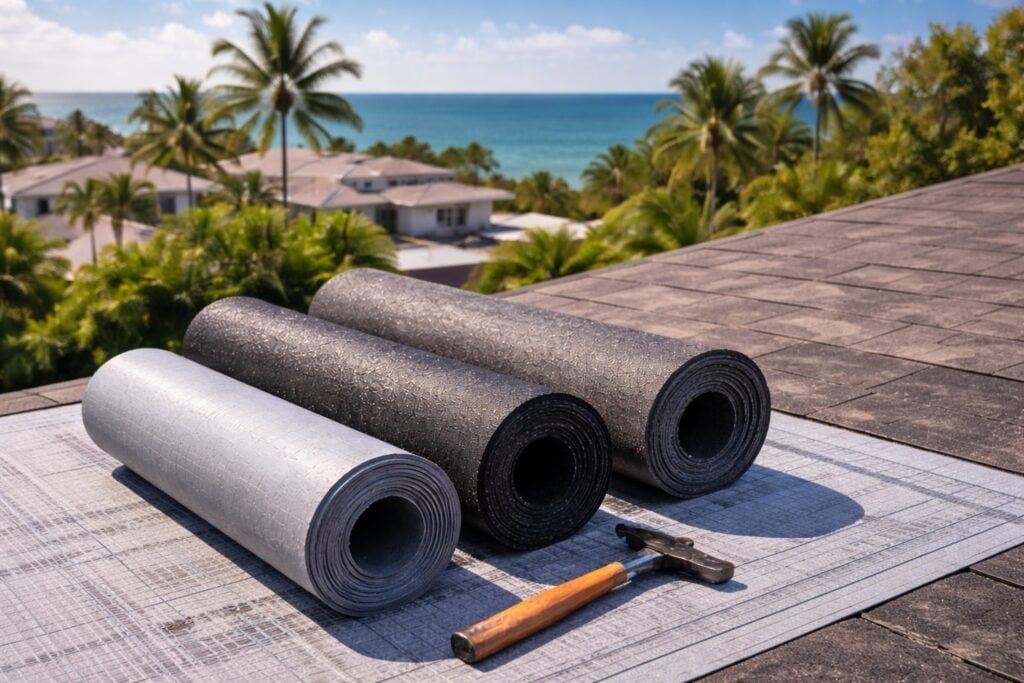
Asphalt-Saturated Felt Underlayment
Felt is the old-school option: asphalt-saturated organic or fiberglass-based sheets rolled out in courses and fastened. It is still used because it’s familiar, readily available, and cost-effective for straightforward roofs with shorter exposure windows.
What it does well:
- Works as a basic secondary water-shedding layer
- Can perform fine when installed correctly and covered quickly
- Often used on standard shingle roofs with simple geometry
Where felt struggles in Tampa Bay:
- High heat and UV exposure can accelerate drying, cracking, and wrinkling if left exposed
- Heavy humidity and sudden storms punish sloppy laps, weak fastening, and poor valley detailing
- Tearing and blow-off risk increases during high winds if the roof isn’t dried-in tight
Standards commonly referenced for felt underlayment include ASTM D226 and ASTM D4869.
Synthetic Underlayment
Synthetic underlayments are typically polypropylene or polyethylene-based sheets engineered to be lighter, stronger, and more stable than traditional felt. In Tampa Bay, this category often wins on day-to-day practicality: fewer tears, flatter laydown, and better survivability when weather delays occur.
What synthetic does well:
- Better tear resistance under foot traffic and during installation
- More consistent laps and less wrinkling, which helps shingle lay-flat
- Improved handling for crews on steep slopes and in humid conditions
- Often includes textured “walk surface” patterns for traction
Where selection matters:
- Some synthetics are “water-resistant” but not truly waterproof at fasteners
- UV exposure limits vary a lot by product (and Tampa sun is not gentle)
- Compatibility with specific roof coverings and manufacturer systems matters if warranties are in play
Self-Adhered (Peel-and-Stick) Polymer-Modified Bitumen Underlayment
This is the heavy hitter for leak-prone areas and high-risk roof designs. It’s a self-adhered membrane that seals to the deck and self-seals around many fasteners. In Florida, it’s also commonly referenced in the requirements for sealed roof deck assemblies and valley detailing in ASTM D1970.
What peel-and-stick does well in Tampa Bay:
- Best defense against wind-driven rain intrusion
- Strong protection at valleys, eaves, rakes, sidewalls, dormers, and transitions
- Better chance of staying watertight even if shingles blow off in a storm
- Helps limit water entry at deck seams when installed as part of a sealed approach (system-dependent)
Where installs go wrong:
- Dirty or damp decking reduces adhesion (humidity in the mornings can bite you)
- Bad rolling pressure and rushed seams create “looks fine, leaks later” problems
- Wrong sequencing at the drip edge, valleys, and flashing details can trap water instead of shedding it
Tampa Bay Roof Types and the Underlayment That Usually Fits Best
Underlayment isn’t one-size-fits-all. The roof covering, slope, and storm exposure should drive the choice.
Asphalt Shingle Roofs in Tampa Bay
For shingles, the underlayment serves as the backup plane when wind-driven rain gets under the shingles.
Common strong setups:
- Synthetic underlayment over the field, paired with peel-and-stick in valleys and at penetrations
- Peel-and-stick at eaves/rakes in high exposure zones, especially where wind uplift is a concern
- Peel-and-stick in closed-cut or critical valley designs where water volume concentrates (ASTM D1970 is commonly cited for valley membranes in code contexts).
Tile Roofs in Coastal and Near-Coastal Areas
Tile sheds water, but wind can drive rain sideways under laps. Tile underlayment often does more “real work” than homeowners expect.
Key considerations:
- Higher-grade underlayment choices matter because tile roofs can be longer-lived
- Coastal salt air and humidity increase corrosion risk, so fastening and metal compatibility matter
- Detailing at flashings and transitions is everything because tile systems have lots of “paths” for water
Metal Roofs in Tampa Bay
Metal panels can handle heavy rain, but water can still back up at transitions, fasteners, and penetrations.
Underlayment priorities:
- High-temp rated membranes in hot roof assemblies where surface temps spike
- Peel-and-stick at penetrations, valleys, and transitions where wind-driven rain concentrates
- Material compatibility with panel systems and manufacturer requirements
The Tampa Bay Weather Factors That Make Underlayment Non-Negotiable
This region faces a unique set of challenges that the underlayment must address without excuses.
Wind-Driven Rain and Hurricane Gusts
Tampa Bay storms don’t just drop water. They push it sideways, upward, and into gaps that “shouldn’t leak.” Underlayment serves as the last line of defense when shingles lift or tiles are displaced.
Heat, UV, and Daily Humidity Swings
Underlayment performance can change rapidly when it bakes all day and then gets soaked in a sudden afternoon storm. Products with weak UV tolerance or poor dimensional stability can wrinkle, pull at fasteners, and create pathways for water.
Condensation Risk from Attic Moisture
Tampa Bay attics can be humid. If ventilation is weak, moisture can condense on the underside of the deck, creating a long-term risk of rot. Underlayment won’t fix poor ventilation, but an inappropriate underlayment choice, along with trapped moisture, can accelerate deck damage.
How Underlayment Fails (So You Can Avoid Buying the Same Roof Twice)
Most underlayment failures aren’t “bad product.” Their installation details were treated like suggestions.
Bad Laps and Wrong Overlap Direction
If laps aren’t shingled correctly, water follows gravity and capillary action right into the seam. Proper sequencing matters more for low-slope transitions and long runs.
Over-Fastening or Wrong Fasteners
Too many fasteners can create more leak points. Wrong fasteners can back out, rust, or tear the sheet under uplift pressure.
Sloppy Detailing at Valleys and Penetrations
Valleys are water highways. Plumbing stacks are leak magnets. Skylights are basically “roofs with feelings.” These areas require membrane continuity, proper cuts, appropriate sealant use (when allowed), and clean transitions into flashing.
Deck Prep Skipped Because “It Looked Fine”
If the deck has rot, delamination, or excessive moisture, the underlayment’s adhesion and fastener integrity suffer. Peel-and-stick membranes require clean, sound substrates to bond properly.
A Practical Tampa Bay Underlayment Selection Checklist
Use this like a reality filter when comparing bids.
Roof Geometry and Leak-Risk Zones
- Lots of valleys, dormers, and wall lines: prioritize peel-and-stick in critical areas
- Simple gable roof: high-quality synthetic over the field may be sufficient, with upgraded valley protection
Storm Exposure and Neighborhood Wind Patterns
- Open exposure (near water, wide-open subdivisions, less tree cover): upgrade underlayment strategy
- Heavily sheltered neighborhoods: still need quality, but risk profile may differ
Project Timing and Weather Delays
If the roof is dried-in and exposed for more than a day or two, UV and tear resistance become critical. Synthetic often beats felt here, and peel-and-stick can be the safest “storm delay insurance.”
Code-Referenced Assemblies and Material Standards
Florida references sealed deck approaches and polymer-modified self-adhered membranes that comply with ASTM D1970 in specific roofing contexts and assemblies.
Best-Practice Installation Details That Matter in Tampa Bay
Even the best underlayment can’t save a roof from lazy sequencing.
Dry-In Sequencing That Actually Works
- Install drip edge and membrane details in the correct order for your assembly
- Use peel-and-stick strategically where water concentrates
- Keep laps clean, flat, and properly aligned
- Roll self-adhered membranes firmly to activate adhesion and reduce fishmouths
Valley Strategy: Where Roofs Either Win or Lose
- Use the correct valley membrane and width for the design
- Avoid exposed fasteners in water flow zones where possible
- Make sure the underlayment directs water onto, not behind, valley flashing components
Fastener Discipline and Leak Point Control
- Use the manufacturer-approved cap nails or fastening method
- Keep fasteners out of critical drainage paths
- Avoid “peppering” the membrane with unnecessary nails
CONCLUSION
In Tampa Bay, underlayment is not a checkbox layer. The right mix of synthetic and self-adhered protection, paired with strict detailing at valleys and penetrations, keeps roofs dry when storms drive water where it has no business going.
Read our blog: “How to Find the True Age of Your Roof (And Why Your Insurance Cares)”.