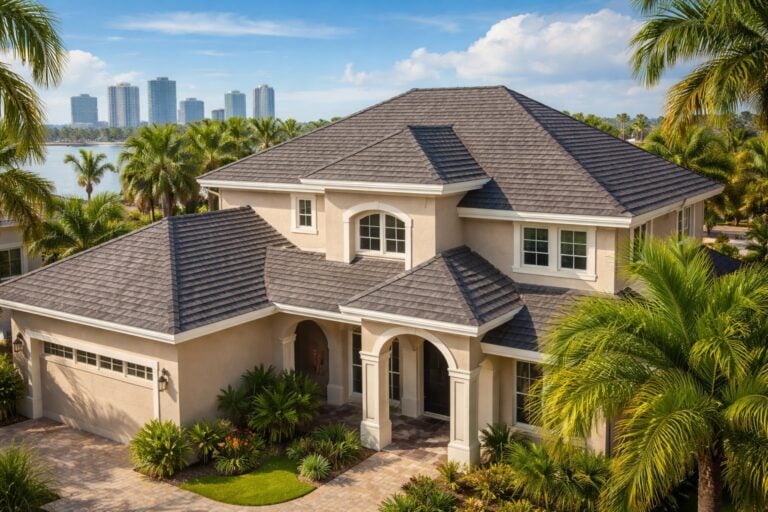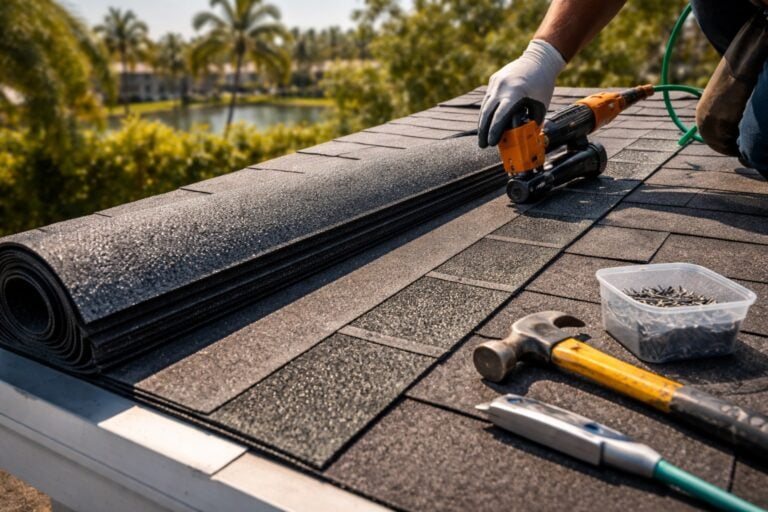
Picking the right roof in Tampa is basically choosing what you want your house to survive for the next 15 to 50 years: heat, humidity, sideways rain, and storm season. Steadfast Roofing, based in Tampa, FL, sees the same patterns over and over: the “best” roof isn’t just a material, it’s the right system for your home, installed to Florida code, with the details done right.
Tip 1: Match Your Roof to Tampa’s Heat, Humidity, Wind, and Storm Cycle
A Tampa roof must withstand three factors that quietly destroy roofs: relentless UV, constant moisture, and wind uplift during storms. Start by choosing a roof type that aligns with your priorities (budget, lifespan, aesthetics, energy efficiency, and storm performance).
Architectural asphalt shingles (most common in Tampa)
- Why they work here: Strong value, good wind ratings, wide style options, easier repairs.
- What to look for:
- High wind rating (many premium architectural shingles are rated for higher winds when installed with the correct nail pattern and components).
- Algae resistance (Florida humidity makes streaking a real thing).
- A complete system (starter shingles, hip and ridge caps, compatible underlayment, and proper ventilation).
- Best fit for: Homeowners who want strong performance without jumping to a premium roof budget.
Standing seam metal (premium performance, premium price)
- Why people choose it: Long lifespan, excellent wind performance when engineered correctly, great shedding of rain, and strong energy efficiency potential.
- What to look for:
- Thicker metal gauge and quality coatings (Florida sun is brutal).
- Proper attachment method and engineered details for penetrations and edges.
- Correct flashing work (metal is unforgiving if details are sloppy).
- Best fit for: Long-term homeowners who want durability and lower long-term maintenance.
Tile (beautiful, heavy, detail-dependent)
- Why it’s popular: Classic Florida look and strong longevity when installed correctly.
- What to look for:
- Underlayment quality (tile systems often fail because the underlayment aged out).
- Attachment method that matches current requirements.
- Structure considerations (tile is heavy, not every home is a simple swap).
- Best fit for: Homeowners prioritizing aesthetics and long service life, with the budget to do it right.
Flat/low-slope areas (patios, additions, modern rooflines)
- Common Tampa reality: Many homes have low-slope sections, even if most of the roof is shingle.
- What to use: Membrane systems designed for low slope (installed with correct drainage and edge details).
Quick reality check: In Tampa, roof failures often start at the edges and transitions, not the big open field of shingles. Which leads to the most ignored part of the conversation: code-level details.
What to verify for storm readiness
- Drip edge at eaves and rakes (edge metal matters more than most people think)
- Starter shingles along eaves and rakes (wind resistance starts here)
- Correct nail pattern and fastener placement (tiny mistake, big consequences)
- Flashing quality at valleys, walls, chimneys, skylights, and pipe boots
- Manufacturer-approved components (mixing parts is how warranties die quietly)
Tip 2: Choose the Right “Roof System,” Not Just a Shingle or Metal Panel
Homeowners get sold “a shingle” like it’s the whole roof. It’s not. Your roof is a layered system, and in Tampa, the layers matter because moisture and heat can cause damage from shortcuts.
Start with the deck and attachment
- Decking condition: If the plywood is compromised, everything above it is a band-aid.
- Re-nailing (when needed): Proper fastening strengthens uplift resistance.
- Clean transitions: Bad decking edges and uneven surfaces cause premature shingle wear and ugly lines.
Underlayment is your backup roof
Even the best shingles can’t save a weak underlayment decision.
- Synthetic underlayment: Popular, durable, and more tear-resistant than old-school felt.
- Peel-and-stick (self-adhered): Great for leak-prone areas (valleys, eaves, around penetrations), especially when wind-driven rain happens.
- Valleys: A high-risk zone. Your valley approach should be deliberate, not “whatever the crew does.”
Ventilation is not optional in Florida
Tampa attics can cause a roof to fail from below.
- Balanced intake + exhaust: So the attic can actually breathe.
- Ridge vent + proper intake (often soffit): A common best-practice combo when the home layout supports it.
- Bathroom fans and kitchen vents: Must vent out properly, not into the attic. Moisture trapped in the attic is a slow-motion disaster.
Flashing is where good roofs separate from “looks fine from the driveway” roofs
- Step flashing at walls: Especially important with stucco and sidewalls.
- Pipe boots: Cheap boots crack early in Florida sun; better materials last longer.
- Chimneys and skylights: Detail-heavy areas that need real attention, not a smear of sealant and hope.
Think in terms of failure points
If you want the “best roof,” choose the system that reduces the number of places water can win:
- fewer seams (where possible)
- better edge detailing
- upgraded underlayment in leak-prone zones
- ventilation that lowers attic temperature and moisture
Tip 3: Pick a Roof Option That Fits Your Budget Today and Your Resale and Insurance Reality Tomorrow
In Tampa, the “best roof” is also the one you can afford to install correctly. A cheaper roof done wrong is expensive. A well-executed roof is usually the most cost-effective option over time.
Use this decision framework
- How long are you staying?
- 3 to 7 years: strong architectural shingles often make the most sense.
- 10+ years: metal can start to look smarter, especially if you value longevity and fewer repairs.
- How important is energy efficiency?
- Lighter colors, reflective coatings, and ventilation upgrades can reduce heat load.
- How complex is your roof?
- Lots of hips, valleys, dormers, and penetrations increase labor and failure points.
- What’s your tolerance for maintenance?
- Shingles are repair-friendly.
- Metal is durable but detail-dependent.
- Tile can be long-lasting but requires the right underlayment strategy and careful foot traffic.
Warranties and workmanship: read the fine print like you’re buying a used boat
- Manufacturer warranty: Often tied to using a full system of approved components.
- Workmanship warranty: This is where the real protection usually lives.
- Transferability: Matters for resale. A transferable warranty can be a selling point.
Permitting and documentation matter more than people want to admit
A roof that’s properly permitted, inspected, and documented is easier to stand behind.
- Helps with resale confidence
- Reduces “mystery roof” questions during transactions
- Keeps everything aligned with local requirements
A simple shortlist of “best roof” upgrades for Tampa
If you want maximum performance without overcomplicating the project:
- premium architectural shingle with high wind rating
- upgraded underlayment in valleys and leak-prone zones
- proper starter and ridge components
- improved attic ventilation (balanced intake/exhaust)
- upgraded flashing and pipe boot materials
CONCLUSION
The best roof for a Tampa home is one built for Florida’s heat, moisture, and storm season, installed as a complete system with strong edge detailing, quality underlayment, proper ventilation, and clean flashing. Choose the material that fits your timeline and budget, then make the details non-negotiable. That’s where roofs either earn their keep or start calling you at 2 a.m. during the next big rain.
Read our blog: “What Is a Starter Shingle? Purpose, Installation, and Common Mistakes”.