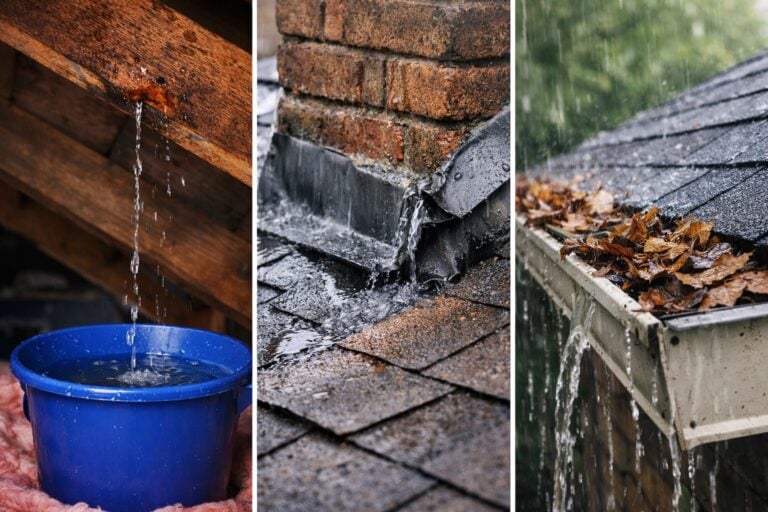
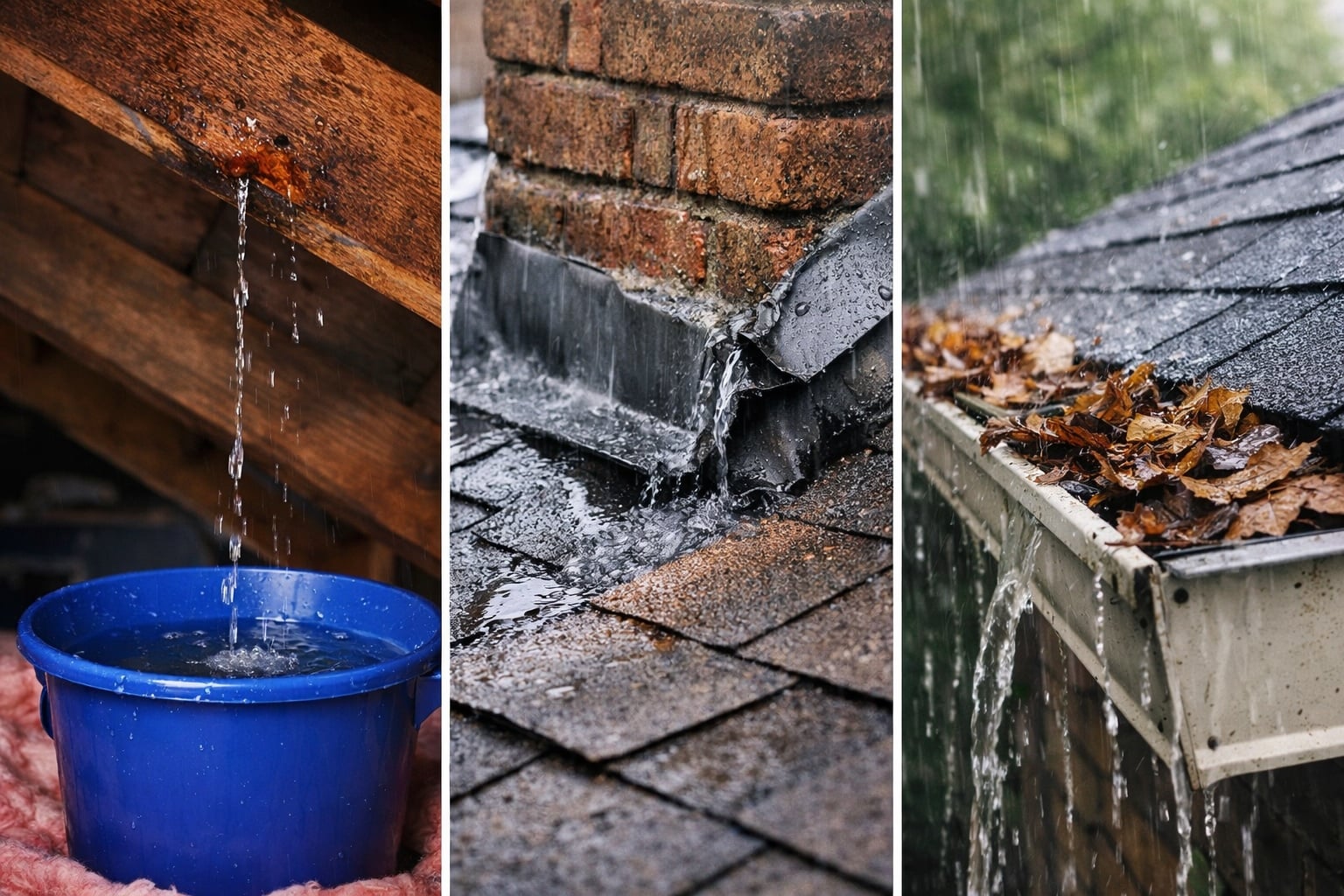
In Riverview, a roof leak rarely starts as a “big hole.” It usually starts as a small failure point that gets bullied by wind-driven rain, blazing sun, and humidity until it becomes a real problem. Steadfast Roofing helps Tampa Bay homeowners track leaks to the source and fix them correctly, not just “make the stain go away.”
Why Roof Leaks Hit Riverview Homes So Hard
Riverview roofs take a steady beating from Florida’s weather pattern: intense summer downpours, sudden storm bursts, and long stretches of heat that dry out sealants and age shingles faster. Add oak leaves in valleys, palm debris in gutters, and afternoon thunderstorms that hit sideways, and small weak spots turn into water intrusion.
A leak is also sneaky. Water can enter in one spot and show up somewhere else. It travels along decking, trusses, rafters, insulation, and even electrical lines. That’s why “the wet spot” is rarely the true source.
The #1 Rule of Roof Leaks: The Entry Point Is Usually Higher Than the Stain
If the ceiling stain is in the living room, the entry might be:
- A roof penetration a few feet above it
- A valley line up-slope
- A flashing joint near a wall intersection
- A nail pop that only leaks when rain hits at a certain angle
Tracking leaks is less like guessing and more like following gravity, overlaps, and water paths. Roofing is a layered system. Leaks happen when water gets past the top layer and finds a shortcut through the layers underneath.
Damaged, Missing, or Aged Shingles
Asphalt shingles are your first line of defense, and Riverview storms love testing them.
Common shingle-related leak causes:
- Wind lift and creasing: shingles get lifted, the seal strip breaks, then water gets under the tab
- Missing shingles: exposed underlayment takes UV damage quickly and stops shedding water
- Granule loss: shingles get brittle, then crack and shed water poorly
- Exposed fasteners: nails that were high-nailed, overdriven, or backed out become little faucets
What it looks like:
- Random leaks after storms
- Drips during heavy rain but not light rain
- Shingle tabs that look “flappy” or raised
What actually fixes it:
- Replace damaged shingles correctly and re-seal surrounding tabs
- Correct fastening patterns in the repair area
- Verify the underlayment condition under the damaged field, not just the surface shingle
Failed Flashing at Chimneys, Walls, and Roof Transitions
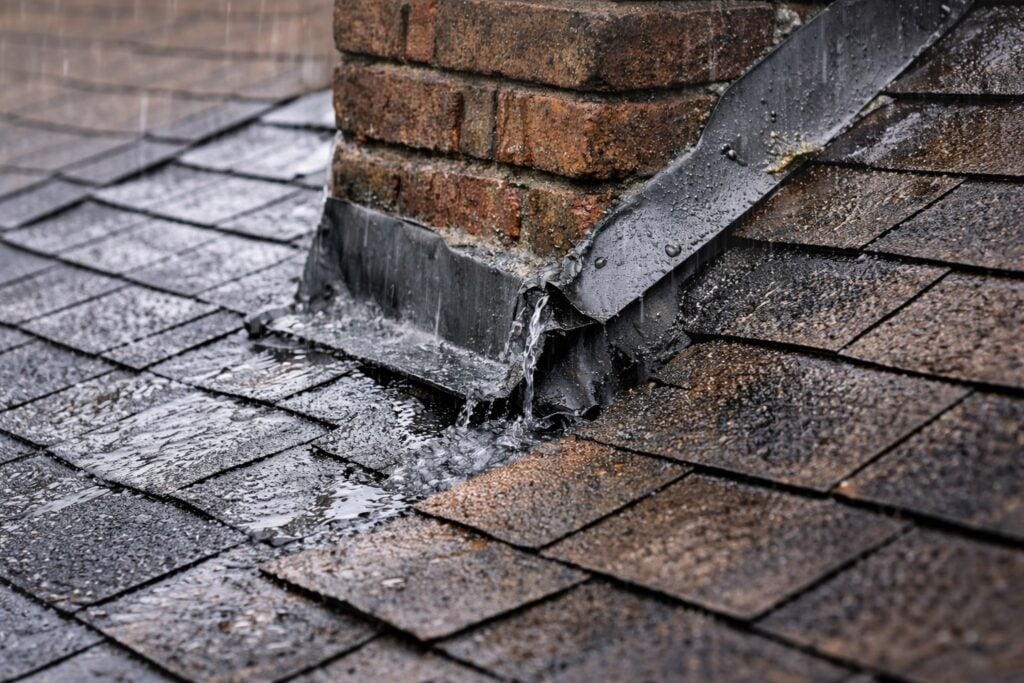
Flashing is where most “mystery leaks” live. Any time a roof meets something that is not the roof, flashing is the referee keeping water out.
High-risk flashing zones:
- Step flashing at sidewalls: especially where a roof meets stucco or siding
- Counterflashing at chimneys: mortar joints fail, metal corrodes, or prior repairs were just caulked
- Kickout flashing: missing kickouts dump water behind siding and into walls
- Roof-to-wall transitions: water gets driven up and under if the layering is wrong
Common symptoms:
- Leaks that show up near exterior walls
- Stains that grow slowly over time
- Dampness after long rain events rather than short storms
Real repair work includes:
- Rebuilding step flashing correctly, not smearing sealant on top
- Replacing corroded metal and re-integrating it into the shingle system
- Ensuring water is directed into gutters (not behind fascia or siding)
Plumbing Vent Boots That Crack and Split
Those rubber boots around plumbing vents bake in the Florida sun. They crack, split, or pull away from the pipe.
Why they leak:
- Rubber dries out and splits at the collar
- Nails loosen around the flange
- Improper sealant use creates a temporary patch, not a long-term fix
Signs:
- Leak only during heavy rain
- Drip lines that appear “near” bathrooms or laundry rooms (but not always directly above them)
Proper fix:
- Replace the boot (or upgrade to a longer-life material) and re-seat it under the correct shingle courses
- Verify the flange is nailed and sealed in the right locations
Clogged Gutters and Poor Drainage
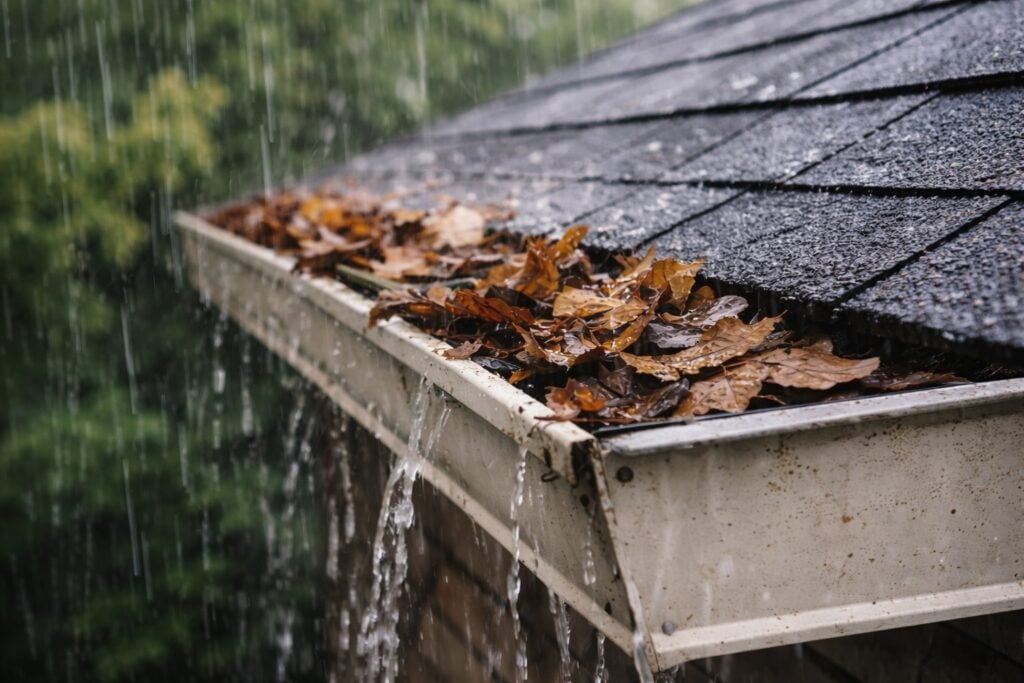
Gutters are not just “nice to have” in Riverview. They’re part of water control. When they clog, water backs up and finds a way under the edge.
What causes the leak:
- Overflow that soaks the fascia and the roof edge
- Water that backs up under shingles near eaves
- Saturated soffit areas that wick moisture into the assembly
What it looks like:
- Water staining near exterior corners
- Rotting fascia
- Stains that worsen after long, steady rain
What fixes it:
- Clean gutters and downspouts (consistently)
- Correct pitch and secure sagging sections
- Add or repair the drip edge where missing, so water sheds cleanly into the gutter
Valleys That Trap Debris and Hold Water
Roof valleys are water highways. If they’re installed incorrectly or packed with leaves, they become water dams.
Leak triggers:
- Debris buildup is forcing water sideways under the shingles
- Worn valley metal or improper valley weave
- Nail placement too close to the valley centerline
- Underlayment failures in the valley zone
Symptoms:
- Leaks after heavy rainfall, even without obvious shingle damage
- Recurring stains that “come back” after a repair
Correct fixes:
- Clear the valley debris and inspect the valley condition
- Rebuild the valley flashing or valley shingle system if the installation is compromised
- Ensure proper underlayment protection in the valley area
Skylights and Roof Windows With Failed Seals
Skylights can be great. They can also be drama queens if flashing or seals fail.
Common issues:
- Failed perimeter seals and cracked gaskets
- Improper skylight flashing kits
- Condensation mistaken for a roof leak (very common in humid climates)
Clues it’s the skylight:
- Water appears around the skylight frame
- Fogging between panes (seal failure)
- A leak happens during wind-driven rain
Fix approach:
- Confirm whether it’s flashing-related or glass/seal-related
- Replace the flashing kit or re-flash properly
- Address ventilation and humidity if there’s interior condensation
Nail Pops, Decking Movement, and Fastener Problems
Florida heat causes expansion and contraction. Over time, roof decking and framing move. Nails can back out. Shingles can lift. Tiny gaps become water paths.
Typical causes:
- Under-driven or over-driven nails
- Nails placed too high on the shingle
- Decking that flexes because of age, spacing, or installation issues
Signs:
- Small, isolated leaks
- Drips that happen only with certain wind directions
- Shingles that look slightly raised in scattered areas
Fixes that actually hold:
- Re-seat and secure the affected areas
- Replace compromised shingles and re-seal
- Check the decking stability if movement is widespread
Attic Condensation Mistaken for a Roof Leak
Not every “leak” is rain. Riverview humidity can cause condensation in attics with poor ventilation or insulation.
What causes it:
- Bathroom fans venting into the attic
- Inadequate intake/exhaust ventilation balance
- Duct leaks are dumping cool air into the hot attic space
- Compressed or missing insulation creates cold spots
How to tell:
- Moisture appears even when it hasn’t rained
- Rust on nails in the attic
- Moldy smell or damp insulation without an obvious roof entry point
Solutions:
- Correct ventilation design (balanced intake and exhaust)
- Seal duct leaks and vent fans to the exterior
- Improve insulation coverage and air sealing
Flat Roof Sections and Low-Slope Areas That Hold Water
Some Riverview homes have patio tie-ins, lanais, or low-slope add-ons. These areas are vulnerable because water doesn’t shed fast.
Common problems:
- Ponding water that works into seams
- Failed terminations where low-slope meets steep-slope
- Old coatings or membranes that have lost flexibility
Fixes:
- Repair or replace membrane sections properly
- Rebuild transitions with the right flashing details
- Improve drainage where possible
How to Find the Source Without Playing Guessing Games
A solid leak investigation follows a pattern:
- Start in the attic (if accessible): look for wet decking, stained nails, darkened wood, and water tracks
- Trace uphill: follow staining toward the highest point of moisture
- Check penetrations first: vents, pipes, skylights, and wall transitions
- Inspect valleys and edges: valleys, eaves, rakes, and gutter lines
- Confirm the roofing layers: leaks often happen where underlayment and flashing should overlap, but don’t
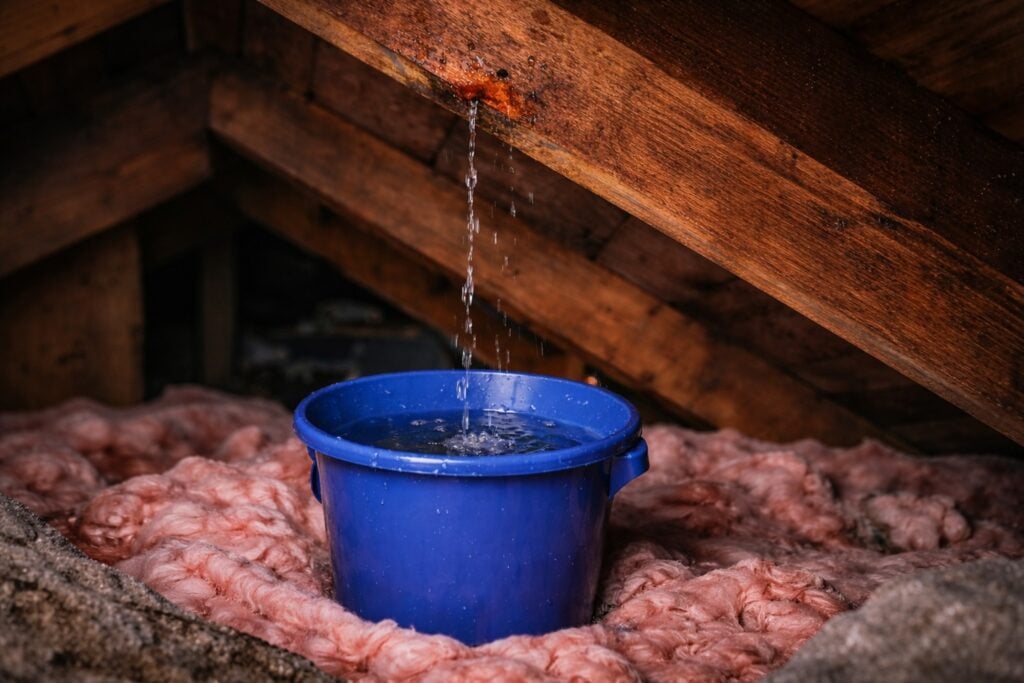
If water is actively dripping, collecting it in a bucket is fine. “Sealing everything you can see” is how leaks become bigger leaks with better marketing.
Preventative Roof Leak Checklist for Riverview Homeowners
A simple routine prevents most leak calls:
- Clear valleys and gutters before storm season and after big wind events
- Look for lifted shingles, especially on ridges, hips, and roof edges
- Check vent boots for cracks and dry rubber
- Inspect wall flashing zones where the roof meets stucco or siding
- Make sure bathroom fans vent outside, not into the attic
- Schedule a roof inspection after hail, tropical storms, or hurricane-force gusts
When a Roof Leak Becomes an Emergency
It’s urgent if any of these are happening:
- Water near light fixtures or electrical panels
- Sagging drywall or a bulging ceiling area
- Multiple active drips in different rooms
- Wet insulation that’s spreading (it holds water like a sponge)
- Visible mold growth or a strong musty odor
In those cases, the goal is to stop the water and prevent interior damage fast, then fix the roof correctly once it’s safe and dry enough to do quality work.
Roof Leak Repairs vs. Roof Replacement in Riverview
A repair usually makes sense when:
- The roof is mid-life, and damage is localized
- Flashing failure is isolated to a specific zone
- The leak source is clearly identified and accessible
Replacement starts making more sense when:
- Leaks are recurring in multiple areas
- Shingles are brittle, thin, or losing granules across large sections
- Prior repairs are stacked on top of each other with mismatched materials
- Underlayment is failing broadly, not just in one spot
The deciding factor is not the stain. It’s the system’s condition.
Conclusion
Roof leaks in Riverview typically come from predictable weak points: shingles, flashing, penetrations, valleys, drainage, and attic moisture problems that masquerade as rain intrusion. The fastest path to a real fix is to identify the true entry point, repair the roofing system layers correctly, and keep water moving off the roof the way it was designed to.
Read our blog: “How Attic Ventilation Impacts Roof Health and Energy Efficiency.”