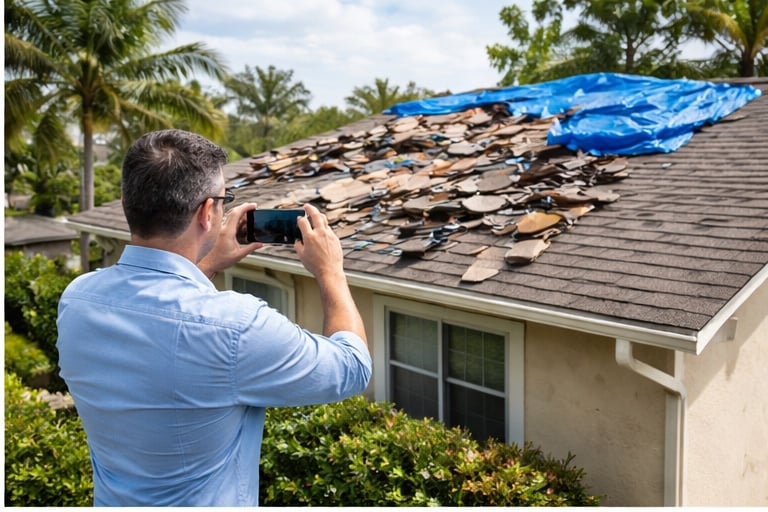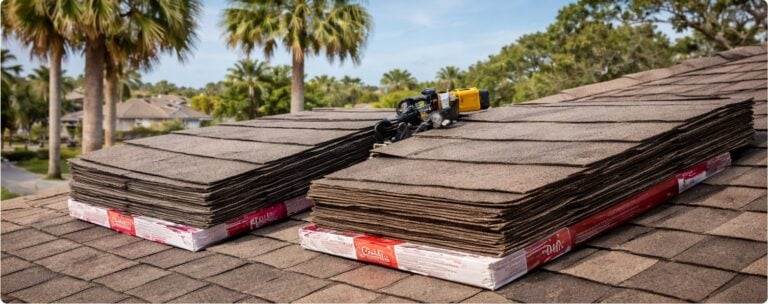

We begin with Steadfast Roofing in Riverview, FL, bringing decades of expertise to recognize, assess, and address various roof damage types—impact damage, wear, installation flaws, weather-related issues, and structural concerns—ensuring homeowners remain fully informed and protected.
Table of Contents
- 1. Hail and Impact Damage
- 2. Wind Damage and Blow-Offs
- 3. UV & Weathering Effects
- 4. Water Intrusion: Leaks & Stains
- 5. Flashing and Chimney Damage
- 6. Biological Growth: Moss & Algae
- 7. Structural Deck & Sagging Issues
- 8. Material-Specific Damage Patterns
- 9. Preventive Maintenance & Inspection Tips
1. Hail and Impact Damage
Identifying Impact Spots
Shingles often exhibit dark, smooth “dings” or bruises when struck by hail or debris—granules may be displaced, revealing the underlying mat. In extreme cases, fractured or cracked shingles appear.
Risk Factors & Insurance Considerations
- Stone-sized hail can fracture granules; golfball-sized hail can crack shingles.
- Spotting impact on vents, gutters, and flashing is crucial—especially for insurance claims.
2. Wind Damage and Blow‑Offs
Evidence of Wind-Related Issues
Look for curled edges, lifted tabs, or completely missing shingles along roof edges or high-wind zones. Underlayment abrasion, granule loss near fascia, or shifted ridge cap shingles indicate wind exposure.
Timing for Intervention
Prompt replacement of damaged shingles prevents wind-driven rain from infiltrating the deck or underlayment.
3. UV & Weathering Effects
Signs of Shingle Deterioration
Continuous UV exposure and thermal cycling cause asphalt shingles to blister, crack, and lose coloration. Calcium carbonate in shingles may form white streaks.
Stage-Wise Degradation
- Early: slight granule thinning and minor fading.
- Advanced: widespread cracking, granule-free patches, brittle or curled tabs.
4. Water Intrusion: Leaks & Stains
Inside the Attic and Ceiling
Check for ceiling discoloration, drip lines, and damp insulation. Start attic inspections at rafters and beams during daylight—light spots point to holes or gaps. Sometimes stains are faint yet still signal weakness.
Common Leak Entry Points
- Damaged or aged flashing around roof penetrations.
- Cracked valleys or improperly sealed edges.
- Broken or missing ridge vents that allow rain ingress.
5. Flashing and Chimney Damage
Flashing Integrity Issues
Flashing seals your roof’s most vulnerable areas—its failure causes leaks. Look for corroded, cracked or improperly sealed flashing where water can easily penetrate.
Mortar & Chimney Collars
Crumbling mortar or cracked chimney collars allow water seepage through the chimney base—inspect closely.
6. Biological Growth: Moss & Algae
Recognition and Risks
Green moss or black algae spores can accumulate moisture, accelerate granule loss, and shorten roof lifespan.
Removal Best Practices
- Use a gentle 50/50 bleach and water solution with zinc strips installed beneath ridge shingles.
- Avoid power washing, which damages shingles.
7. Structural Deck & Sagging Issues
Detecting Structural Problems
A sagging roofline, bouncy decking, or uneven valleys indicate structural decay. Climb into the attic to inspect sheathing for mold, rot, and deflection. Surface staining often precedes structural failure.
Risk Mitigation
Leaking places near soffits, chimneys, or plumbing require immediate attention and roof replacement if decking is compromised.
8. Material‑Specific Damage Patterns
Asphalt Shingles
Most common damage includes granule loss, curling tab edges, and split shingles.
Metal Roofing
Look for dents, rust, punctures, and joint failures. Cosmetic dings may be harmless, but rust significantly shortens lifespan.
Tile and Slate
Tiles may crack or slip; slate may flake. Missing underlayment beneath damaged pieces escalates vulnerability.
9. Preventive Maintenance & Inspection Tips
Quarterly Visual Checks
Inspect the roof after storms for damage, clean gutters, and remove debris.
Annual Hard Checks
- Walk the attic and ceiling for leaks.
- Inspect flashing, shingles, ridges, valleys, and gutter joints.
- Replace damaged or failing components promptly.
Documentation for Warranties/Insurance
Photograph areas of concern—highlight granule loss, cracked shingles, rusted flashing—to support claims or consultant evaluations.
Conclusion
Vigilant recognition of impact, wind, UV, water intrusion, flashing, biological, and structural damage empowers homeowners to act early. When roof issues are addressed swiftly, the roof’s lifespan and performance improve significantly. Professional evaluation is essential when structural concerns, widespread damage, or aging materials are present.
Read one of our latest blogs: “DIY Roof Repair Guide: Step-by-Step Instructions for Homeowners”.