When it comes to addressing persistent leaks on flat roofs, homeowners and property managers need precise guidance and reliable solutions. At Steadfast Roofing, located in Tampa, FL, we specialize in diagnosing, repairing, and sealing flat roof systems to prevent water damage and extend the lifespan of your roofing investment. Our expert team ensures that every flat roof repair is executed with high-quality materials, professional techniques, and long-term durability in mind.
Understanding Flat Roof Leaks
Flat roofs, while aesthetically appealing and space-efficient, are inherently prone to water pooling and structural vulnerabilities. Unlike sloped roofs, flat roofs rely on effective drainage systems, proper membrane installation, and seamless sealing to prevent leaks. Common causes of leaks include:
- Ponding water due to improper slope or blocked drains
- Cracks and blisters in the roofing membrane
- Seam failures from improper installation or aging materials
- Roof penetration leaks around HVAC units, vents, and skylights
Recognizing the source of a leak is crucial before initiating any repair work. A thorough inspection helps identify both visible damage and underlying structural issues that could worsen over time.
Tools and Materials for Effective Flat Roof Sealing
To achieve a long-lasting repair, the right combination of tools and materials is essential. Professionals typically use:
- Roofing membranes: TPO, EPDM, or modified bitumen
- Liquid roofing sealants: Silicone, polyurethane, or acrylic-based coatings
- Roofing primers: Enhance adhesion for seamless sealing
- Reinforcing fabrics: For patching tears and strengthening weak areas
- Application tools: Brushes, rollers, trowels, and caulking guns
Selecting materials compatible with the existing roofing system ensures maximum performance and prevents further leaks or premature deterioration.
Step-by-Step Guide to Sealing a Leaking Flat Roof
1. Comprehensive Roof Inspection
Begin by evaluating the entire flat roof surface. Identify all cracks, blisters, and seam separations. Document problem areas and assess the drainage performance to ensure no standing water remains.
2. Surface Cleaning and Preparation
Remove debris, dirt, and loose materials. Pressure washing is effective, but care must be taken to avoid damaging the membrane. Ensure the roof surface is dry and free from contaminants before applying any sealant.
3. Membrane Repair and Patch Installation
For visible cracks or holes, cut a reinforcing fabric slightly larger than the damaged area. Apply a compatible liquid roofing adhesive and embed the fabric to create a seamless patch. Allow proper curing time according to the manufacturer’s specifications.
4. Applying Roof Sealant
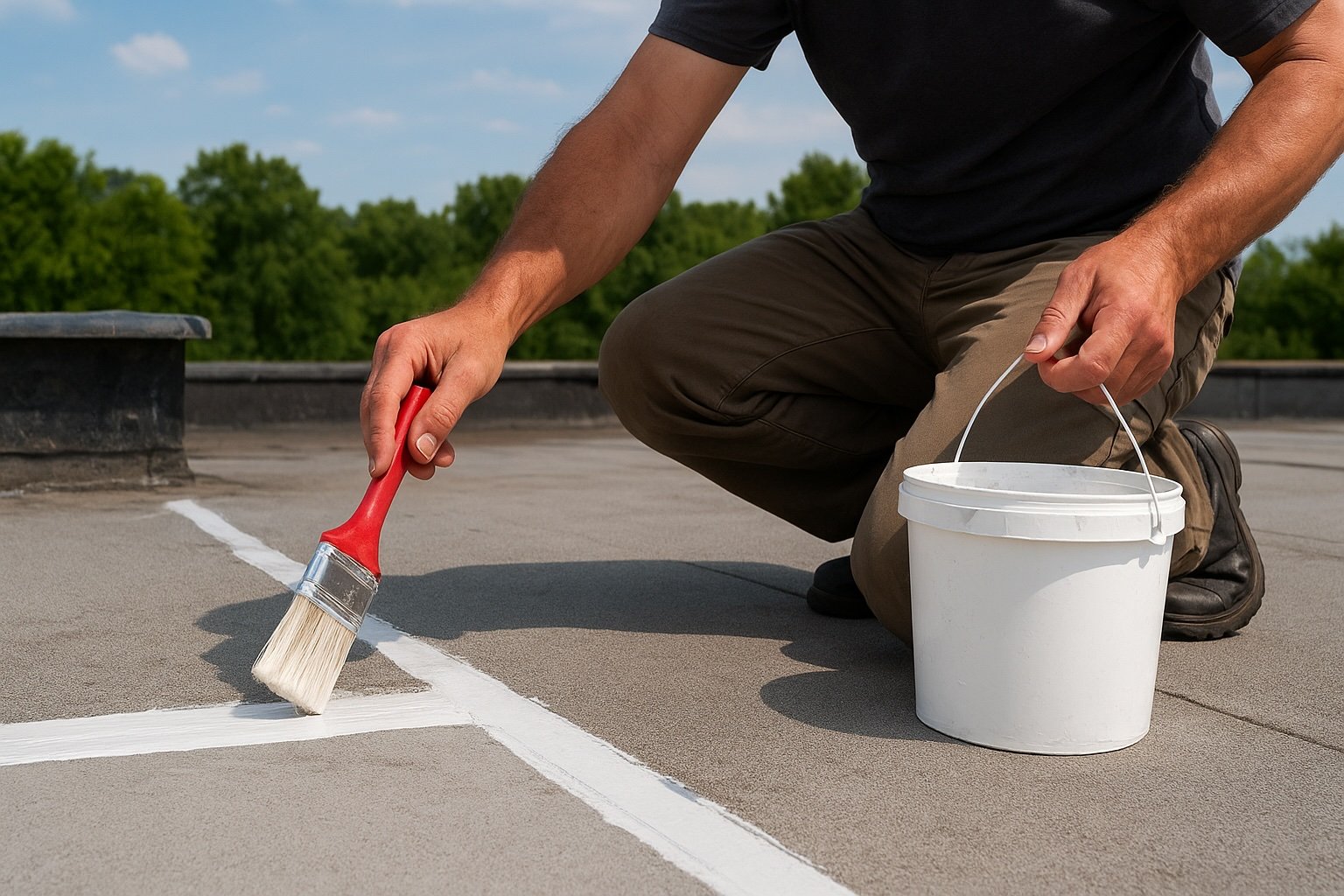
Evenly coat the entire surface or problem areas with a high-quality liquid roof sealant. Multiple thin layers provide better adhesion and durability than a single thick layer. Pay special attention to seams, edges, and penetrations to ensure complete waterproofing.
5. Inspecting and Maintaining Roof Drains
Check all scuppers, drains, and gutters for blockages. Clear debris and verify that water can flow freely off the roof to prevent future ponding and leaks.
6. Post-Repair Inspection
After curing, conduct a thorough inspection. Test for leaks by observing water flow during rainfall or simulating water exposure. Any missed spots should be addressed immediately.
Preventive Measures for Long-Term Flat Roof Protection
Preventing future leaks requires a proactive approach:
- Regular inspections: Conduct at least twice a year and after major storms
- Routine maintenance: Clean drains, repair small cracks early, and apply protective coatings
- Proper drainage design: Ensure adequate slope and drainage channels
- High-quality materials: Invest in durable membranes and sealants for longer-lasting results
Consistent care significantly reduces repair costs and extends the life of your flat roof.
Common Mistakes to Avoid in Flat Roof Repair
- Using incompatible materials that may peel or crack over time
- Ignoring minor leaks, allowing them to develop into structural damage
- Skipping surface preparation, leading to poor adhesion and failure
- Applying sealant during adverse weather, compromising effectiveness
Adhering to professional standards ensures repairs are durable, efficient, and cost-effective.
When to Call a Professional
While skilled DIYers can sometimes handle minor leaks, most flat roof repairs require expert intervention. Licensed professionals should address persistent leaks, extensive membrane damage, or structural concerns. Partnering with Steadfast Roofing guarantees access to experienced technicians, top-quality materials, and guaranteed results.
Conclusion
Sealing and repairing a leaking flat roof is a meticulous process that demands precision, high-quality materials, and consistent maintenance. By understanding common leak causes, using proper repair techniques, and scheduling regular inspections, property owners can protect their investment and ensure long-term durability. With professional guidance from trusted experts like Steadfast Roofing, Tampa Bay residents can enjoy a leak-free, resilient flat roof for years to come.
Take a moment to read one of our latest blogs: “Common Residential Roofing Problems: A Comprehensive Guide for Homeowners”.