When roofing issues arise, most homeowners immediately think of shingles, leaks, or maybe the gutters. But what about your fascia and soffit? These components are critical to protecting your roof structure, attic ventilation, and overall curb appeal. At Steadfast Roofing in Tampa, FL, we’ve repaired and replaced hundreds of soffit and fascia systems—often finding that minor damage can lead to significant, costly problems when left unchecked. Understanding the difference between fascia and soffit damage—and catching issues early—can save you thousands.
What Are Fascia Boards?
Fascia boards are the long, straight boards that run along the lower edge of your roof. They’re mounted at the point where the roof meets the outer walls and typically support the lower edge of the bottom row of shingles. More importantly, they serve as the mounting point for your gutters.
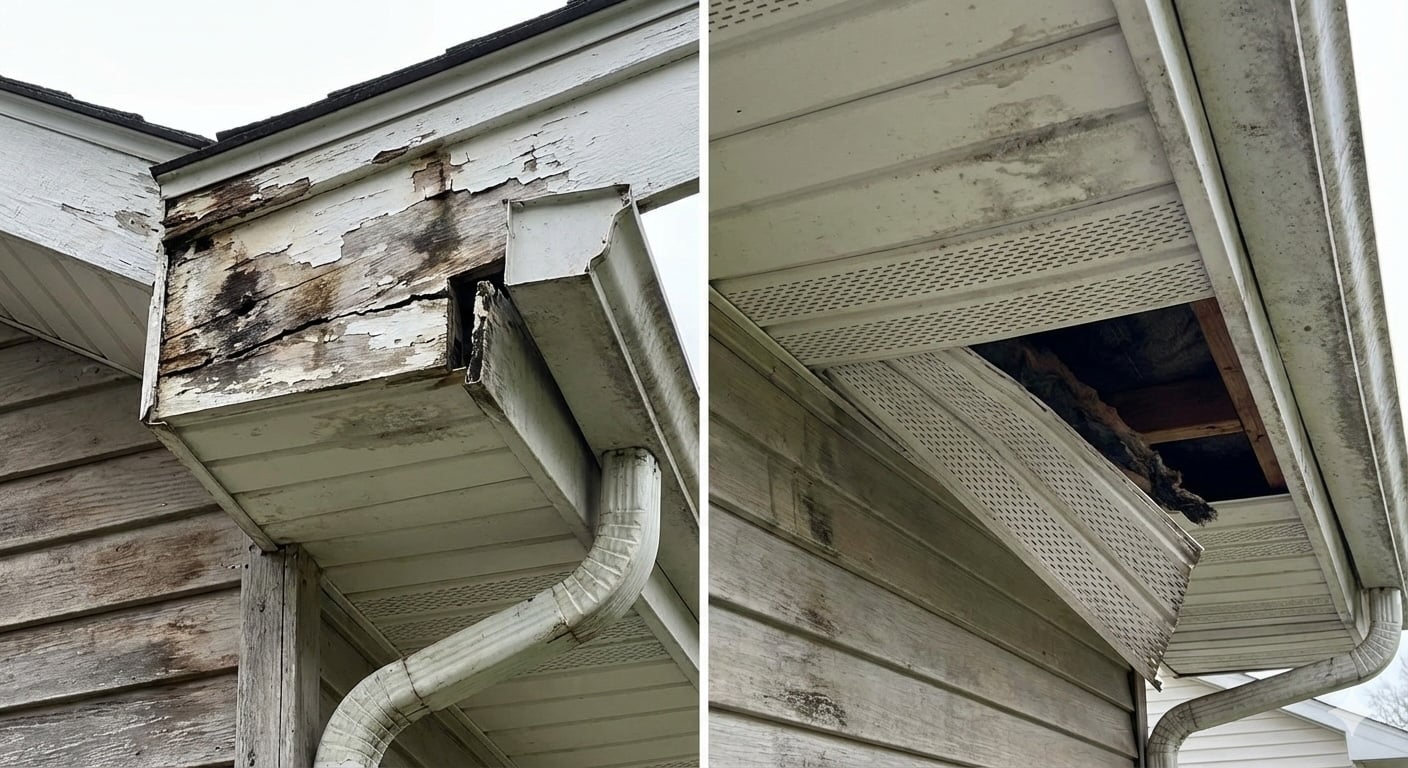
Common Signs of Fascia Damage:
- Peeling or cracked paint
- Soft or spongy wood when touched
- Gutter sections pulling away
- Visible rot or mold near roof edges
- Water dripping behind gutters
Rotten fascia is usually a sign of prolonged water exposure—either from gutter overflows, clogged downspouts, or poor flashing. In Florida’s humid climate, untreated fascia board damage can rapidly escalate into mold, wood rot, and even pest infestations.
Soffit Damage Explained
The soffit is the underside portion of your roof’s overhang. While it’s easy to overlook, this vented area plays a massive role in allowing your attic to breathe. It helps regulate moisture and prevent heat buildup…both of which can shorten the lifespan of your roofing system.
Warning Signs of Soffit Issues:
- Discoloration or water stains
- Visible holes or cracks
- Peeling paint or swollen wood
- Birds or rodents nesting
- Poor airflow in the attic
When soffits fail, you’re often dealing with more than just cosmetic issues. Damaged or blocked soffits can lead to condensation in your attic, mold growth, warped sheathing, and ultimately a weakened roofing system.
Fascia Board vs. Soffit: Key Differences
| Feature | Fascia | Soffit |
|---|---|---|
| Location | Along the roofline, behind gutters | Underneath the roof overhang |
| Function | Moisture, nesting animals, and poor airflow | Provides attic ventilation |
| Common Materials | Wood, composite, aluminum, PVC | Vinyl, aluminum, wood |
| Primary Threats | Water damage, pest infestation | Moisture, nesting animals, poor airflow |
Understanding the roles of each component makes it easier to spot problems and act before things escalate.
Why Florida Homes Are Especially Vulnerable
Tampa Bay homeowners face a mix of scorching sun, torrential rain, and salty air. This unique blend creates the perfect storm for fascia and soffit deterioration. Gutters overflow during heavy rain, water backs up, and before you know it, your fascia is soaked. Add in poorly ventilated attic spaces, and your soffit becomes a breeding ground for mold and mildew.
We’ve seen countless homes where improper soffit venting led to attic moisture, which then caused the sheathing to warp and roofing nails to back out…all while the homeowners never noticed a single leak.
Repair or Replace? How to Know What You Need
Here’s a breakdown of what typically warrants repair vs. replacement:
Repair-Ready Issues:
- Small areas of rot or peeling paint
- Minor cracks or animal damage
- Limited water stains without structural compromise
Replace-Required Issues:
- Widespread rot
- Compromised structural integrity
- Mold growth or insect infestations
- Sagging or completely detached soffit/fascia
When evaluating, it’s best to treat the root cause—not just the visible damage. Repainting a fascia board won’t solve the problem if the real issue is a clogged gutter or flashing failure.
Prevention Tips for Homeowners
An ounce of prevention is worth thousands in repair. Here’s how to keep your fascia and soffit in great shape:
- Clean your gutters regularly to prevent water overflow
- Inspect after major storms for signs of wind or water damage
- Repaint or reseal wooden fascia every few years
- Check attic ventilation to avoid moisture buildup
- Install drip edge flashing to keep water away from fascia boards
- Schedule annual roof inspections to catch early issues
Ventilation and Airflow: Why Soffits Matter More Than You Think
In hot, humid climates like Florida, attic ventilation is key to maintaining your roofing system. Soffits work hand-in-hand with ridge vents to keep air circulating. Without them, trapped heat can blister shingles and drive up cooling costs. Worse, excess humidity in an unventilated attic can warp wood decking, create condensation, and lead to premature roof failure.
If your soffits are blocked, missing, or falling apart, your whole ventilation system is compromised.
Gutter Installation and Its Role in Fascia Health
Poorly installed or clogged gutters are one of the top reasons fascia boards rot. If gutters overflow or leak behind the fascia, the wood stays wet, and mold sets in. We’ve replaced entire gutter runs that were pulling away from rotten fascia—just because leaves were never cleared.
Always ensure your gutters are sloped correctly, free of debris, and firmly attached to healthy fascia boards.
Choosing the Right Materials for Florida Homes
Material selection matters when replacing fascia and soffit boards in Florida:
Fascia:
- Cedar or pressure-treated wood – Classic look, needs frequent maintenance
- PVC – Resistant to moisture and insects, long-lasting
- Aluminum – Great durability, often used with seamless gutters
Soffits:
- Vinyl – Affordable, low-maintenance, moisture-resistant
- Aluminum – Strong, vented options available
- Fiber cement – High durability, fire-resistant
Many homeowners are opting for composite or synthetic fascia boards that mimic wood but last longer in Florida’s climate.
The Bottom Line: Don’t Ignore the Edges
While fascia and soffit damage might seem minor, they’re often the first visible signs of a much bigger issue brewing under the surface. Whether it’s attic mold, rotting sheathing, or failing gutters, ignoring these components can lead to major headaches—and major repair bills.
Conclusion
If you suspect damage to your fascia or soffit, don’t wait until it spreads. The edges of your roof aren’t just cosmetic—they protect everything beneath. Inspections, proper gutter maintenance, and quality materials are your best defense.
For expert fascia and soffit evaluations in Tampa Bay, trust Steadfast Roofing to get it done right the first time.
Take a moment to read one of our latest blogs: “Tile Roof vs Metal Roof: Which Lasts Longer in Florida?”