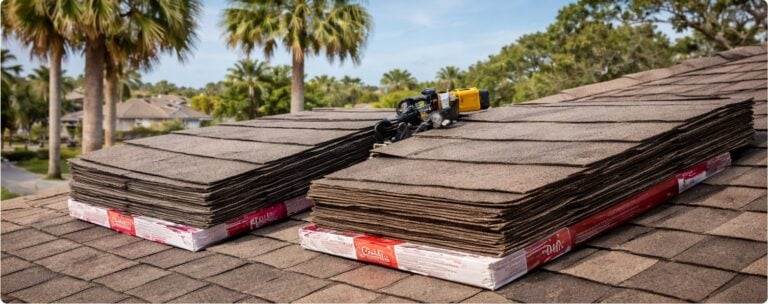
In Florida, Steadfast Roofing sees the same problem over and over: storm damage occurs quickly, but the insurance claim process can drag on, confuse property owners, and lead to costly mistakes. We shape this guide to give Florida homeowners and business owners a clear path from first inspection to final roof replacement.
What Florida property owners need to know before filing a roof damage claim
Florida roof claims are not ordinary maintenance claims. They usually involve wind, hail, tornadoes, hurricanes, fallen limbs, water intrusion, damaged flashing, and code-related repair issues that may not be obvious from the ground. The first rule is simple: storm damage and wear and tear are not treated the same way. Insurance typically responds to sudden accidental direct physical loss from a covered peril, while age, neglect, deterioration, and long-term maintenance issues are commonly excluded. That distinction drives almost every dispute that happens later in the claim. Florida also has its own deductible rules, including hurricane deductibles that may be offered as $500, 2%, 5%, or 10% of the dwelling or structure limits, depending on the policy. That is where many owners get a nasty surprise, because a percentage deductible on a high-value property is not pocket change.
Understanding the insurance claim process is essential for homeowners to navigate the complexities of filing a claim effectively.
What counts as covered storm damage on a roof in Florida
Covered roof damage usually starts with a documented weather event and visible resulting damage. In Florida, that can include high winds from severe thunderstorms, tropical storms, and hurricanes, as well as tornadoes, hail, and falling tree limbs. The National Weather Service defines a severe thunderstorm as one that produces hail at least one inch in diameter, winds of 58 mph or stronger, or a tornado. Those conditions are more than enough to fracture shingles, lift tabs, crease asphalt roofing, tear ridge components, loosen flashing, damage fasteners, and expose underlayment or decking to water intrusion. Commercial roofs can suffer punctures, membrane uplift, seam failure, edge metal damage, and saturated insulation after wind-driven rain or impact events. Florida businesses and homeowners both need to understand that insurance usually pays based on policy language, cause of loss, and documented damage, not on how badly the owner wants the problem gone. The roof has to show compensable storm-related damage, not just age or ugly wear.
Why early documentation can make or break your insurance claim
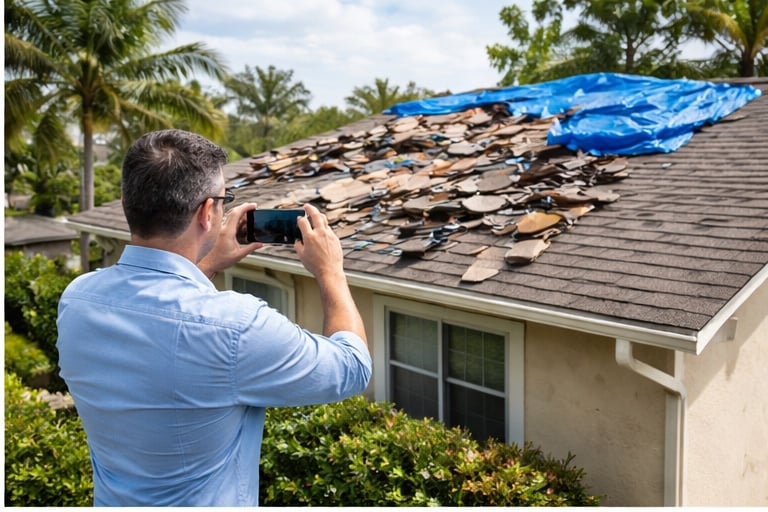
The minutes and hours after a storm matter more than most property owners realize. FEMA advises insured property owners to file a claim with their insurance company and take photos of damage as soon as it is safe to do so. That sounds basic, but it is the backbone of a strong claim. A weak file leads to a weak outcome. The best documentation package includes wide photos of all roof slopes that can be safely seen, close-ups of missing shingles or damaged roof components, interior water staining, wet insulation, ceiling damage, damaged gutters, dented metal, downspouts, window screens, AC fins, pool enclosures, and any tree or limb impact. Business owners should also document affected inventory areas, production interruptions, rooftop equipment zones, and any temporary protection work performed to reduce further damage. Good documentation turns a vague complaint into a time-stamped record. That is what moves a claim from “maybe” to “this happened here, on this date, in this condition.”
How to inspect storm damage without creating a bigger problem
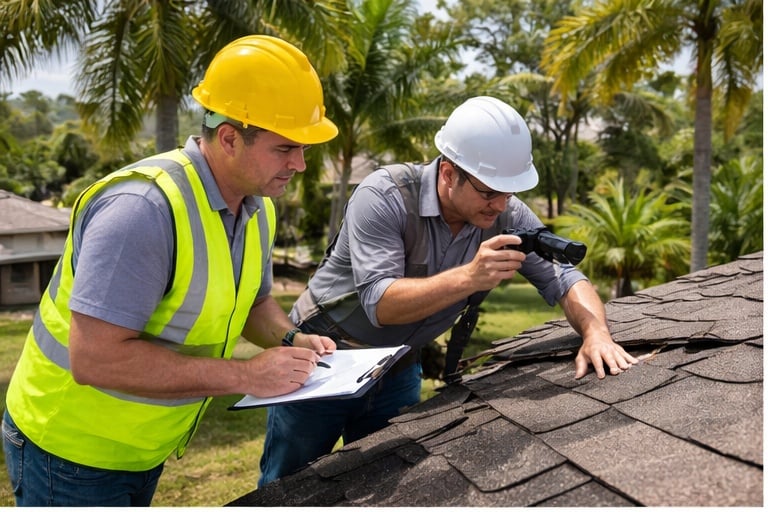
Roof inspections after storms should be cautious, not cowboy stuff. Ground-level documentation is a smart first step, especially when tiles are loose, decking may be compromised, or wet surfaces create slip hazards. FEMA guidance emphasizes acting safely and documenting damage, not taking unnecessary risks. For many properties, the safest path is a professional inspection that documents wind damage, hail impacts, flashing failure, storm-created openings, underlayment exposure, and related exterior damage. Commercial properties often require a more technical inspection because a low-slope or flat roof can hide punctures, wet insulation, membrane splits, or seam issues that are invisible from the parking lot level. A rushed self-check can miss the real problem or, worse, create a liability issue if someone falls trying to play adjuster on a two-story roof in wet sneakers. That is a bad look and a worse afternoon.
How Florida deductibles affect what you actually pay out of pocket
One of the biggest misunderstandings in Florida roof claims is the deductible. Many owners assume that insurance pays the whole bill, minus a modest flat amount. Sometimes that is true. Sometimes it is wildly false. Florida’s hurricane deductible structure can be percentage-based, with the percentage tied to the insured value of the home or structure. On a large home or commercial building, the deductible can be substantial. Florida consumer guidance also states that it is insurance fraud for a contractor to pay or waive an insurance deductible. So if someone promises a “free roof” by burying your deductible, run. Fast. That pitch may sound charming at the kitchen table, but it can create legal trouble and financial blowback later. A legitimate roof insurance process starts with honest numbers, clear policy language, and the property owner paying the deductible that applies under the policy.
Replacement cost value vs actual cash value on roof claims
The policy valuation method changes the economics of the claim. Replacement Cost Value, often called RCV, generally pays based on the cost to repair or replace covered damage with materials of like kind and quality, subject to the policy terms and deductible. Actual Cash Value, or ACV, generally reflects depreciation, meaning the payment is reduced based on age, condition, and remaining useful life. That difference can be massive on an older Florida roof. Homeowners with ACV coverage may find that the insurance payment covers only part of the replacement cost, leaving a larger balance due. Business owners can face similar issues depending on how the commercial property policy is written, what endorsements apply, and whether upgrades or specialty assemblies are involved. Before anyone signs a construction contract, the valuation method should be explained in plain language, as it directly affects the budget, scope, and expectations.
The real step-by-step process to replace a storm-damaged roof through insurance
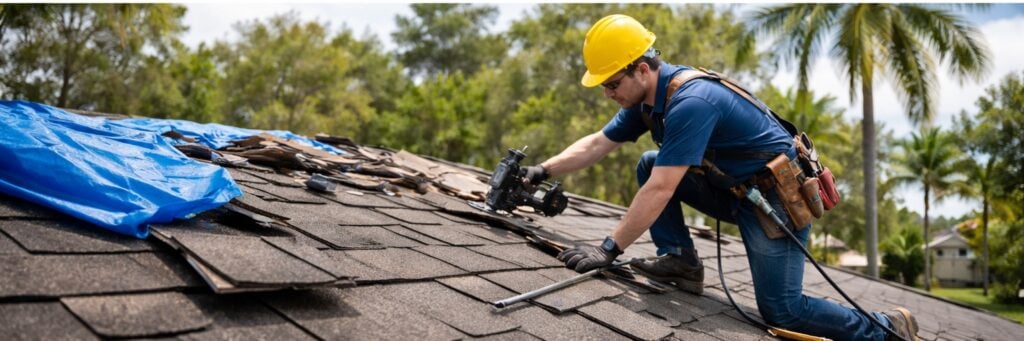
The cleanest Florida roof claim process follows a disciplined sequence. First, document the damage safely and protect the property from further harm. Second, review the policy to understand the deductible, valuation method, exclusions, and claim reporting obligations. Third, notify the insurance carrier promptly and follow the carrier’s claim reporting instructions. Fourth, obtain a detailed roof inspection with photo documentation and a clear explanation of storm-related damage. Fifth, attend the adjuster inspection with documentation ready. Sixth, compare the carrier’s scope of loss with the actual repair requirements, including code items, accessory components, and hidden damage discovered during proper inspection. Seventh, complete any justified supplemental request if the original scope is missing required line items or code-related work. Eighth, perform the roof replacement or repair according to the approved scope and applicable code. Ninth, submit final documentation so any recoverable depreciation or additional amounts owed can be released where the policy allows. That is the process when it works well. When it goes wrong, it usually falls apart because of poor documentation, policy misunderstandings, or a contractor treating the file like a casino chip rather than a legal claim.
Why Florida roof claims often need supplements
The first insurance estimate is not always the final word. On many Florida claims, the carrier’s initial scope may omit necessary components, local code-driven work, accessory items, disposal factors, steep-slope labor, flashing details, permit-related costs, or commercial roofing assemblies that are more complex than the estimate reflects. A supplement is the process of seeking payment for justified items that were missed, under-scoped, or not visible at the initial inspection. That is not fraud when it is supported by facts, photos, code requirements, and actual conditions. It is part of properly pricing the work. For Florida property owners, the key is that supplements should be evidence-based and tied to the loss, not padded with nonsense. A roof claim is not a magic trick. It should be documented like a file that could be audited later, because sometimes it is.
Florida code, mitigation, and why the roof claim price can change
Florida roofs do not exist in a vacuum. Once storm damage leads to replacement work, building code requirements, attachment standards, flashing details, underlayment details, ventilation corrections, and wind-resistance considerations can affect the final scope. Separate from the claim itself, mitigation matters in Florida because stronger building features can improve resilience and, in some cases, affect insurance pricing or future risk. The Florida Office of Insurance Regulation has long tied wind loss mitigation to how structures perform under storm conditions, and federal disaster loan programs may allow eligible borrowers to add mitigation-related funding to reduce future losses. Small Business Administration disaster loan guidance states that eligible borrowers may qualify for expanded funding of up to 20% to make mitigation improvements. For business owners and homeowners alike, that means storm recovery can also be a chance to build back smarter, not just patch the problem and pray through the next season.
What business owners should do differently on a commercial roof insurance claim?
Commercial roof claims come with extra layers of complexity. A business owner is not just protecting shingles or membrane. They are protecting operations, tenants, inventory, equipment, revenue, and lease obligations. Florida consumer guidance explains that commercial property insurance generally covers commercial buildings and contents against covered causes of loss, such as fire and windstorm, but business policies involve more forms, endorsements, and coverage conditions than standard homeowners coverage. That means roof claims on warehouses, retail centers, offices, churches, HOAs, apartment buildings, and mixed-use properties should be documented with both structural and operational impact in mind. Owners should gather roof reports, maintenance records, repair invoices, lease requirements, interior damage photos, and business interruption information where applicable. If a declared disaster triggers broader recovery options, SBA physical damage loans may also help eligible businesses repair or replace damaged real estate, machinery, equipment, fixtures, and leasehold improvements. A commercial claim is not just “same game, bigger roof.” It is a different game with more money on the field.
Assignment of benefits, contractor fraud, and other traps that wreck claims
Florida property owners should be extremely careful before signing anything that transfers rights or gives broad authority to a third party. The Florida Department of Financial Services explains that an Assignment of Benefits can transfer insurance claim rights or policy benefits to another party, giving that party authority to file a claim, make repair decisions, and collect insurance payments. That is not automatically evil, but it can shift control away from the owner at exactly the moment control matters most. Florida consumer protection materials also warn owners to let the insurance company inspect damage before signing paperwork or allowing work to begin when the repair is part of an insurance claim. Add in the illegal deductible-waiver gimmick, disaster chasers, inflated scopes, and scare tactics, and you have the classic post-storm circus. Property owners should slow down, verify licensing, read every contract, retain control of the claim, and make decisions based on documentation rather than panic.
What to do if the insurance company underpays or denies the roof claim
A denial or underpayment is not always the end of the road. It may reflect a disagreement about causation, scope, valuation, or whether the observed condition was caused by a covered peril. Florida consumers have dispute-resolution options in some circumstances. The Florida Department of Financial Services notes that mediation is available for certain qualifying residential and commercial-residential disputes involving the amount offered or the cause of damage, subject to program requirements. That does not mean every denial becomes a win. It means owners should not confuse the first answer with the final answer. The better move is to review the carrier’s letter carefully, compare it with the inspection evidence, identify any missing documentation, and address the actual reason for the denial or underpayment. Emotion helps nobody here. Paperwork does.
How Florida homeowners and business owners can strengthen a roof claim from day one
Strong roof claims usually share common traits. They are reported promptly. They are supported by date-stamped photos and weather-event context. The policy is reviewed before major decisions are made. Temporary mitigation is documented. The adjuster inspection is organized. The contractor’s scope is detailed, not vague. The owner knows whether the policy is ACV or RCV. The deductible is paid legally. The final invoice and completion records are saved. Business owners also preserve records showing operational impact, tenant concerns, and emergency expenditures. This is not glamorous stuff. Nobody is framing a supplement packet and hanging it in the lobby. But disciplined documentation is what separates a recoverable claim from an expensive mess with wet ceiling tiles and a whole lot of finger-pointing.
CONCLUSION
Florida roof insurance claims move best when the property owner treats the process as a serious financial event rather than a casual repair call. We shape the smartest path around safe documentation, policy review, legal deductible handling, evidence-based scope development, and code-aware roof replacement. For homeowners, that means protecting the house and the budget. For business owners, it means protecting the building, the operation, and future insurability. A storm may be unavoidable. A sloppy claim is not.
Read our blog: “Owens Corning vs GAF Shingles in Tampa, FL: Which Roof Shingle Is Better for Your Home?”