
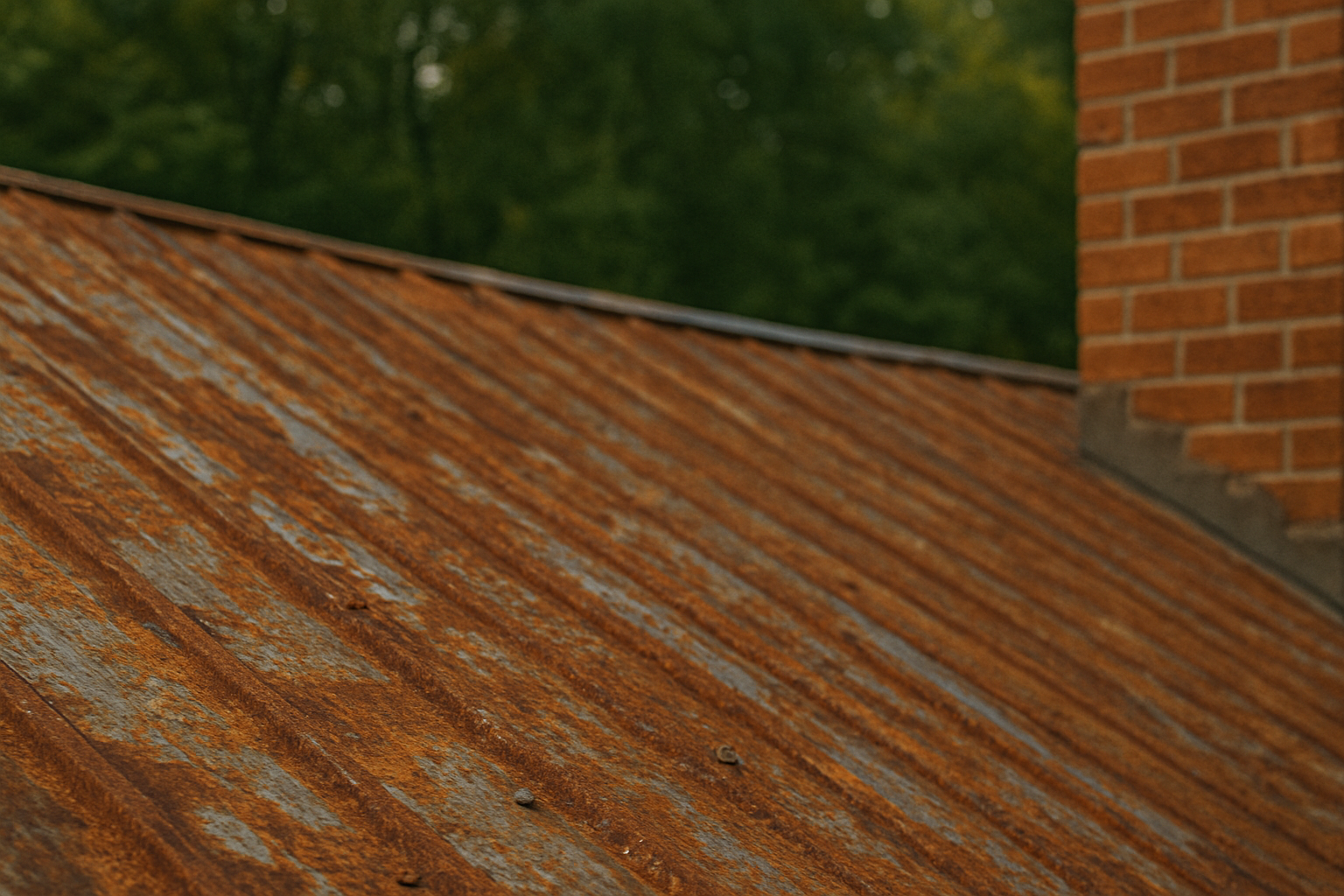
At Steadfast Roofing in Ruskin, FL, we locate metal roof leaks by treating the roof as a complete system—not just a surface with panels. A leak may appear as a ceiling stain in one room, but the actual entry point can be several feet away at a fastener, seam, ridge cap, flashing detail, pipe boot, skylight curb, wall transition, or corroded panel edge. Accurate metal roof leak detection requires methodical inspection, knowledge of Florida weather patterns, and an understanding of how metal expands, contracts, and ages in coastal conditions.
Why Metal Roof Leaks Can Be Difficult to Trace
Metal roofing is durable, but leaks are not always obvious. Water can enter through a tiny failed washer, travel under a panel rib, follow framing, and show up far from the roof breach. In Florida, heavy rain, wind-driven storms, salt air, UV exposure, and humidity accelerate small weaknesses. This is especially true near Tampa Bay, coastal communities, and waterfront properties where corrosion can affect screws, clips, exposed edges, and flashing components.
The most common leak points on a metal roof include:
- Exposed fasteners with cracked or compressed washers
- Loose screws caused by thermal movement
- Open laps, panel seams, and end laps
- Failed sealant around penetrations
- Damaged flashing at walls, valleys, chimneys, vents, and skylights
- Ridge cap separation
- Rusted fastener heads or panel edges
- Poorly detailed transitions between roof sections
- Ponding water on low-slope commercial metal roofs
Start Inside: Identify the Leak Pattern
Before stepping onto the roof, we begin inside the property. Water stains, bubbling paint, musty odors, wet insulation, dark attic decking, and rust marks on metal framing can reveal the direction of water travel. During daylight, the attic should be inspected with a strong flashlight. Pinhole daylight around fasteners, vents, ridge areas, or wall transitions may indicate a breach.
A single stain does not always mean a single leak. On older metal roofs, multiple small failures can combine during heavy rain. We look for patterns: stains below penetrations, moisture near exterior walls, water following rafters, or recurring leaks only during wind-driven rain. That pattern often narrows the inspection area before roof testing begins.
Inspect Fasteners, Washers, and Screw Lines
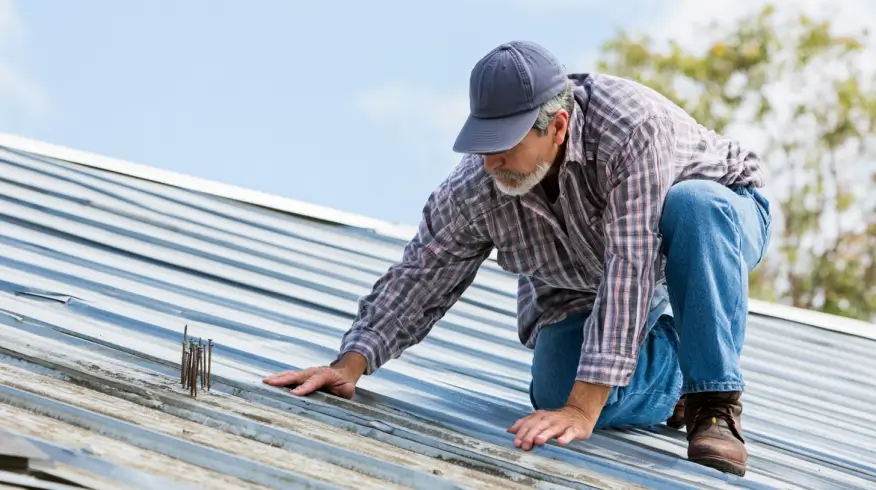
Fasteners are one of the most frequent leak sources on exposed-fastener metal roofs. Each screw creates a penetration through the panel, and each washer must remain flexible and properly compressed to seal water out. Over time, UV exposure can dry out neoprene washers, screws can back out, and over-tightened fasteners can split the washer or dimple the panel.
During inspection, we check for:
- Backed-out screws
- Rusted screw heads
- Missing fasteners
- Cracked or flattened washers
- Oversized holes from movement
- Screws driven at an angle
- Fasteners placed in incorrect locations
- Corrosion staining around screw lines
In coastal areas, corrosion-resistant fasteners are essential. FEMA guidance on corrosion protection for metal connectors and fasteners in coastal areas highlights the importance of upgraded corrosion resistance, especially where salt exposure is present. If fasteners are failing across large sections, spot repairs may not be enough; a full fastener replacement plan may be needed.
Examine Seams, Laps, and Panel Movement
Metal roof panels expand and contract as temperatures change. That movement is normal, but it can stress seams, laps, clips, and sealants. On standing seam systems, leaks often develop where clips loosen, seams separate, or flashing details fail. On exposed-fastener systems, end laps and side laps are common trouble areas.
We inspect seams for open joints, lifted edges, deteriorated butyl tape, cracked sealant, and signs of water tracking. Any repair must respect the roof system design. Simply covering a seam with generic caulk rarely lasts in Florida heat. Proper seam repair may require cleaning the metal, removing failed sealant, applying compatible butyl or polyurethane sealant, reinforcing the seam, and securing the panel according to manufacturer specifications.
Check Flashing at Every Transition and Penetration
Flashing failures are another leading cause of metal roof leaks. Flashing protects the places where the roof changes direction or meets another surface. These details handle concentrated water flow, wind pressure, and movement, making them vulnerable if installed poorly or left unmaintained.
Key flashing areas include:
- Ridge caps
- Valley metal
- Pipe boots
- Skylight curbs
- Chimney flashing
- HVAC curbs
- Wall-to-roof transitions
- Gable and rake trim
- Eave edges
- Pitch transitions
We pay close attention to sealant gaps, loose trim screws, cracked pipe boots, rusted edges, and flashing that was not properly counterflashed. For Florida properties, roof assemblies and components should be consistent with applicable code and approved systems; the Florida Building Code governs roof assembly design, materials, construction, and quality, and many roofing products must be verified through the state’s Florida Product Approval system.
Use a Controlled Water Test When the Leak Is Hidden
When visual inspection does not confirm the leak source, a hose test can help isolate the problem. The test must be controlled and systematic. We start low on the roof and work upward, testing one section at a time while someone watches inside the attic or affected interior area. Each section should be allowed enough time to reveal water movement before moving to the next area.
The mistake many property owners make is spraying the whole roof at once. That floods multiple details and makes the source harder to identify. A proper water test isolates fastener rows, seams, flashing zones, ridge areas, and penetrations one at a time.
Commercial Metal Roof Leak Detection
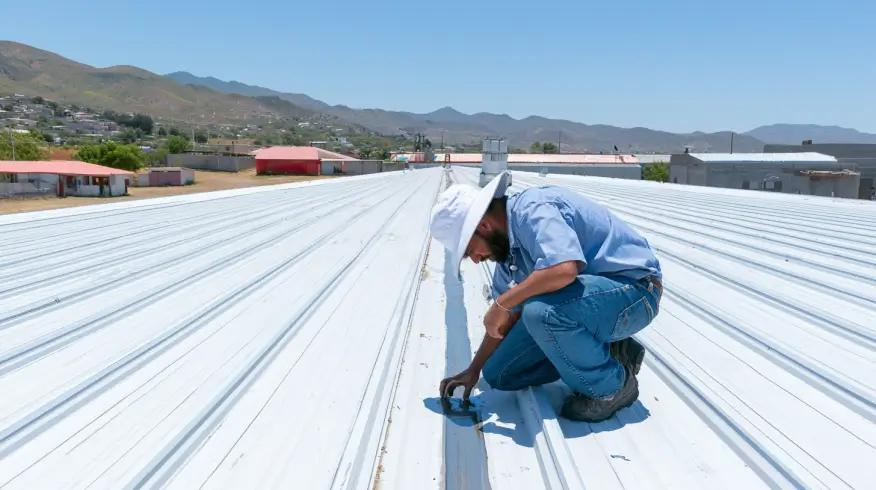
Commercial metal roofs require a broader inspection strategy because they often include long panel runs, mechanical equipment, curb penetrations, internal drainage, and low-slope conditions. Leaks may be caused by panel movement, open laps, clogged gutters, deteriorated coatings, HVAC service damage, or ponding water near seams.
For commercial buildings, we inspect roof access points, rooftop equipment curbs, expansion joints, gutters, downspouts, scuppers, and previous repair patches. Infrared moisture scanning may be useful when wet insulation or trapped moisture is suspected. A professional inspection helps determine whether the roof needs localized repair, seam restoration, fastener replacement, coating, or a larger metal roof restoration plan.
Repair Strategies After the Leak Is Found
Once the entry point is confirmed, the repair should match the cause. Fastener leaks may require replacing screws with properly sized corrosion-resistant fasteners and new washers. Seam leaks may require cleaning, resealing, and reinforcing the lap. Flashing failures may require rebuilding the detail rather than adding surface sealant. Corroded panels may need patching or replacement if the metal has lost structural integrity.
For aging roofs with widespread micro-leaks, a coating system may be appropriate after proper preparation. However, coatings should not be used to hide active structural problems, severe rust, loose panels, or failed flashing. The roof must be cleaned, repaired, primed where needed, and detailed before coating.
If you are dealing with recurring leaks, storm damage, or an aging metal roof, our team can provide a detailed metal roof evaluation and targeted roof inspection to identify the source before damage spreads.
Preventing Future Metal Roof Leaks
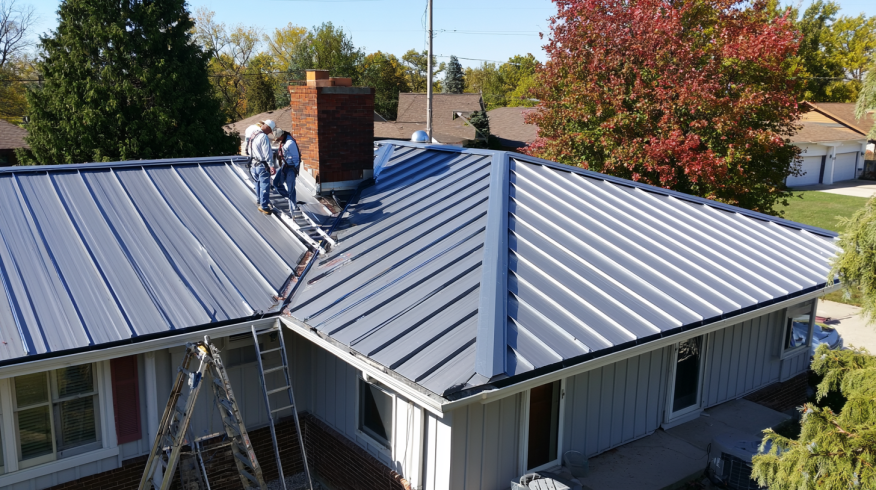
Prevention is far less expensive than interior water damage. We recommend inspecting metal roofs at least twice per year and after major storms. Fasteners, seams, flashings, gutters, sealants, and penetrations should be checked regularly. Coastal properties should receive extra attention because salt air can accelerate corrosion on fasteners, clips, panel edges, and exposed metal accessories.
Steadfast Roofing helps homeowners, property managers, and commercial building owners identify small issues early so they can avoid larger repairs, interior damage, mold concerns, and premature roof replacement.
Conclusion
Locating a leak in a metal roof requires more than finding the nearest stain. The true source may be a failed fastener, separated seam, compromised flashing, coastal corrosion, or a commercial roof detail that only leaks during wind-driven rain. A careful inspection process—starting inside, moving across fasteners and seams, checking every flashing point, and using controlled water testing when needed—provides the most reliable path to a lasting repair.
For persistent leaks, storm-related damage, or concerns about an older metal roofing system, Steadfast Roofing can perform a professional inspection and recommend the right repair strategy before the problem becomes more expensive.
FAQ
How do I know if my metal roof leak is coming from a fastener?
Fastener leaks often show up near screw lines, panel ribs, or areas where washers have cracked, flattened, or pulled away from the metal. Rust stains around screw heads, backed-out screws, and damp decking below fastener rows are strong indicators. Because water can travel beneath panels, the visible ceiling stain may not be directly below the failed screw.
Can a metal roof leak only during heavy wind-driven rain?
Yes. Some metal roof leaks only appear during storms because wind pushes rain under loose ridge caps, open seams, wall flashing, or poorly sealed penetrations. These leaks may not appear during light rain or a basic hose spray unless the test recreates the right direction and pressure.
Should I repair a leaking metal roof or replace it?
The answer depends on the age of the roof, the number of leak points, the condition of the panels, and whether corrosion or installation defects are widespread. Isolated fastener, seam, or flashing leaks can often be repaired. Replacement may be the better option when panels are severely corroded, seams are failing throughout the roof, or repeated repairs are no longer solving the problem.