Tampa homeowners don’t need more hurricane hype. They need the roof to stay on the house. Steadfast Roofing helps homeowners understand hurricane straps, roof-to-wall connections, permits, and wind mitigation paperwork so upgrades actually count when inspectors and insurance underwriters show up.
What hurricane straps actually do in Florida hurricanes
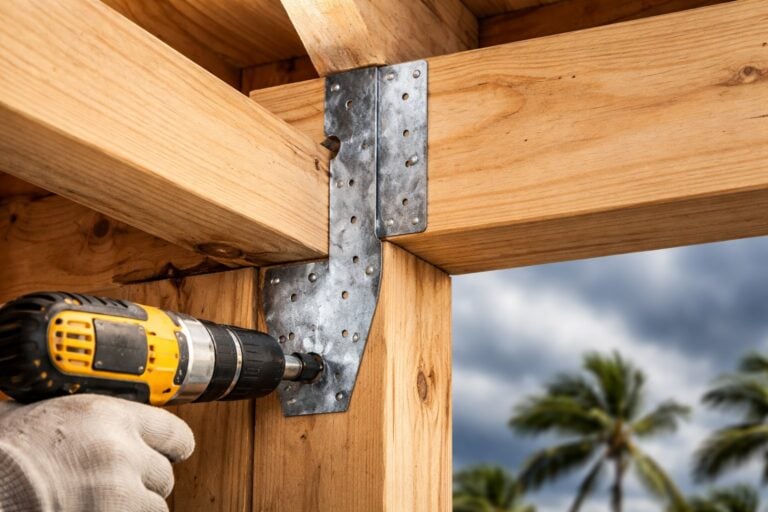
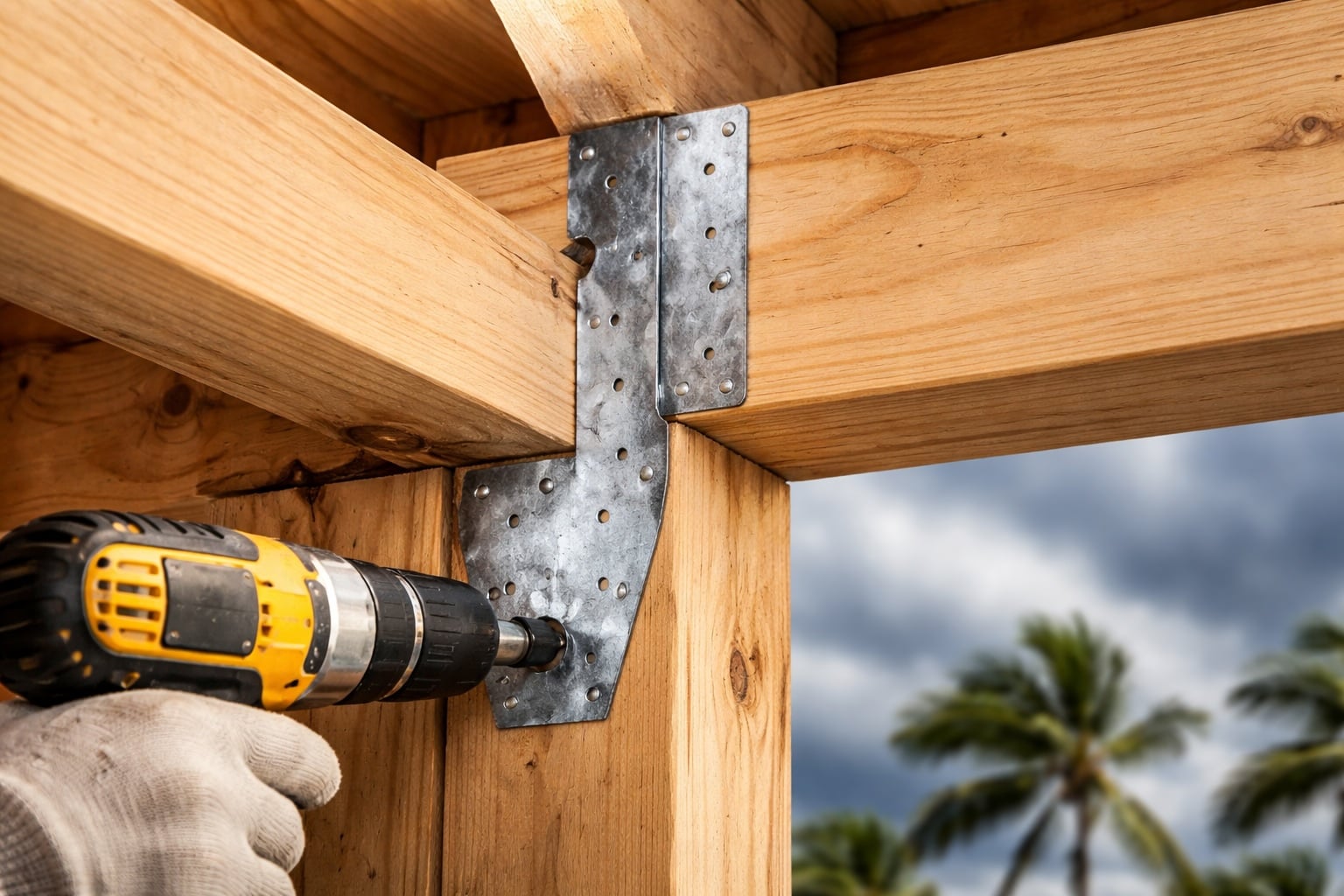
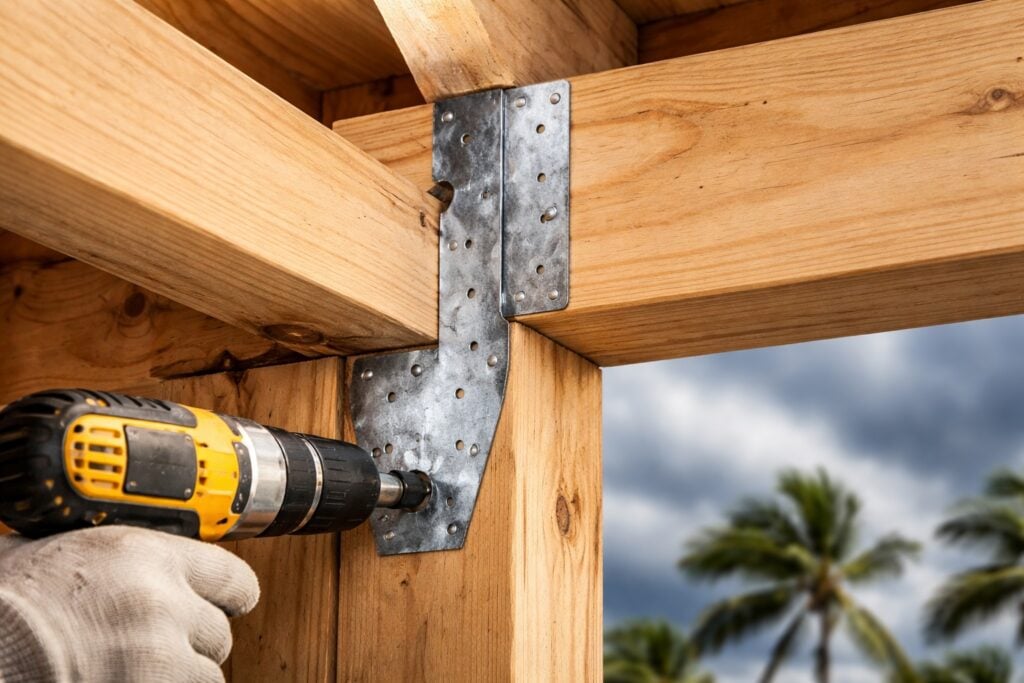
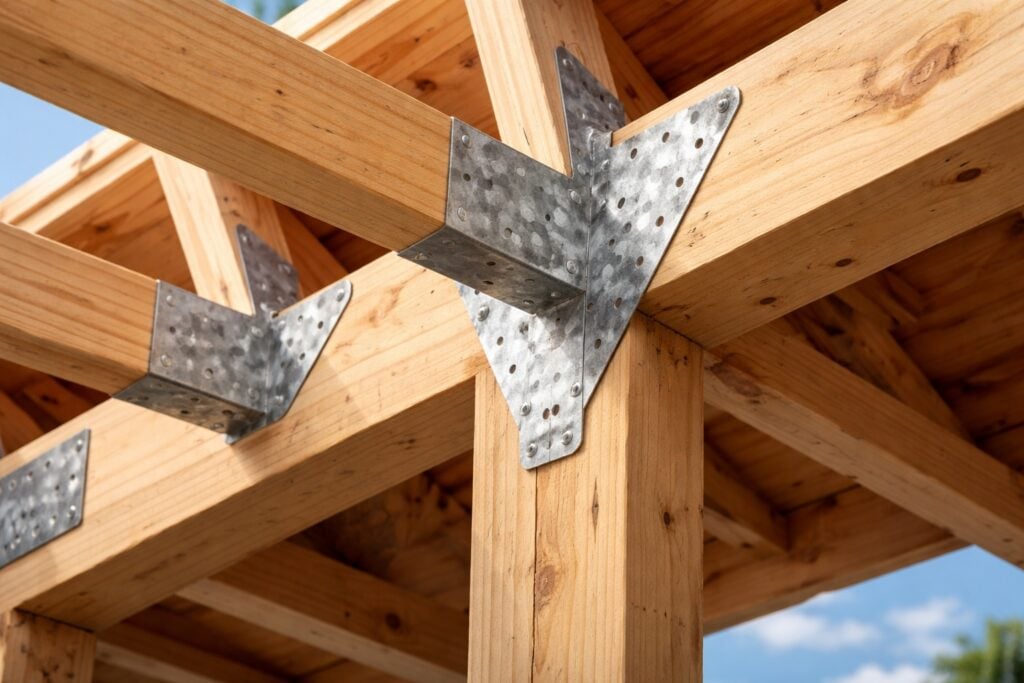
Hurricane straps (and clips) are metal connectors that tie your roof framing (trusses or rafters) to the top of your exterior walls. Their entire job is simple: resist wind uplift. In a major storm, wind tries to pry the roof up and peel it back. Straps help create a “continuous load path,” so uplift forces transfer down into the structure instead of ripping the roof free.
In Tampa Bay, this matters because most real roof failures during hurricanes are not “shingles flew off.” It’s “the roof system lost its connection strength in the wrong place, and everything unraveled fast.”
Roof-to-wall attachment types that show up on wind mitigation reports
Florida wind mitigation inspections classify roof-to-wall connections in a few common buckets. Those categories aren’t just trivia. They directly affect whether you qualify for meaningful insurance credits.
- Toenails: Nails driven at an angle from the truss into the wall top plate. Common in older homes. Usually, the weakest category on reports.
- Clips (hurricane clips): Metal connectors that attach the truss to the wall, but do not wrap over the truss.
- Single wrap (single strap): Metal strap that wraps over the truss with multiple nails on each side (when done correctly).
- Double wrap (double strap): Two wraps, typically higher uplift resistance when properly installed.
Real-world note: what matters isn’t the label you think you have. It’s what the inspector can see, measure, and document.
The “3-nail” rule and why partial upgrades usually don’t count
Insurance credits often hinge on strict installation details. One of the most common deal-breakers is nail count and consistency: clips/straps frequently must have three nails into the truss (and proper fastening into the wall connection) across the roof-to-wall connections to qualify for the better categories. If some connections are missing hardware, missing nails, or installed incorrectly, underwriters can treat the whole roof-to-wall category as downgraded.
Another common problem is “we did a few” installations. Wind mitigation is not a participation trophy. Inspectors typically need to see that every truss is properly connected, not just the easy ones near the attic hatch.
Florida code vs. insurance underwriting: same topic, different game
Building code is about minimum life-safety and structural standards when building or performing certain permitted work. Insurance underwriting is about risk pricing. They overlap, but they are not identical.
- Code compliance may be triggered by a permitted scope of work and local inspections.
- Insurance credits are triggered by what the wind mitigation form documents and what your carrier accepts.
That’s why a homeowner can replace a roof and still get told, “Your roof-to-wall connections don’t qualify for credits.” Roof replacement does not automatically include roof-to-wall retrofits in Florida.
Why a new roof does not automatically upgrade hurricane straps
This is the #1 misconception that causes homeowner frustration in Tampa.
A typical reroof scope focuses on tear-off, decking, underlayment, flashing, ventilation, and shingles/metal/tile. Structural connectors in the attic are a separate retrofit scope that usually requires attic access, selection of hardware by connector type, proper nailing patterns, and often permitting/inspection, depending on the jurisdiction and scope.
Translation: a beautiful new roof can still be sitting on weak connections.

What a wind mitigation inspection checks (and what they need from you)
A Florida wind mitigation inspection is performed by a qualified licensed professional and documented on the wind mitigation form used for insurance credits. The inspector is looking at multiple features (roof shape, opening protections, deck attachment, secondary water resistance, and roof-to-wall connections). The roof-to-wall section is heavily photo-driven, meaning that if they can’t photograph it, it often doesn’t count the way you want.
What helps the process go smoothly:
- Clear attic access (not buried behind shelving or a locked panel)
- Safe walkway (planks if needed, no “parkour over insulation” situation)
- Lighting (or the inspector brings it, but you’d be surprised how many attics are pitch black)
- No spray foam or coverings hiding connectors where they must be verified
After upgrades, a fresh wind mitigation inspection is often recommended to ensure you have a current report to submit to your carrier.
Insurance discounts in Florida: what’s realistic for Tampa homeowners
You’ll see big numbers thrown around online. The reality is: the discount depends on your carrier, your policy, and the inspection documents. Still, roof-to-wall improvements can be meaningful when they move you from toenails to clips/wraps, and the rest of the mitigation features are favorable. Some insurers advertise premium reductions that can be substantial when the required standards are met.
Before spending money, do this:
- Ask your agent what credits your carrier actually applies for roof-to-wall improvements.
- Compare the estimated premium difference against the retrofit cost.
- Make sure your planned retrofit approach will document cleanly on inspection day.
Hurricane straps retrofit: what the work typically involves in existing Tampa homes
Every attic is different, but most retrofits follow a pattern:
- Access and evaluation: identify truss type, wall top plate condition, existing fasteners, and obstructions.
- Connector selection: clips vs wraps depend on geometry and clearance.
- Surface prep: clean nailing surfaces and confirm wood integrity.
- Fastener compliance: correct nail type/size and the right pattern (this is where sloppy work loses credits).
- Consistency across trusses: because partial coverage often downgrades the whole category on the report.
If someone says they can do it “super cheap” but won’t pull permits when required, won’t follow fastening specs, and won’t plan for inspection documentation, you’re buying hardware, not results.
Permits and inspections: the unsexy part that makes the upgrade count
Roof-to-wall connectors are structural components. In many cases, a legit retrofit may require permits and inspections, depending on the jurisdiction and scope. Even when not strictly required in every scenario, documented, code-aligned work is what holds up when a wind mitigation inspector and an insurance underwriter review the photos.
Also, if you ever sell the home, clean documentation beats “trust me, my cousin installed straps.”
My Safe Florida Home grants: the Tampa-friendly money that’s actually aimed at mitigation
If you want help paying for wind mitigation improvements, Florida’s My Safe Florida Home program is one of the most relevant places to look. It offers free wind mitigation inspections and grant funding for approved upgrades for eligible homeowners.
Key points to keep straight:
- Only improvements recommended in your inspection report are eligible for reimbursement under program rules.
- Roof-to-wall connection strengthening is among the authorized mitigation improvements described in program materials.
- Program eligibility and funding details can change over time, so always verify current requirements directly through the program site.
If you’re in Tampa and planning multiple upgrades (roof-to-wall, opening protection, etc.), this is usually a smarter first stop than guessing about “tax credits.”
Tax credits: the truth Tampa homeowners need before they plan their budget
Let’s kill the confusion cleanly.
The federal “home improvement tax credits” people most often talk about are generally tied to energy efficiency improvements, not structural wind-mitigation hardware. The IRS Energy Efficient Home Improvement Credit focuses on qualifying energy-related upgrades (and has its own rules and limits).
Where do hurricane straps fit?
- Hurricane straps are typically not an energy-efficiency item, so they usually don’t line up with the common federal energy efficiency credits homeowners search for when they hear “tax credit.”
- The more practical “savings” path for straps in Florida is usually insurance credits (via wind mitigation) and/or state mitigation programs/grants, not a generic federal tax credit bucket.
If you want a hard answer for your exact tax situation, that’s a CPA question. But if your plan is “I’ll offset the strap retrofit with the energy credit,” that plan usually dies the minute you read what the IRS actually lists as qualified improvements.
Tampa homeowner checklist: how to make hurricane strap upgrades actually pay off
If the goal is “stronger home + credits that stick,” this checklist keeps you out of the weeds:
- Start with documentation: get a wind mitigation inspection (or pull your most recent report) to determine your current roof-to-wall category.
- Ask your insurer first: confirm what roof-to-wall credits they apply and what proof they require.
- Plan for visibility: ensure the final installation is easy to photograph and verify.
- Insist on correct fastening: nail type, count, and placement matter as much as the metal itself.
- Re-inspect after completion: submit the updated report to your carrier promptly so credits can be applied.
- If you’re eligible, use the program money: explore My Safe Florida Home before you write a full out-of-pocket check.
CONCLUSION
In Tampa, hurricane straps are less about “nice upgrade” and more about whether your roof stays married to your walls when the wind tries to file for divorce. The only upgrades that matter are the ones installed to spec, documented clearly, and supported by a wind mitigation report your insurer will actually honor.
Read our blog: “My Safe Florida Home Grant in Tampa, FL: Free Wind Mitigation Inspection and Roofing Upgrades That Actually Matter.”