
When property owners compare roofing materials for coastal Florida, the decision is rarely about looks alone. Salt air, humidity, UV exposure, heavy rain, wind uplift, and fast-moving storm systems all affect how a roof performs over time. At Steadfast Roofing in Tampa, FL, we evaluate metal roofing as a complete system: panels, coatings, fasteners, flashing, underlayment, ventilation, roof slope, and maintenance access. A metal roof can be one of the strongest choices for coastal homes and commercial buildings, but only when the material and installation details match the environment.
Why Coastal Climates Are Hard on Roofing Systems
Coastal roofing has to survive more than occasional bad weather. Around Tampa Bay, Clearwater, St. Petersburg, Tarpon Springs, Sarasota, and nearby Gulf communities, roofs are exposed to rain, humidity, condensation, and salt carried inland by wind. That combination can accelerate corrosion, stain finishes, weaken exposed fasteners, and shorten the life of poorly selected materials.
Salt air corrosion is the main issue that separates coastal roofing from inland roofing. Salt particles settle on metal surfaces, especially near seams, scratches, cut edges, fasteners, gutters, and flashing transitions. When moisture is present, those deposits can speed up electrochemical reactions that lead to rust, pitting, coating failure, and eventually leaks. This does not mean metal roofing is a bad choice near the coast. It means coastal metal roofing must be specified more carefully than a standard inland roof.
Wind is another major factor. Coastal roofs often experience stronger gusts, wind-driven rain, and pressure changes around roof edges, corners, ridges, and penetrations. A panel that looks durable in the field of the roof can still fail if edge metal, clips, sealants, trim, and fasteners are not matched to wind exposure. A coastal roof should be designed as a weather-resistant assembly, not just a surface covering.
The Main Pros of Metal Roofing in Coastal Climates
1. Strong Long-Term Durability
A properly installed metal roof can provide excellent long-term performance in Florida’s coastal climate. Metal panels resist many problems that commonly affect asphalt shingles, including granule loss, curling, cracking, and heat-related aging. In high-sun, high-humidity areas, that durability is one of the biggest reasons homeowners and property managers compare metal against traditional roofing systems.
For residential properties, metal roofing can improve curb appeal while adding a clean, modern profile. For commercial buildings, it can support long-term maintenance planning by reducing the frequency of full roof replacements when compared with shorter-life roofing materials. Property owners researching metal roofing services should focus on system design, not just panel color or price.
2. Better Performance Against Rain and Moisture
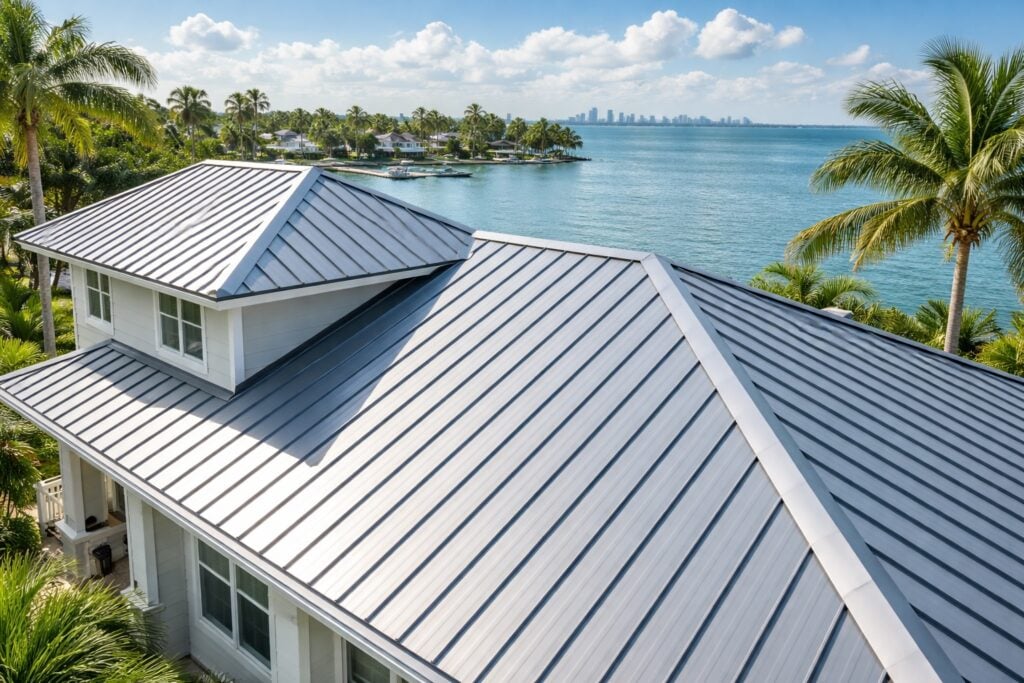
Metal roofing sheds water efficiently when installed on the right slope with correct flashing and drainage details. Standing seam systems are especially valuable because they use raised seams and hidden fasteners, reducing the number of exposed points where water can enter. In coastal rain events, fewer exposed penetrations can mean fewer opportunities for premature leaks.
The advantage depends heavily on workmanship. Valleys, sidewalls, chimneys, skylights, vents, pipe boots, eaves, and rake edges need careful detailing. A coastal metal roof should move water off the roof quickly, away from vulnerable transitions, and into properly sized gutters or drainage areas.
3. Energy Efficiency in Hot Coastal Weather
Metal roofing can support energy efficiency because many metal roof finishes reflect more solar radiation than darker, heat-absorbing roof surfaces. The U.S. Department of Energy explains that cool roofs are designed to reflect more sunlight and absorb less solar energy, which can help lower building temperatures in hot climates. In Tampa Bay, where cooling demand is high for much of the year, reflective metal roofing can help reduce heat gain when paired with proper attic ventilation and insulation.
Color matters. Lighter finishes and “cool color” coatings typically perform better for reflectivity than dark, matte surfaces. However, the roof is only one part of the thermal system. Ventilation, radiant heat, insulation levels, ductwork location, and attic air sealing all influence comfort and energy performance.
4. Excellent Fit for Residential and Commercial Roofing
Metal roofing works for many coastal building types. Homeowners may choose standing seam, metal shingles, or stone-coated metal for durability and appearance. Business owners may choose metal panels for long-term serviceability, broad coverage, and predictable maintenance. For larger properties, metal roofing can also make future inspections easier because damage, loose trim, and sealant issues are often visible before they become major failures.
For businesses and property managers comparing options, our commercial roofing services can help evaluate whether metal, flat roofing, coatings, repairs, or replacement makes the most sense for the building. A warehouse, retail building, church, office, or multifamily property may require a different panel profile and fastening approach than a single-family home.
5. High Wind Resistance When Installed Correctly
Metal roofing can perform well in wind-prone regions when the system is properly engineered and installed. The key is not only the panel itself but the entire attachment method. Clips, screws, edge metal, underlayment, decking, ridge details, and perimeter fastening patterns all matter. Coastal wind failures often begin at roof edges, corners, and penetrations, so those areas need extra attention.
This is one reason we often recommend a professional inspection before a coastal roof replacement. A roof deck that is weakened, uneven, poorly fastened, or damaged by prior leaks can undermine even a premium metal roofing system.
The Main Cons of Metal Roofing in Coastal Climates
1. Higher Upfront Cost
Metal roofing usually costs more upfront than asphalt shingles. The final price depends on roof size, slope, panel type, metal type, finish, tear-off needs, underlayment, flashing complexity, labor, and access. Standing seam systems with hidden fasteners typically cost more than exposed-fastener panels because they require more precise fabrication and installation.
The higher initial investment can still make sense for property owners focused on long-term value. However, if the roof has unusual geometry, many penetrations, extensive decking repairs, or strict neighborhood design requirements, the project budget should be reviewed carefully before selecting metal.
2. Salt-Air Corrosion Risk if the Wrong Materials Are Used
Metal roofing is not automatically corrosion-proof. Coastal performance depends on selecting the right substrate, coating, fasteners, and accessories. Aluminum is often considered for properties closer to saltwater because it naturally resists red rust. Galvalume-coated steel, painted steel, zinc, copper, and stainless components can also perform well in the right applications, but compatibility matters.
The weakest point is often not the main panel. It may be a screw, clip, washer, cut edge, flashing detail, dissimilar metal contact point, or scratched coating. FEMA’s coastal construction guidance emphasizes the importance of corrosion-resistant metal connectors and fasteners in areas exposed to high humidity and airborne salts, including the use of stainless steel or appropriately galvanized materials in corrosive environments through Technical Bulletin 8. For roofing, this reinforces a practical rule: coastal fasteners and accessories must be selected as carefully as the panels.
3. Exposed Fasteners Require More Maintenance
Exposed-fastener metal roofing can be appropriate for certain buildings, but it is usually more maintenance-sensitive in coastal climates. The fasteners penetrate the panel face, and each fastener includes a washer that must remain sealed. Over time, heat expansion, contraction, UV exposure, salt air, and wind movement can loosen fasteners or deteriorate washers.
For many residential coastal applications, hidden-fastener standing seam is preferred because it reduces exposed penetrations and handles thermal movement more cleanly. Exposed-fastener systems may still be useful for barns, sheds, utility structures, some commercial buildings, and budget-sensitive projects, but the owner should understand the inspection and maintenance expectations.
4. Poor Installation Can Cause Noise, Oil Canning, and Leaks
Metal roofs require technical installation. Panels expand and contract as temperatures change. If fasteners are overdriven, clips are restricted, panels are misaligned, or flashing is forced into place, the roof can develop leaks, buckling, oil canning, or premature finish wear. Oil canning is visible waviness in flat metal panels; it is often cosmetic, but it can frustrate homeowners who expected a perfectly smooth surface.
Noise is another concern some homeowners raise. A correctly installed metal roof over solid decking with proper underlayment and attic insulation is not typically the loud, hollow roof people imagine from older barns or open-frame structures. Still, assembly design matters, especially for bedrooms, offices, and living spaces directly below the roof deck.
5. Coastal Maintenance Cannot Be Ignored
Metal roofing is lower-maintenance, not no-maintenance. Coastal properties should be inspected regularly for salt buildup, debris, sealant wear, scratches, loose trim, clogged gutters, and fastener issues. Buildings closer to open water, canals, the Intracoastal, or the Gulf may need more frequent cleaning and inspection than inland properties.
Rinsing salt residue from accessible areas, keeping valleys and gutters clear, trimming back branches, and addressing scratches quickly can help preserve the coating system. Any repair should use compatible materials. Mixing metals incorrectly can create galvanic corrosion, which may damage the roof faster than normal weathering.

Best Metal Roofing Options for Coastal Properties
Standing Seam Metal Roofing
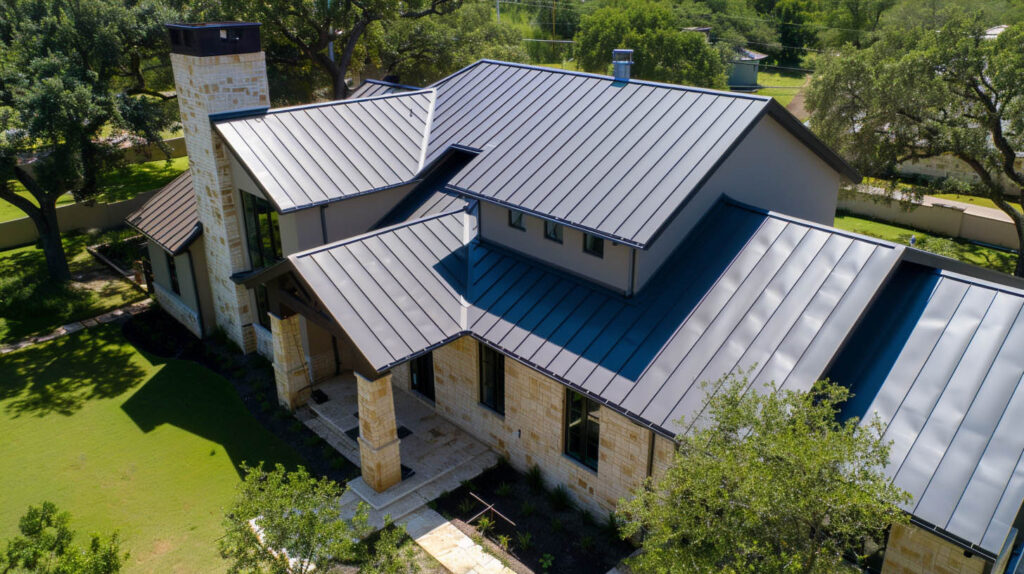
Standing seam is often the premium choice for coastal homes because it uses concealed fasteners and raised vertical seams. This design helps limit exposed penetration points and provides a sleek appearance. It is commonly selected for homeowners who want a durable, modern roof with strong weather resistance.
Aluminum Roofing
Aluminum is a strong candidate for salt-air environments because it does not red-rust like steel. It still requires proper coatings, compatible fasteners, and careful installation, but it is often considered for properties closer to saltwater exposure. The tradeoff is cost and dent resistance, which should be discussed during material selection.
Painted Steel and Galvalume Systems
Painted steel and Galvalume-coated steel can be practical for many Tampa Bay properties, especially when the home is not directly oceanfront and the finish is designed for exterior roofing exposure. The coating quality, panel thickness, edge treatment, and warranty terms should be reviewed closely. Coastal warranty exclusions may apply depending on distance from saltwater, so property owners should never assume all warranties are the same.
Metal Shingles and Stone-Coated Metal
For homeowners who want the benefits of metal but prefer a more traditional appearance, metal shingles or stone-coated metal may be worth considering. These systems can mimic the look of shingles, shake, or tile while offering metal’s durability advantages. Details around hips, ridges, valleys, and penetrations are especially important.
How We Recommend Choosing a Coastal Metal Roof
The right choice starts with location. A property in inland Tampa does not have the same exposure as a waterfront property in Clearwater, St. Petersburg, Tarpon Springs, or Sarasota. Distance from saltwater, wind exposure, roof height, tree coverage, drainage, and surrounding buildings all affect the best material.
Next, we review the roof design. Low-slope sections, complex valleys, skylights, chimneys, solar plans, HVAC curbs, and multiple penetrations may influence whether metal is the best solution or whether another roofing system should be considered. A coastal metal roof should never be sold as a one-size-fits-all upgrade.
Finally, we compare the full system: underlayment, flashing, fasteners, coatings, ventilation, edge metal, and warranties. Steadfast Roofing uses this complete-system approach because the roof’s weakest detail usually determines how soon a property owner has problems.
Maintenance Checklist for Coastal Metal Roofing
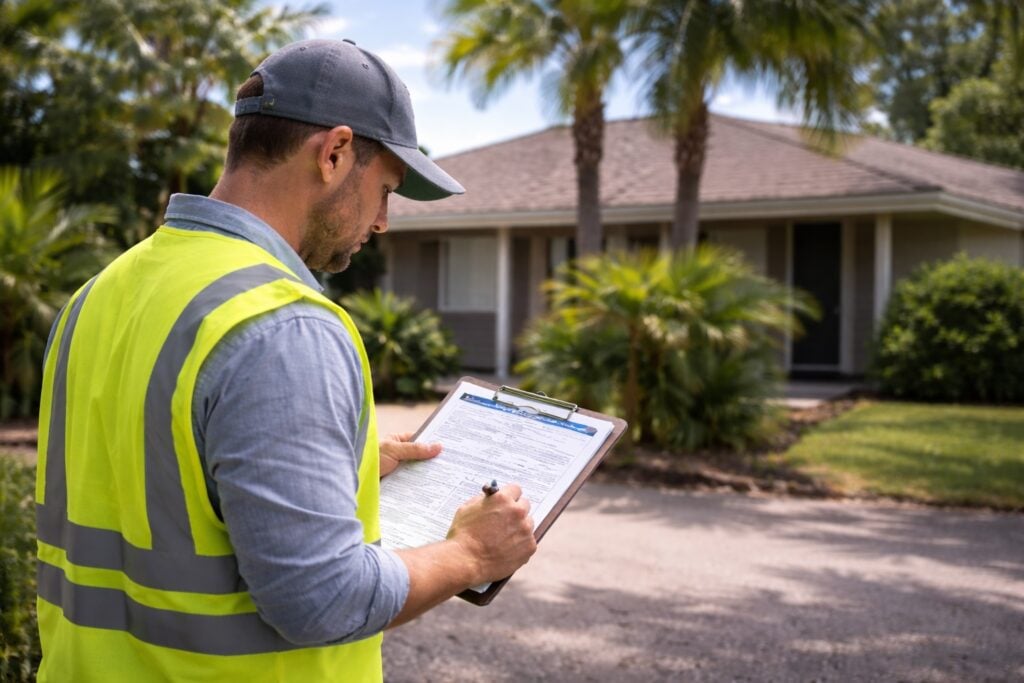
A coastal metal roof should be checked at least once a year and after major storms. During an inspection, we look for loose or backed-out fasteners, damaged sealant, scratched panels, rust staining, clogged valleys, debris under roof edges, cracked pipe boots, compromised flashing, gutter overflow, and signs of movement at seams or trim.
Property owners should avoid harsh chemicals, abrasive cleaning tools, and pressure washing methods that could damage the coating. Soft washing or manufacturer-approved cleaning is safer for most painted metal systems. If a branch scratches the finish or a contractor damages a panel during unrelated work, the affected area should be evaluated quickly to prevent corrosion from starting at the exposed point.
When Metal Roofing Is the Right Choice
Metal roofing is often a strong choice if you want long-term durability, improved energy performance, strong weather resistance, and a clean appearance. It is especially attractive when the roof has good slope, manageable penetrations, and enough budget for quality materials and skilled installation.
For homeowners comparing Tampa metal roofing with shingles or tile, the best next step is a roof assessment. We can review the existing roof, explain whether metal fits the home, and identify any structural, ventilation, or drainage concerns before the project begins.
When Another Roofing Option May Be Better
Metal is not always the best answer. Asphalt shingles may make more sense for budget-sensitive projects, rentals, or homes where the owner does not plan to stay long term. Tile may be preferred for certain architectural styles, while flat or low-slope commercial sections may require membrane roofing instead of metal panels.
Steadfast Roofing helps property owners compare options honestly because the best roof is the one that fits the building, exposure, budget, and long-term maintenance plan.
Conclusion
Metal roofing can be an excellent choice for coastal climates when it is selected and installed with salt air, humidity, wind, heat, and maintenance in mind. Its biggest advantages are durability, weather resistance, energy efficiency, strong curb appeal, and long-term value for both residential and commercial properties. Its biggest drawbacks are higher upfront cost, possible salt-air corrosion if the wrong materials are used, exposed-fastener maintenance, installation sensitivity, and the need for periodic coastal inspections.
For coastal Florida properties, the decision should come down to exposure, material compatibility, coating quality, fastener selection, roof design, and workmanship. A well-planned metal roof can perform beautifully near the coast. A poorly specified one can develop avoidable problems long before it should. Schedule a complimentary roof inspection to compare your options and choose a roofing system built for your property’s real conditions.
FAQ
Is metal roofing good for homes near saltwater?
Yes, metal roofing can be a strong option near saltwater, but the system must be designed for coastal exposure. The panel material, coating, fasteners, clips, flashing, and sealants all need corrosion-resistant specifications. Homes very close to the Gulf, Tampa Bay, canals, or the Intracoastal may benefit from aluminum, premium coated panels, stainless components, and more frequent rinsing or inspections.
What is the biggest problem with metal roofs in coastal climates?
The biggest problem is usually corrosion at vulnerable details, not failure of the main panel. Fasteners, washers, cut edges, scratches, flashing, clips, gutters, and dissimilar metal contact points can deteriorate faster when exposed to salt deposits and moisture. Proper material selection and routine maintenance reduce this risk significantly.
How often should a coastal metal roof be inspected?
Most coastal metal roofs should be inspected at least once per year and after severe storms. Properties close to open water, heavy tree cover, or frequent salt spray may need more frequent checks. Inspections should focus on fasteners, seams, flashing, sealants, coating damage, debris buildup, drainage, and early signs of corrosion.