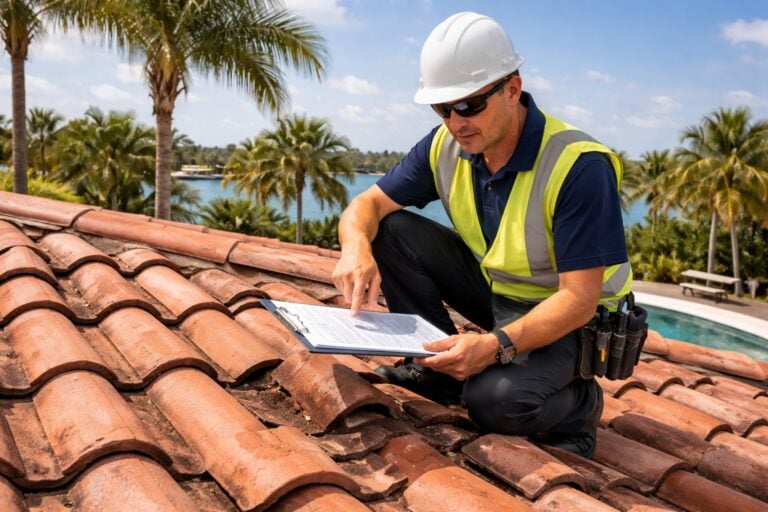
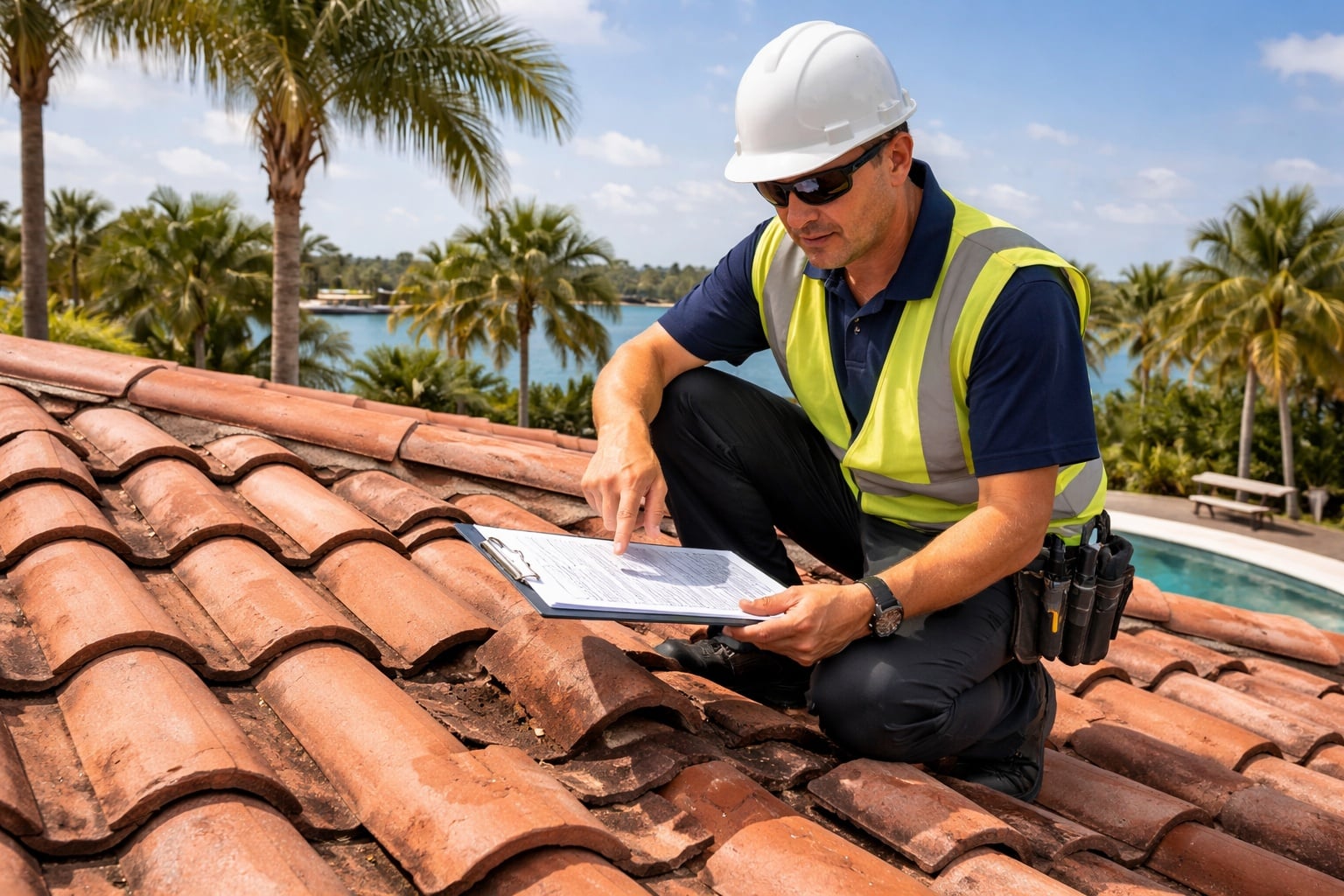
For Florida homeowners, a roof inspection is the cheapest way to avoid the expensive surprise. With Steadfast Roofing, the goal is simple: confirm what’s actually happening up there (wind wear, hidden leaks, failing flashing), document it cleanly, and leave with a clear next step, not a vague “maybe.”
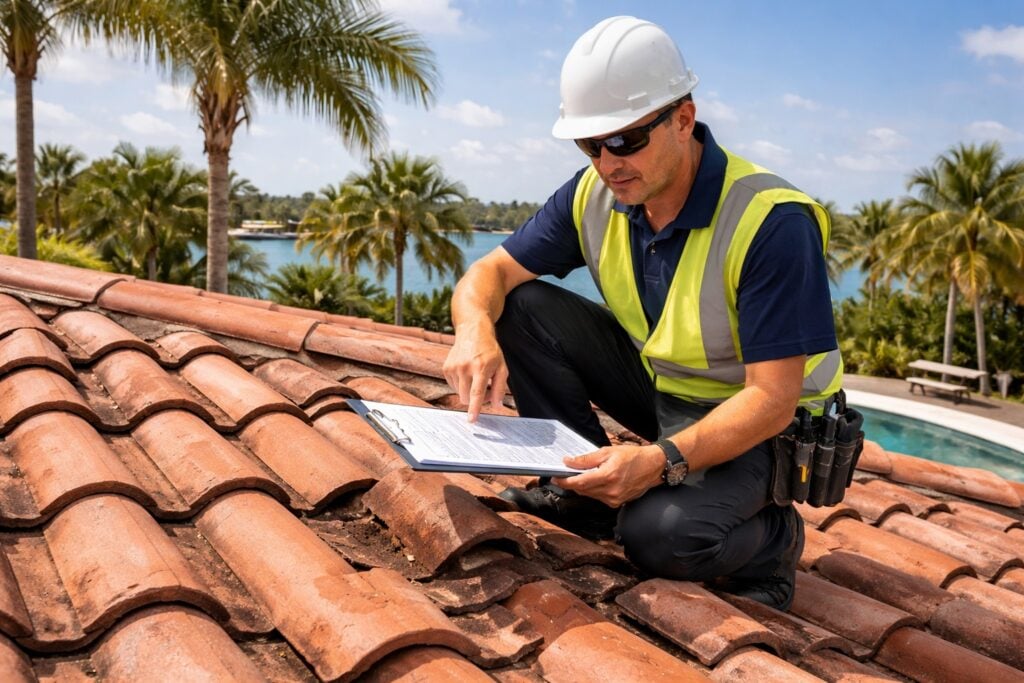
How Much Does a Roof Inspection Cost in Florida?
Most standard roof inspections fall in the $120 to $400 range, with the final price determined by roof size, height, access, and complexity.
That said, Florida is its own animal. Steep two-story roofs, tile systems, coastal corrosion, and storm documentation can nudge pricing higher because the inspection takes longer, requires more safety setup, and often involves more photos and reporting.
Typical Roof Inspection Price Ranges (Florida-Friendly)
- Basic visual inspection (single-story, walkable): ~$120–$200
- Standard inspection (most homes): ~$200–$400
- Leak investigation (more time + tracing): often falls in the same band, but can include an added service/trip fee depending on the company
- Storm/insurance-style documentation (more photos + detail): typically longer and can cost more due to scope and reporting time
When a Roof Inspection Is Free (And When It’s Not)
Many contractors waive the inspection fee when the inspection is included in a roof replacement estimate, since the project is attached. For repairs and leak tracking, some companies charge a service fee because the inspection is more investigative and time-heavy.
If someone says “free inspection,” the smart move is to ask one question: “What exactly is included in the inspection deliverable?” Free can be fine. Free can also be a guy eyeballing your roof from the driveway while texting.
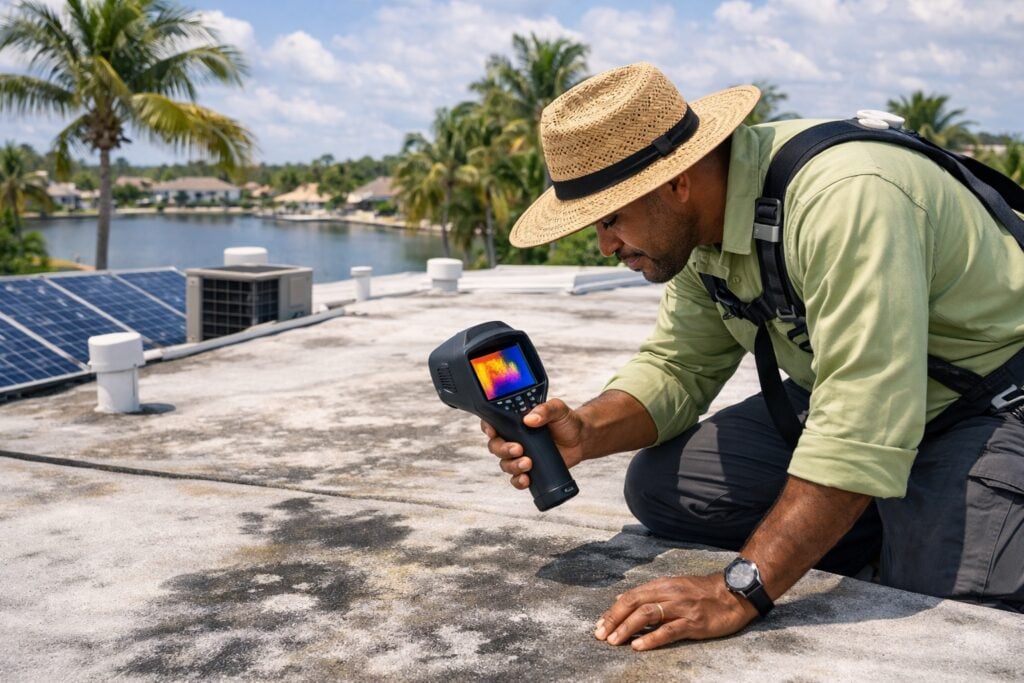
What Makes Roof Inspection Costs Go Up?
Roof inspections aren’t priced by vibes. They’re priced by the things that slow an inspector down or increase risk.
Common cost drivers:
- Height: two-story and three-story homes add safety planning and slower movement
- Pitch: steep roofs take longer and may limit walkable areas
- Complexity: multiple facets, dormers, valleys, transitions, and tight penetrations
- Material type: tile, metal, and flat/low-slope systems require different checks
- Access issues: landscaping, tight lots, limited ladder placement, blocked attic access
- Reason for inspection: maintenance vs leak tracing vs storm documentation
How Long Does a Roof Inspection Take?
A real inspection usually takes 1–2 hours, with the same drivers as the cost (size, complexity, access, and reason). Storm-related inspections often run longer because the inspector is documenting more detail and evidence.
If someone’s “done” in 10 minutes on a complex Florida roof, congratulations: you purchased a guess.
Does the Roofer Need to Come Inside the House?
Sometimes, yes.
- Leak repair inspections: often can be done outside if the entry point is obvious, but tricky leaks may require seeing interior stains and tracing them back to the source.
- Replacement estimates (done right): inside access matters for checking attic ventilation and looking at the underside of the roof decking for rot or deterioration.
In Florida, attic conditions are a big deal because heat load, ventilation performance, and moisture patterns can accelerate shingle aging and create condensation issues that appear as “mystery leaks.”
What Gets Inspected During a Proper Roof Inspection?
A legitimate inspection covers more than “shingles look old.”
Expect the inspection to include checks like:
- Attic ventilation system (intake/exhaust balance)
- Soffit and fascia condition
- Interior water staining and visible leak indicators
- Roof layers (how many systems are stacked)
- Roof decking condition (including rot indicators)
- Flashing at walls, chimneys, and transitions
- Drip edge and perimeter detailing
- Roof penetrations (pipes, skylights, mounts) and their flashings
- Gutters and downspouts for drainage performance
- Overall field condition of the roof covering (shingles, tile, metal, etc.)
If the inspection is for replacement pricing, there’s usually added measuring and documentation (pitch, valleys, chimney base, penetrations, and more) because those details directly impact scope and materials.
Florida-Specific: What a Roof Inspection Should Focus On
Florida roofs fail differently from roofs in mild climates. A strong Florida inspection pays extra attention to:
- Wind-related issues: lifted shingle corners, creased shingles, loosened ridge/hip caps, displaced tiles
- Fastener and metal corrosion: especially near the coast or where salt air travels inland
- Sealant breakdown: UV exposure cooks sealants faster than most homeowners expect
- Flashing fatigue: the “small metal pieces” that cause big leaks when they fail
- Drainage and ponding (flat/low-slope): clogged drains and poor slope create slow leaks that spread
- Pre-season readiness: many Florida homeowners schedule inspections before hurricane season to catch weak points early
Insurance and Real Estate: Inspections Florida Homeowners Actually Run Into
Florida is heavy on underwriting and documentation compared to many states.
Common scenarios:
- Four-point inspections: Citizens notes four-point inspections are required for many properties (often older homes), and the roof is one of the major systems evaluated.
- Roof inspection forms: Citizens has updated roof and four-point forms (including a 2025 roof inspection form update), which matter if an insurer is asking for specific documentation.
- Home purchase negotiations: buyers use roof condition to negotiate repairs, credits, or replacement timing
- Post-storm documentation: photos and clean notes matter when you need a clear paper trail
A roof inspection for insurance should be treated like documentation, not a casual opinion. The deliverable matters.

What You Should Receive After the Inspection
A homeowner-friendly roof inspection should end with something you can actually use:
- A short written summary of the roof condition and priority issues
- Photos of concerns (not just the “worst spot,” but representative areas)
- Clear categorization: monitor vs repair soon vs urgent
- If applicable: notes on ventilation, decking concerns, flashing failures, and penetrations
- If a leak exists: likely entry points, how the water travels, and what’s needed to stop it
If all you get is “yep, needs a new roof” with no specifics, that’s not an inspection. That’s a sales opener.
How Often Should Florida Residents Get a Roof Inspection?
A practical Florida schedule looks like this:
- Once per year (ideal timing is before hurricane season)
- After major storms (wind events, tornado warnings, hail, tropical systems)
- Before buying or selling a home
- When you see warning signs like water stains, granules in gutters, curling shingles, or loose flashing
Red Flags That Say “Skip This Inspector”
- No attic check offered (when attic access exists, and the inspection is for replacement/roof health)
- No photos, no written notes, no deliverables
- “Inspection” takes 10 minutes on a complicated roof
- They won’t explain what they inspected (vents, flashing, penetrations, drip edge, valleys)
- Pressure tactics immediately, without evidence
Roof Inspection Cost vs. Roof Repair Cost: The Real Math
A $200–$400 inspection hurts way less than:
- a soaked ceiling and insulation replacement
- mold remediation
- decking rot that spreads
- a “tiny leak” that turns into interior damage across multiple rooms
In Florida, water doesn’t politely stay in one spot. It travels, stains, and quietly rots everything.
CONCLUSION
In Florida, a roof inspection typically costs $120 to $400, and it’s worth it when it includes real documentation, attic and ventilation evaluation when relevant, and clear findings you can act on. The best inspection is the one that catches the problem while it’s still cheap.
Read our blog: “CertainTeed Landmark vs Owens Corning Duration Shingles in Riverview, FL: A Detailed, Real-World Comparison”.