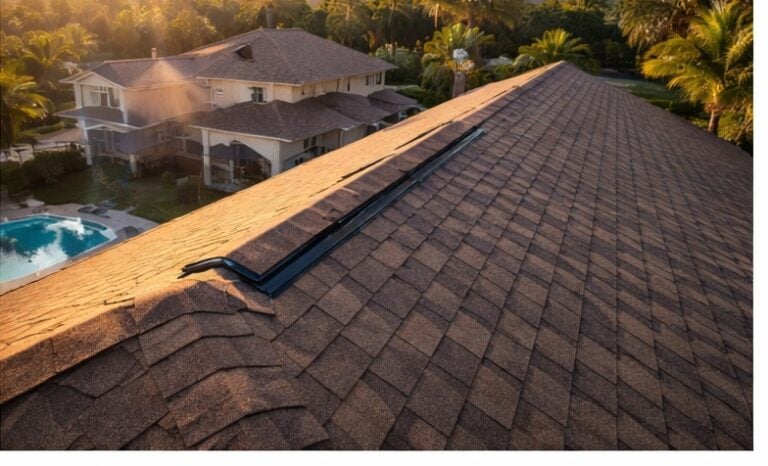
In Florida, proper attic ventilation is not optional. It is part of how a roof system handles heat, moisture, and long-term wear. At Steadfast Roofing, ridge vent conversations usually start after a homeowner hears the term during a roof estimate and realizes nobody ever explained what it actually does.
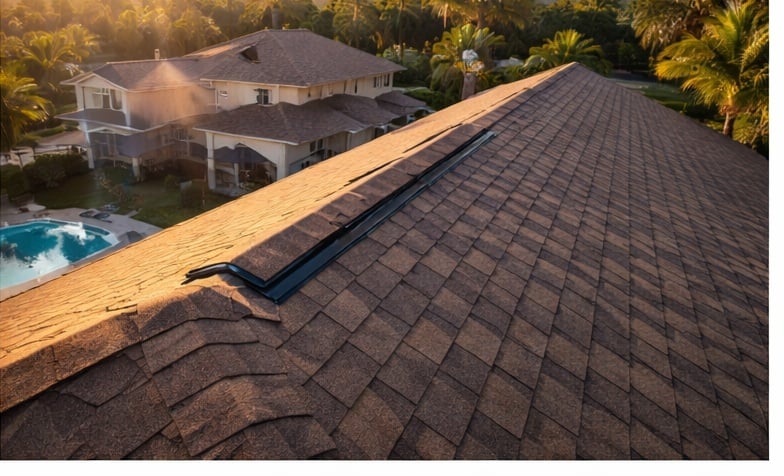
What Is a Roof Ridge Vent?
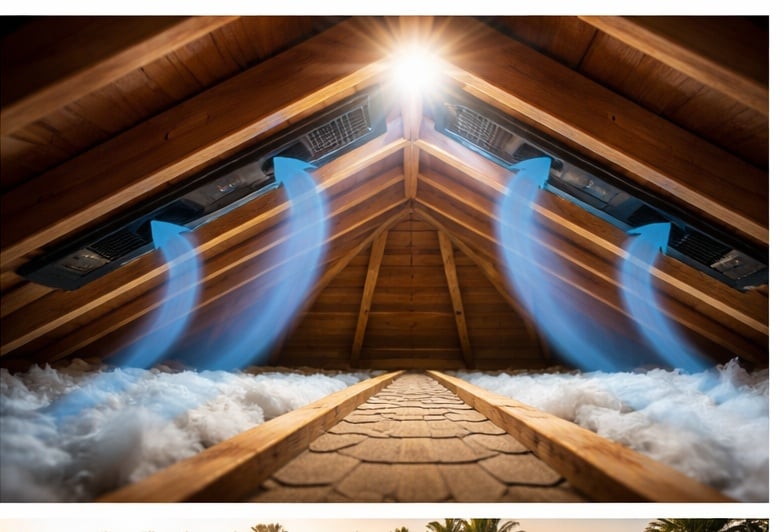
A roof ridge vent is a continuous exhaust vent installed along the highest point of a sloped roof where two roof planes meet. Instead of using bulky roof penetrations that sit visibly on the surface, a ridge vent runs along the peak and allows hot, moisture-laden attic air to escape through the top of the home. Ridge vents are commonly paired with intake ventilation at the soffits so fresh air can enter low and exhaust high, creating balanced airflow through the attic. That general intake-and-exhaust concept is the core of effective attic ventilation, and it is the reason ridge vents remain one of the most widely used ventilation options on residential shingle roofs.
How a Ridge Vent Works on a Florida Roof
A ridge vent works by letting rising heat escape from the attic at the roof’s highest point. In a properly designed system, outside air enters through soffit vents near the eaves, moves upward through the attic space, and exits through the ridge vent. That movement helps reduce trapped attic heat and provides a path for moisture to escape, rather than allowing it to linger against decking, framing, and insulation. ENERGY STAR specifically notes that airflow depends on keeping soffit vents clear and maintaining a channel for air to move from the eaves toward the ridge or gable vent, which is why blocked intake is one of the most common ventilation failures.
For Florida homeowners, that matters more than many people realize. Florida homes regularly deal with long cooling seasons, high humidity, afternoon storm cycles, and intense solar exposure. The attic becomes the battleground for it all. When hot air and moisture are trapped inside that space, the roofing system and the home beneath it have to work harder. Ventilation does not magically solve every comfort or efficiency issue, but a properly balanced ridge-and-soffit setup gives the attic a much better chance of staying functional under Florida conditions.
Why Roof Ridge Vents Matter in Florida’s Heat and Humidity
Florida is not the same roofing environment as Tennessee, Ohio, or North Carolina. What works in a milder or colder climate may not translate cleanly here. Florida homes are exposed to brutal sun, warm overnight temperatures, high ambient humidity, salty air in coastal markets, and frequent wind-driven rain. That combination puts extra pressure on attic ventilation design.
Research published by the Florida Solar Energy Center indicates that most Florida homes use vented attics with insulation at the ceiling plane, and those attics are typically vented with soffit vents and ridge or off-ridge vents. The same report found that simply sealing attic vents in a vented-attic configuration increased cooling energy use in the test home. That is a pretty good clue that, in Florida, ventilation decisions are not just cosmetic details tacked onto a roofing quote. They affect how the whole roof-and-attic system performs.
For a Florida homeowner, the value of a ridge vent usually comes down to five practical outcomes:
A continuous ridge vent helps release heat that accumulates under the roof deck on long, sunny days. It helps exhaust moisture that enters the attic through normal air leakage and humidity loads. It supports balanced airflow when matched with adequate soffit intake. It gives a low-profile finished look compared with many visible vent alternatives. And it can reduce the chance that one poorly located vent becomes a weak point on the roof.
Ridge Vent vs Box Vent: Which Is Better for Florida Homes?
Many Florida roofs still have box vents, turtle vents, off-ridge vents, power fans, or mixed ventilation systems installed over time. Some homes even have a patchwork setup that looks like the roof has been modified by three contractors, two storms, and one guy who definitely said, “Eh, close enough.”
A ridge vent is often the better option when the roof design allows it, as it exhausts air continuously across the ridge rather than relying on a few isolated exhaust openings. That broader exhaust path can produce more uniform ventilation across the attic. It is also visually cleaner because it sits low and blends into the ridge line under the cap shingles. The Bill Ragan article highlights that low-profile appearance is one reason ridge vents are so popular, and that remains true in Florida, where homeowners usually prefer a clean roofline over multiple exposed vent boxes.
That said, “better” is never automatic. A ridge vent is only a strong option if the roof has sufficient ridge length, the attic can be ventilated as a single system, and the intake ventilation is adequate. If the soffit intake is missing, blocked, or undersized, adding ridge vent exhaust alone can underperform. More exhaust does not fix a starved intake system. It just creates a fancier version of the same problem.
The Most Common Ridge Vent Mistake: No Balanced Intake
The biggest mistake in residential roof ventilation is treating the ridge vent like a standalone upgrade. It is not. A ridge vent is the exhaust side of a system. Without adequate intake at the soffits, the vent has little fresh air to draw from. That means airflow is restricted, attic performance suffers, and homeowners are left thinking ridge vents are overrated, when the real issue is an incomplete design.
ENERGY STAR warns that soffit vents must remain open and unobstructed, and that rafter vents or insulation baffles are often needed to prevent insulation from choking off airflow at the eaves. That detail is easy to ignore during roofing work, attic insulation upgrades, or older home retrofits, but it is one of the most important pieces of the puzzle.
For Florida homes, balanced ventilation is important because the attic must handle both heat gain and moisture load. If the intake side is weak, humid air and radiant heat can linger longer than they should. If the exhaust side is weak, rising hot air has nowhere efficient to go. A ridge vent works best when intake and exhaust are designed together, not guessed at.
Do Florida Building Codes and Ventilation Ratios Matter?
Yes. A lot.
Roof ventilation is not supposed to be based on vibes, guesses, or “that’s how we always do it.” Standard code guidance for vented attic spaces uses minimum net free ventilation area ratios, with the familiar baseline of 1/150 of the attic area and a possible reduction to 1/300 when certain conditions for balanced vent placement are met. Industry summaries of IRC Section R806 explain that the system must be designed around net free area, not just the number of vents you see from the ground.
That distinction matters because homeowners are often told they have “plenty of vents” when, in fact, they have an unbalanced mix with insufficient net free intake or exhaust. Ventilation should be calculated. The attic area should be measured. The vent products should be matched to their actual net free area ratings. And the system should be laid out so the airflow path makes sense for the roof design.
Are Ridge Vents Good for Every Florida Roof?
No. They are excellent for many homes, but not all.
A ridge vent tends to be a strong fit on homes with enough continuous ridge length, conventional attic layouts, and proper soffit intake. It is especially common on asphalt shingle roofing systems because it integrates cleanly with ridge cap shingles and provides continuous exhaust without adding a row of exposed rooftop penetrations.
A ridge vent may be a poor fit or require more design review when:
- The roof has a very limited ridge length
- The attic is chopped up into disconnected compartments
- The home lacks usable soffit intake
- The roof design includes hips, valleys, or transitions that complicate airflow
- A prior ventilation system was installed in a mixed or conflicting layout
- The home is in a high-wind area, and the selected vent product is not appropriate for the roof system or local requirements
Florida homeowners should also understand that not all ridge vents are equal. Product design matters. Some ridge vents include external baffles that improve airflow and help block weather intrusion. The Bill Ragan article distinguishes between baffled and non-baffled ridge vents and recommends the baffled version for better function and filtering. That is a useful distinction, especially in a state where wind-driven rain is hardly rare.
What Is a Baffled Ridge Vent and Why Does It Matter?
A baffled ridge vent includes a raised external profile or channel designed to improve air movement over the vent opening and help resist wind-driven debris and water intrusion. In simple terms, the baffle helps the vent perform more like a purpose-built airflow component instead of just a slot under cap shingles.
That matters in Florida because the roof is regularly exposed to gusty storms, tropical weather, and heavy rain events. A ridge vent should not only exhaust attic air effectively, it should also be designed to hold up under ugly weather. A quality baffled product installed to manufacturer specifications is usually the smarter play than a cheaper, lower-performance alternative.
How a Ridge Vent Is Installed During a Roof Replacement
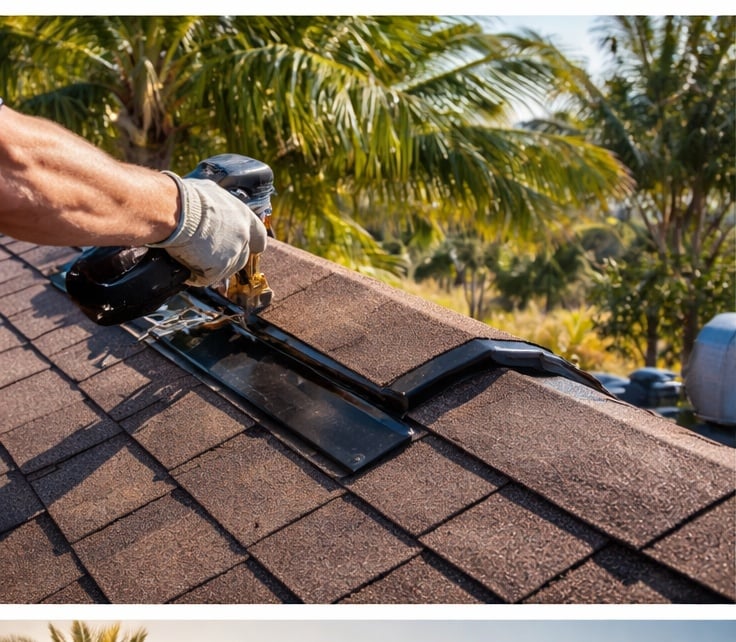
On a shingle roof replacement, ridge vent installation usually happens after the old roofing material is removed and the roof deck is exposed. A slot is cut along the decking ridge, leaving the structure intact while creating the exhaust opening. The ridge vent material is then installed over that slot, fastened according to the manufacturer’s instructions, and covered with ridge cap shingles as the final finish. That general sequence is consistent with how the competitor article explains installation and with standard roofing practice.
What matters most is not just the sequence but the execution. The slot width has to match the product requirements. The vent must be compatible with the roofing system. Nails must be the correct type and length. Ridge cap installation has to be clean and secure. Existing ventilation conflicts, such as leftover box vents, must be addressed rather than ignored. And the contractor should verify that the attic can actually support ridge vent performance before making the switch.
Can You Add a Ridge Vent to an Existing Florida Roof?
Sometimes yes, sometimes no.
A ridge vent can often be added during a full roof replacement because the roof is already opened up, the ridge can be cut correctly, and the ventilation system can be redesigned at the same time. Retrofitting a ridge vent onto an older roof without replacing shingles is more complicated and not always a smart move. The condition of the existing roofing, the ridge cap details, the attic layout, and the soffit intake all need to be reviewed first.
If a homeowner is replacing a roof in Florida and the contractor brings up ridge ventilation, that is the right time to ask the hard questions:
- How much intake do we have now?
- Will soffits need to be opened or corrected?
- Are there existing box vents that should be removed and patched?
- Does this roof have enough ridge length to justify the change?
- What net free area are we targeting?
- Which vent product are we using, and why?
That is the conversation that separates an actual ventilation plan from a sales line.
Signs Your Florida Home May Need Better Ridge and Attic Ventilation
Florida homeowners often do not realize they have a ventilation issue until a few symptoms start stacking up. A ventilation problem can manifest as excessive attic heat, uneven indoor temperatures, lingering humidity, mildew odors near the ceiling line, premature roof aging, or dirty, compressed insulation near the eaves due to blocked or poorly managed airflow.
Other warning signs include:
- Multiple exhaust vent types are mixed together on one roof
- Old box vents with no visible intake strategy
- Soffit vents painted shut or blocked by insulation
- Noticeable heat buildup in rooms under the attic
- A new roof quote that never mentions ventilation at all
A roof replacement is one of the best times to address these issues, as the contractor already has access to the system. Leaving attic ventilation unaddressed during a reroof is a little like getting a new engine and reusing a cracked radiator. It might run for a while, but nobody should act shocked when the phone rings later.
Does a Ridge Vent Lower Energy Bills?
Sometimes, but this question gets butchered all the time.
A ridge vent is not a magic money machine. It is one component of a larger attic and building system that includes insulation, air sealing, duct location, roof color, radiant heat gain, and HVAC performance. A ridge vent can improve the way attic air is exhausted when the full intake-and-exhaust system is balanced and functioning properly.
That matters in Florida because research from the Florida Solar Energy Center found that sealing attic vents in a vented-attic configuration increased cooling energy use in the tested home. That does not mean every ridge vent installation delivers dramatic utility savings, but it does reinforce the point that ventilation matters and that vented attics remain the standard approach in many Florida homes.
A homeowner expecting a ridge vent alone to fix comfort problems caused by leaky ducts, poor insulation, blocked soffits, and air leakage from the house into the attic is setting the roof up to take blame for issues it did not create.
How Much Does a Ridge Vent Cost in Florida?
Ridge vent cost depends on the total linear feet of ridge, the type of vent product, whether ridge cap shingles are included, local labor rates, roof accessibility, slope, and whether the ventilation redesign also requires intake improvements or repairs to existing venting. The competitor article notes that ridge vents are typically priced by linear foot rather than by square foot. That pricing structure holds true conceptually even though actual Florida pricing can differ by market, roof complexity, and wind-zone requirements.
For Florida homeowners, the more useful question is not “What does ridge vent cost per foot?” but “What will it take to build a balanced, code-conscious ventilation system on this roof?” Sometimes the ridge vent itself is not the expensive part. The real cost comes from correcting the intake side, removing conflicting vents, and doing the job like it should have been done the first time.
Ridge Vent Questions Florida Homeowners Should Ask Before Signing a Contract
A good roof estimate should answer more than shingle color and total price. If ventilation is part of the project, homeowners should ask:
- What ventilation system is on the roof now?
- Is it balanced or mixed?
- How much net free intake and exhaust do we currently have?
- Will you verify the soffit intake before recommending the ridge vent?
- What ridge vent product are you specifying?
- Is it baffled?
- Will old box vents or other exhaust vents be removed?
- Will the attic remain properly ventilated in all sections of the roof?
- How does this plan fit Florida conditions and local code requirements?
If those questions are met with blank stares, subject changes, or contractor poetry, keep digging.
Best Practices for Ridge Vent Performance in Florida
The best ridge vent setups in Florida usually follow the same common-sense principles:
- A continuous ridge vent is paired with sufficient soffit intake.
- The attic airflow path is kept open with baffles where needed.
- Conflicting exhaust vents are removed rather than left in place.
- The vent product is chosen for performance, weather resistance, and compatibility with the roofing system.
- The installation follows the manufacturer’s instructions exactly.
- The design is based on net free area calculations, not guesswork.
- The roof is reviewed as a whole system, not a pile of separate accessories.
That is the difference between “roof ventilation” as a checkbox and roof ventilation as an actual building-science decision.
Why Florida Homeowners Should Care Before Replacing the Roof
Most homeowners do not think about ridge vents until a reroof is already on the calendar. That is normal. But it is also why ventilation mistakes keep getting baked into otherwise expensive roofing projects. Once the roof is installed, homeowners assume everything up there was planned carefully. Sometimes it was. Sometimes it was just copied from whatever was there before.
Florida roofs take too much punishment for that kind of lazy thinking. If the home has a vented attic, the ventilation system deserves the same level of attention as the shingles, underlayment, flashing, and ridge cap. A ridge vent can be a smart, clean, high-performing solution, but only when the roof design, intake ventilation, and installation details all line up.
CONCLUSION
A roof ridge vent is one of the best ventilation options for many Florida homes because it offers continuous high-point exhaust, a clean finished appearance, and strong performance when paired with proper soffit intake. The key is not the ridge vent by itself. The key is balanced attic ventilation designed for Florida heat, humidity, and roof geometry. Homeowners replacing a roof should make sure the ventilation plan is calculated, not assumed, because the right ridge vent system can help the roof perform better, last longer, and avoid problems that start where most people never look: inside the attic.
Read our blog: “Florida Roof Insurance Claim Process for Storm Damage: A Complete Guide for Homeowners and Business Owners.”