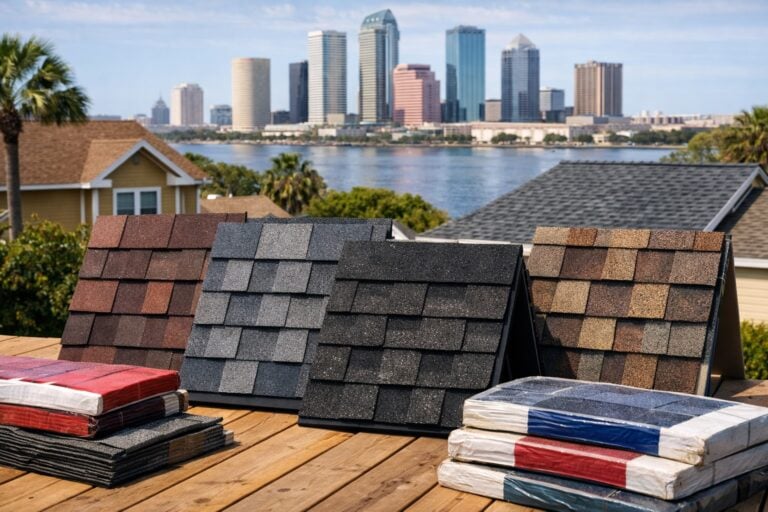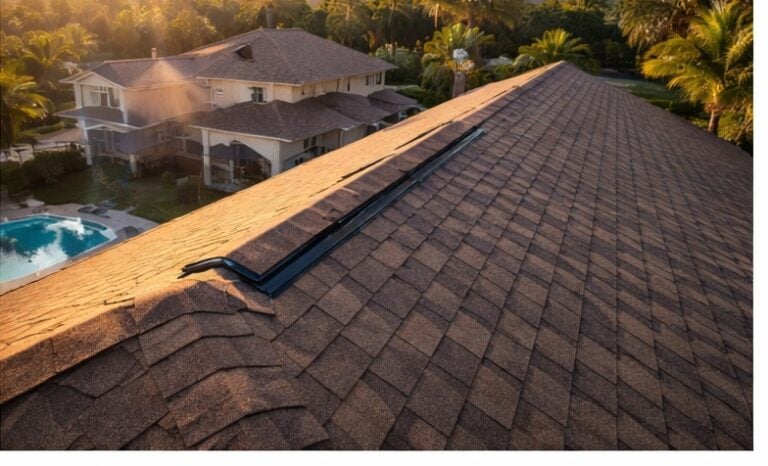
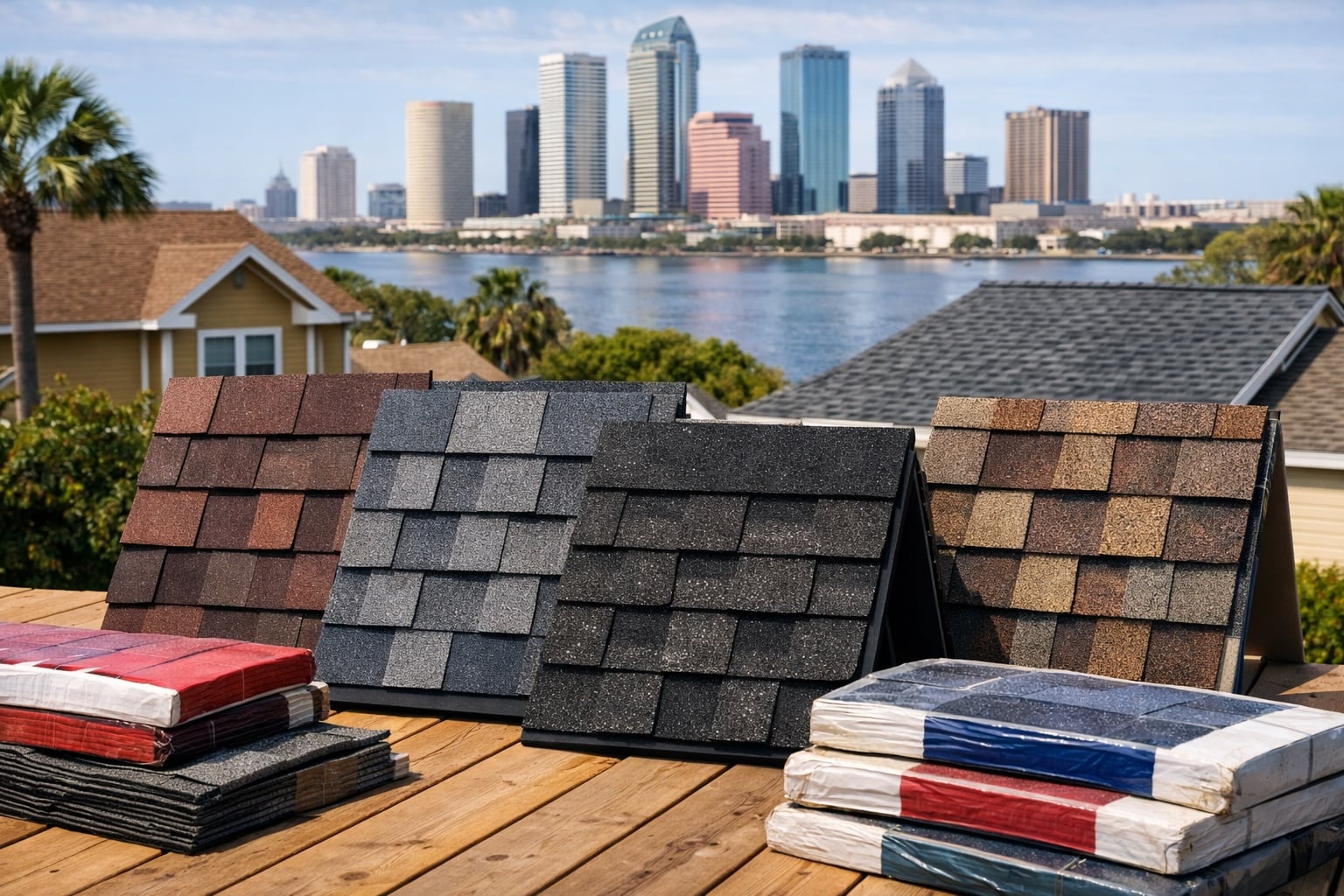
Tampa Bay roof replacements aren’t won by a logo on the wrapper. They’re won by the crew on your roof, the details under the shingles, and the paperwork that backs it up. Steadfast Roofing in Riverview, FL helps homeowners choose both, without guessing, so the storm doesn’t pick a winner.
The real answer: the contractor matters more, but only if the system is right
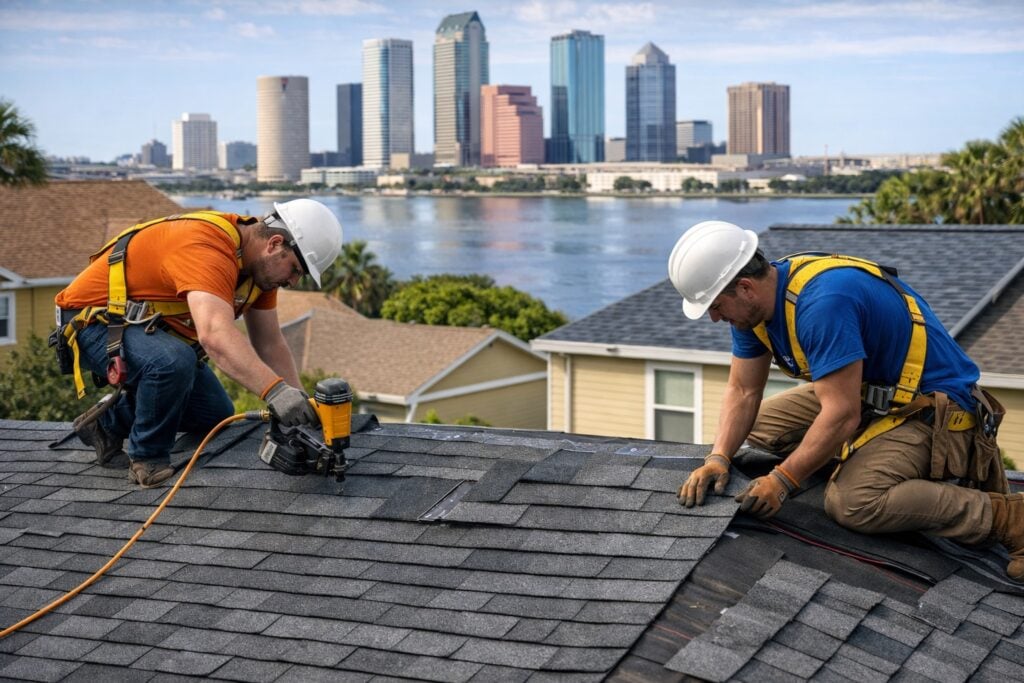
If the question is “Which one decides whether your roof performs?” the answer is the contractor. Installation is the one thing you can’t “upgrade later” without tearing things back off. A skilled Roofing Contractor can make all the difference.
But here’s the part people miss: the Roofing Contractor’s job is to build a roof system that matches Tampa Bay conditions. That means choosing a shingle line that fits the house, the ventilation, the slope, the neighborhood exposure (open water and coastal wind are a different animal), and the warranty goals.
So yes, contractor first. Then the shingle brand and product line were selected on purpose.
Why Tampa Bay roofs fail early (and it’s rarely the brand’s fault)
Choosing the right Roofing Contractor can ensure that your roof lasts longer and performs better.
Most premature shingle problems in Florida track back to a short list of avoidable mistakes:
- Wrong nailing pattern or sloppy fastening (high-wind regions magnify small errors fast).
- Bad starter strip and edge detailing (wind loves edges, corners, and rakes).
- Underlayment installed like it’s an afterthought (it’s not).
- Ventilation mismatches (bake the attic, cook the shingles, spike moisture issues).
- Flashing and penetrations are treated like “finish work” (that’s where leaks live).
- No real plan for code, product approval, and permit details (paperwork matters when the weather hits).
A top-tier shingle can’t out-muscle a careless install. That’s why “best shingles” is a weak plan by itself.
What a shingle brand actually changes: performance categories that matter in Florida
Shingle branding gets noisy because people compare names instead of specs. In Tampa Bay, shingle “quality” should be judged by categories, not marketing.
Key differences that can matter:
- Wind-resistance ratings and the test standards behind them (ASTM classifications are a practical way to compare uplift resistance).
- Algae resistance (Florida heat + humidity = streaks; manufacturers label this differently).
- Impact resistance options (handy if you’re dealing with hail pockets or insurance requirements).
- Accessory compatibility (starter, hip and ridge, underlayment, ventilation components).
- Material warranty structure (coverage types, exclusions, required components, transfer rules).
A reputable contractor will translate these into plain English and match them to your house, not just hand you a brochure.
Wind matters here, and shingles aren’t all “the same in a hurricane”
Florida’s wind design rules aren’t casual suggestions. The state building code ties into modern wind-load standards, and the direction of travel has been tighter, not looser.
On the shingle side, wind classifications (like ASTM D7158 classes) are a real differentiator when you’re comparing products built for higher uplift resistance.
That said, wind resistance is a system outcome:
- Correct deck prep
- Correct underlayment
- Correct starter/edge strategy
- Correct fastening and placement
- Correct sealing behavior (and enough time/conditions for shingles to seal)
The brand matters, but the contractor controls whether the roof is installed in a way that actually earns the performance you paid for.
Florida licensing isn’t optional, and it’s not a “nice-to-have”
In Florida, roofing is regulated. A legitimate contractor can explain their license type, pull permits properly, and handle inspections the way the state expects. The state’s licensing pathway and requirements are administered by DBPR/CILB, and you can verify status directly.
If someone gets weird about licensing, permits, or “we don’t need that,” that’s not a personality quirk. That’s a risk.
Manufacturer warranty vs workmanship warranty: the part homeowners mix up
Most homeowners hear “warranty” and think it’s one umbrella. It’s not.
Manufacturer (material) warranty generally covers defects in the shingle product, under specific conditions.
Workmanship warranties cover installation issues, which account for a large percentage of real-world problems.
If you’re comparing bids, ask this bluntly:
- What is the workmanship term, and what does it cover?
- Is it backed only by the company, or is there third-party backing?
- What maintenance or documentation is required to keep it valid?
A strong shingle warranty doesn’t make up for a weak installation. And a “lifetime” label doesn’t mean “lifetime on your roof under Florida abuse with no strings.”
“Certified” contractor programs: when they help, and when they’re just a badge
Manufacturer certification can matter because it can unlock upgraded warranty options and require certain training or installation standards. The key is whether the contractor can explain, in writing, what the certification changes for you.
A useful way to pressure-test it:
- What upgraded warranty options are available for my exact shingle line?
- What components are required for that warranty?
- What paperwork gets filed, and who files it?
- What inspections (if any) are part of it?
If the answer is fuzzy, you’re probably paying for vibes.
Why contractors recommend certain shingle brands (the honest list)
There are legitimate reasons, and there are lazy reasons.
Legit reasons:
- Proven performance in Florida heat, UV, and wind.
- Reliable supply and consistent batch quality.
- Better integration of accessories (starter, ridge cap, ventilation).
- Warranty options that match how the contractor builds roofs.
Lazy reasons:
- “It’s what we always use.”
- “My supplier had a deal.”
- “Brand X is premium because I said so.”
A professional recommendation sounds like: “Here are two or three options, here’s what changes between them, here’s what I’d put on my own house in Tampa Bay, and here’s why.”
Tampa Bay-specific decision factors most articles skip
A roof in Tampa Bay isn’t the same as a roof in a mild-climate state. These local factors should shape your decision:
- Salt air and coastal exposure: faster corrosion risk at fasteners, flashing edges, and metal components.
- Afternoon storm cycles: leak paths get tested repeatedly.
- Heat load: attic temps can get brutal, and ventilation balance matters.
- Insurance scrutiny: documentation, permits, and clean install details matter later, not just today.
- Tree canopy and debris: affects algae growth, granule wear, and maintenance needs.
This is why “pick a brand” is step two, not step one.
The contractor checklist that actually predicts a good roof
If a homeowner asked for one list that predicts outcomes, it’s this:
- License verification and permit plan (no dodging).
- Site-specific scope (not a generic estimate template).
- Decking strategy (how rotten wood is handled, how pricing is handled, how it’s documented).
- Underlayment plan (where peel-and-stick goes, where synthetic goes, how laps and penetrations are handled).
- Edge and starter detailing (drip edge, starter strip, rake edge approach).
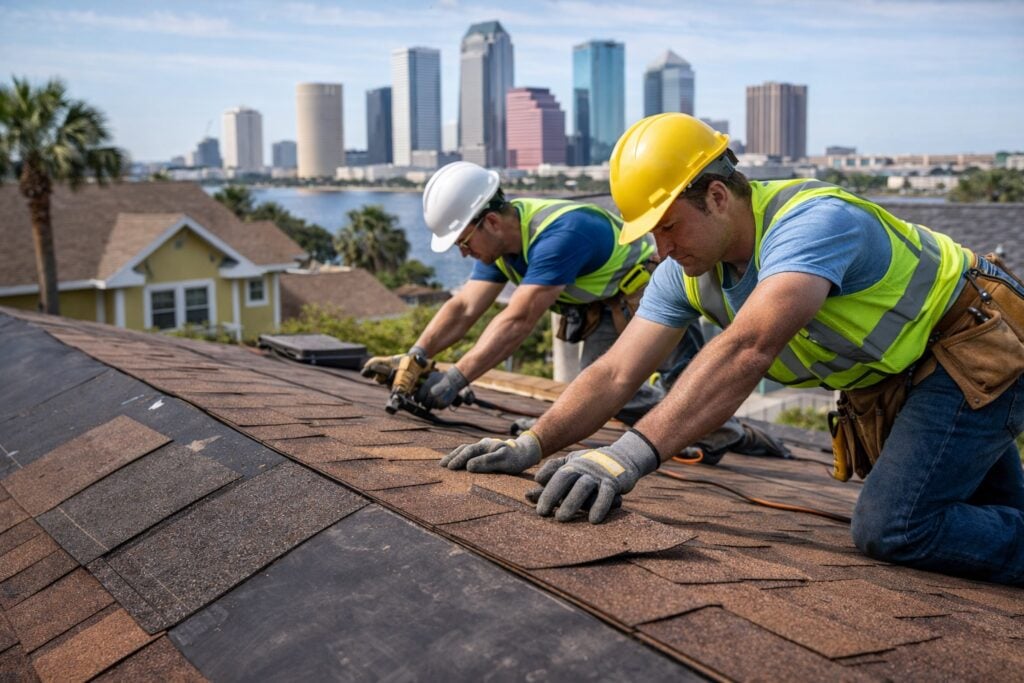
- Nailing method and quality control (pattern, placement, nail type, blow-through prevention).
- Flashing standards (step flashing, pipe boots, wall transitions, chimney details).
- Ventilation calculation (not guessing, not “you’ll be fine”).
- Cleanup and protection plan (landscaping, magnets, dump placement, daily site control).
- Clear warranty terms in writing (workmanship term, exclusions, transfer rules).
- Photos and documentation (before, during, after).
If a contractor can walk you through that smoothly, you’re in the right room.
Six nails, four nails, and the “details that decide blow-offs”
Florida roofing conversations always circle back to fastening because wind is unforgiving.
In many contexts and approvals, six fasteners per shingle is the baseline expectation, especially in higher-wind applications, and it must align with product approval and manufacturer instructions.
Even when a contractor says “the code minimum is X,” the smarter question is: what is required for the shingle system you’re actually installing on your specific home?
Translation: don’t argue nails like it’s a forum debate. Make sure the install matches the approval and the manufacturer’s spec for your wind exposure.
How to compare shingle brands without getting played
If you want to compare brands like a pro (without becoming a shingle nerd), compare these items side by side:
- Wind classification and published wind coverage
- Algae resistance term and conditions
- Impact rating options (if relevant)
- Accessory requirements for upgraded warranties
- Availability and color match consistency
- Real warranty limitations (what voids it, what documentation is required)
And then ask the contractor: “If I pick Brand A vs Brand B, what changes in your install plan?”
If the answer is “nothing,” then you’re mostly choosing aesthetics and paperwork, not performance.
The best way to decide: choose the contractor, then choose the shingle line that fits your goals
A clean decision path for Tampa Bay homeowners:
- Pick the contractor based on process, proof, and paperwork.
- Pick two acceptable shingle brands/lines that meet your wind, algae, and warranty goals.
- Let the contractor recommend the best fit for your home’s slope, ventilation, and exposure.
- Lock the scope in writing (including deck contingencies and warranty details).
- Document everything (permits, photos, approvals).
That’s how you get a roof that doesn’t just look good on install day, but still behaves when the weather decides to get loud.
CONCLUSION
In Tampa Bay, the roofing contractor is the bigger decision because installation quality determines whether any shingle brand performs as designed. The smartest move is to hire a proven, properly licensed contractor first, then select a shingle line based on wind resistance, algae protection, warranty structure, and your home’s real-world exposure.
Read our blog: “Roof Ridge Vent Guide for Florida Homes: How Ridge Vents Work, When They Help, and What Homeowners Need to Know.”