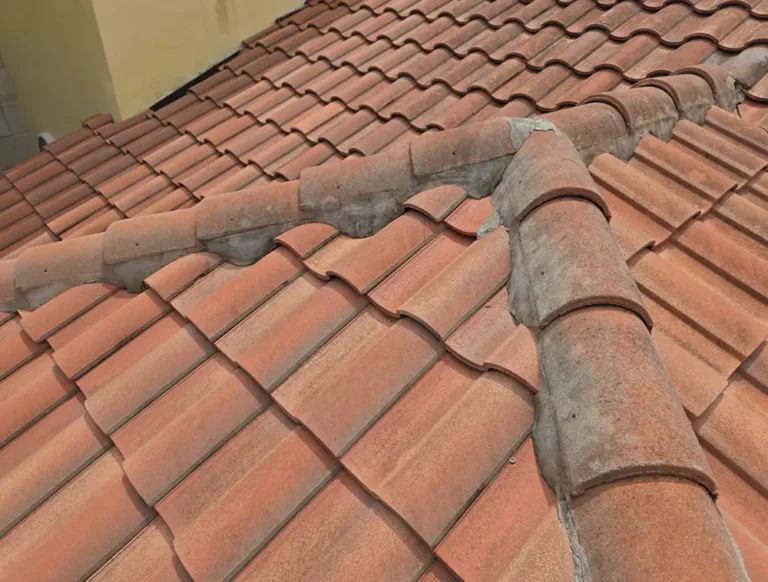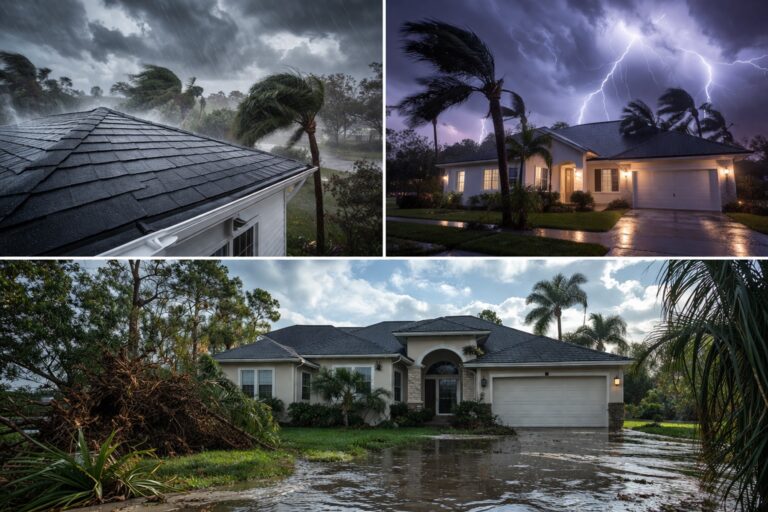

When severe weather strikes, roof damage can compromise the entire structure of your home. At Steadfast Roofing in Tampa, FL, we provide expert storm-damage assessments and long-lasting repair solutions designed to restore safety, structural strength, and peace of mind after even the most intense weather events.
Identifying Storm Damage: Early Warning Signs Every Homeowner Should Know
Surface Damage Visible From the Ground
Wind, hail, and wind-driven debris can cause a range of issues, including:
- Missing or lifted shingles exposing the underlayment
- Cracked, bruised, or dented shingles from hail strikes
- Granule loss piling in gutters or on the ground
- Damaged flashing around chimneys, skylights, valleys, or vents
- Warped or crooked gutters may signal a roof edge impact
These damages often worsen rapidly if left unaddressed.
Hidden Damage That Often Goes Unnoticed
Some storm-related issues occur beneath the visible surface, including:
- Moisture-soaked decking caused by small leaks
- Damp or mold-forming insulation from prolonged seepage
- Soft, spongy roof sections indicate weakened structural components
- Interior stains on ceilings or walls signal ongoing water intrusion.
These problems typically escalate and cause extensive repairs if ignored.
Immediate Post-Storm Steps to Protect Your Home
- Ensure safety first—avoid climbing onto the roof after a storm.
- Take photos and videos of visible damage from the ground.
- Remove loose debris around the property if it is safe to do so.
- Use temporary coverings, such as tarps, to stop active leaks until professional help arrives.
- Schedule a professional inspection promptly to uncover both visible and hidden issues.
Quick action reduces long-term costs and structural deterioration.
Common Types of Storm Damage and Their Impact
Wind Damage
High winds tear shingles from the roof, loosen flashing, and create openings where water can enter. Torn or lifted shingles typically require prompt repair to prevent internal leakage.
Hail Damage
Hail impact can bruise shingles, crack asphalt surfaces, punch holes in soft metal components, and knock protective granules loose. Even small hail can shorten roof lifespan significantly.
Water Intrusion and Leak Damage
Once water bypasses shingles or flashing, it travels through layers of roofing material, often spreading across large areas unseen. This causes:
- Rotted decking
- Mold growth
- Damaged insulation
- Ceiling stains and bubbling paint
Falling Debris
Storms frequently break tree limbs that puncture roof surfaces or damage gutters. Even small branches can crack shingles and create leak points.
Repair or Replace? How to Make the Right Decision
Repair Is Ideal When:
- Damage is limited to small areas of missing or torn shingles
- Underlayment and decking remain intact
- Flashing damage is localized
- The roof is relatively new and structurally sound
Replacement Is Recommended When:
- More than 20–25% of the roof surface is compromised
- Shingle granule wear is widespread
- Decking shows signs of saturation or rot
- The roof is nearing the end of its lifespan
- Impact damage affects multiple sections of the structure
A detailed inspection ensures you receive the correct solution the first time.
The Value of Professional Storm-Damage Inspections
Specialists use advanced techniques to identify and diagnose storm damage that is invisible from the ground. Professional inspections include:
- Drone imagery or elevated views
- Moisture detection tools
- Structural integrity assessments
- Photographic documentation for insurance claims
Accurate evaluations protect long-term safety and prevent repeated repair costs.
Navigating the Insurance Process After Storm Damage
- Document everything—photos, dates, and visible issues
- Contact your insurer promptly to meet reporting deadlines
- Provide professional inspection reports and repair estimates
- Maintain records of communications with adjusters
- Ensure repairs meet local building codes to avoid future complications
A well-documented claim streamlines approvals and prevents unnecessary delays.
Preventive Measures to Strengthen Your Roof Against Future Storms
- Schedule regular inspections, ideally before and after storm seasons
- Keep gutters clear to prevent water backups
- Trim overhanging branches and remove unstable trees
- Reinforce weak areas with improved flashing or impact-resistant materials
- Address minor issues early before severe weather exploits them
Proactive maintenance often saves homeowners thousands in potential storm-damage repairs.
CONCLUSION
Storm-damaged roofs require rapid evaluation, skilled repair, and preventive planning to ensure long-term home protection. Understanding the signs of damage, taking immediate action, and relying on qualified roofing professionals ensures your home remains safe, resilient, and structurally sound through future storms.
Take a moment to read one of our latest blogs: “How to Determine When to Replace Your Roof”.