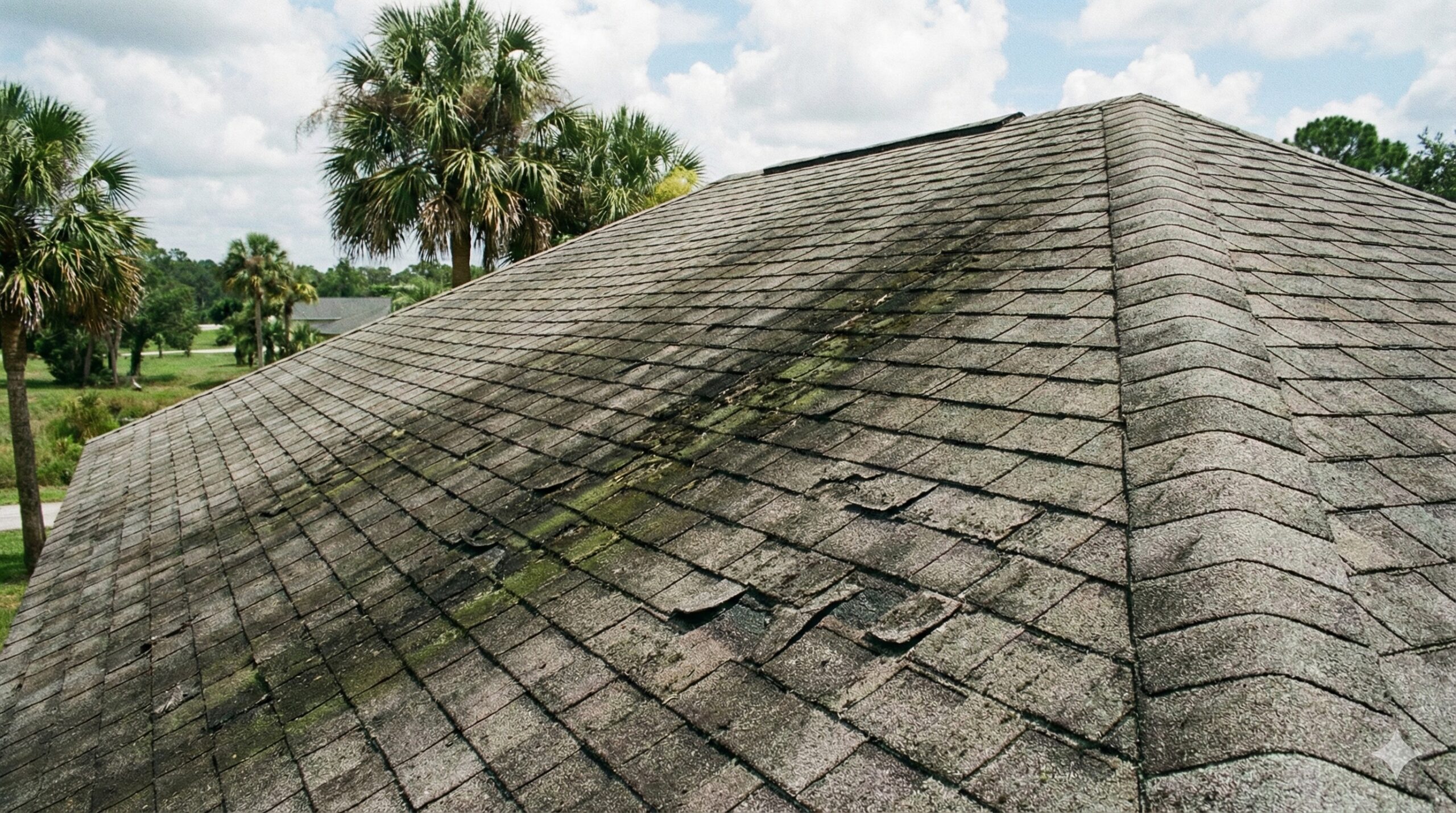
When you look up at your home, those unsightly dark patches and long vertical stains across your roof can be alarming. At Steadfast Roofing, our team in Riverview, FL, frequently helps homeowners address these issues, ensuring that your property maintains its structural integrity and aesthetic appeal through expert maintenance and high-quality roofing solutions. While many residents assume these marks are caused by soot, dirt, or mold, the reality is a specific biological growth that requires a specialized approach to resolve and prevent.
What Causes Black Streaks on Roofs?
The primary culprit behind these dark discolorations is a hardy cyanobacterial species known as Gloeocapsa magma. This blue-green algae travels through the air as microscopic spores, landing on rooftops and colonizing the surface. These streaks appear black rather than green because the algae’s survival mechanism is a dark, pigment-rich outer coating that protects it from harmful ultraviolet (UV) radiation.
As algae grow, they feed on the calcium carbonate in the limestone fillers used in modern asphalt shingles. Because limestone is a cost-effective and durable filler, it is present in the vast majority of shingle products. Unfortunately, this provides a continuous food source for the algae, allowing it to spread downward in the direction of gravity and water flow, creating the characteristic “streak” appearance.
Why Do Algae Streaks Form on Certain Areas?
We often observe that these streaks appear first on the north-facing slopes of a home or in areas heavily shaded by overhanging trees. These roof sections remain damp for longer after rain or morning dew. Because Gloeocapsa magma requires moisture and limited direct sunlight to thrive, these microclimates act as the perfect breeding ground.
Furthermore, humidity plays a significant role. In regions like Florida, the high moisture content in the air provides the ideal environment for rapid colonization. Once established, the algae can spread from one house to another within a neighborhood via wind and animal activity.
Are Black Streaks Damaging to Your Roof?
While the initial concern is usually cosmetic, ignoring black streaks can lead to long-term structural issues.
- Heat Absorption: Asphalt shingles are designed to reflect a certain amount of solar energy. The algae’s dark pigment absorbs significantly more heat, which can raise attic temperatures and increase your monthly cooling costs.
- Moisture Retention: The algae accumulation holds moisture against the shingle surface. Prolonged dampness can lead to the growth of more destructive organisms, such as moss and lichen.
- Premature Granule Loss: While the algae itself does not eat the asphalt, the root-like structures of moss and lichen—which grow alongside the algae—can penetrate the shingle layers, causing the protective ceramic granules to detach. This accelerates the aging process of your roof.
Professional Cleaning vs. Pressure Washing
We strongly advise homeowners to avoid using high-pressure power washers on their shingles. The intense force of a pressure washer can strip away the protective granules that safeguard the asphalt from UV rays, effectively voiding your manufacturer’s warranty and shortening the roof’s lifespan by years.
Instead, we utilize a “soft wash” methodology. This involves applying a biodegradable, manufacturer-approved chemical solution—typically a specific ratio of sodium hypochlorite and surfactants—that kills the algae at the root without physical abrasion. Once the solution has neutralized the growth, it is gently rinsed away at low pressure, restoring the shingles to their original color without causing damage.
Long-Term Prevention Strategies
After a thorough cleaning, it is essential to implement preventative measures to ensure the streaks do not return.
- Zinc or Copper Strips: Installing metallic strips at the roof’s ridge is a highly effective long-term deterrent. When it rains, metal ions are released and wash down the roof, creating an environment that is toxic to algae spores.
- Tree Maintenance: We recommend trimming back branches that hang over the roofline. This increases sunlight exposure and airflow, allowing the shingles to dry quickly and removing the damp conditions that algae require.
- Debris Removal: Keeping gutters clean and the roof surface free of leaves and organic debris prevents moisture traps from forming.
- Algae-Resistant Shingles: If you are considering a roof replacement, we suggest selecting shingles engineered with copper-infused granules. These shingles are specifically designed to inhibit growth for 10 to 25 years, depending on the manufacturer’s rating.
CONCLUSION
Black streaks on your roof are more than a cosmetic nuisance; they are a biological growth that can impact your home’s efficiency and longevity. By understanding that Gloeocapsa magma is the root cause, you can move away from ineffective cleaning methods and toward professional solutions that protect your investment. Regular inspections and proactive maintenance remain the most effective ways to ensure your roof stays clean, functional, and durable for decades to come.
Take a moment to read one of our latest blogs: “Ultimate Clay Tile Roof Installation Prep Guide for Florida Homes”.