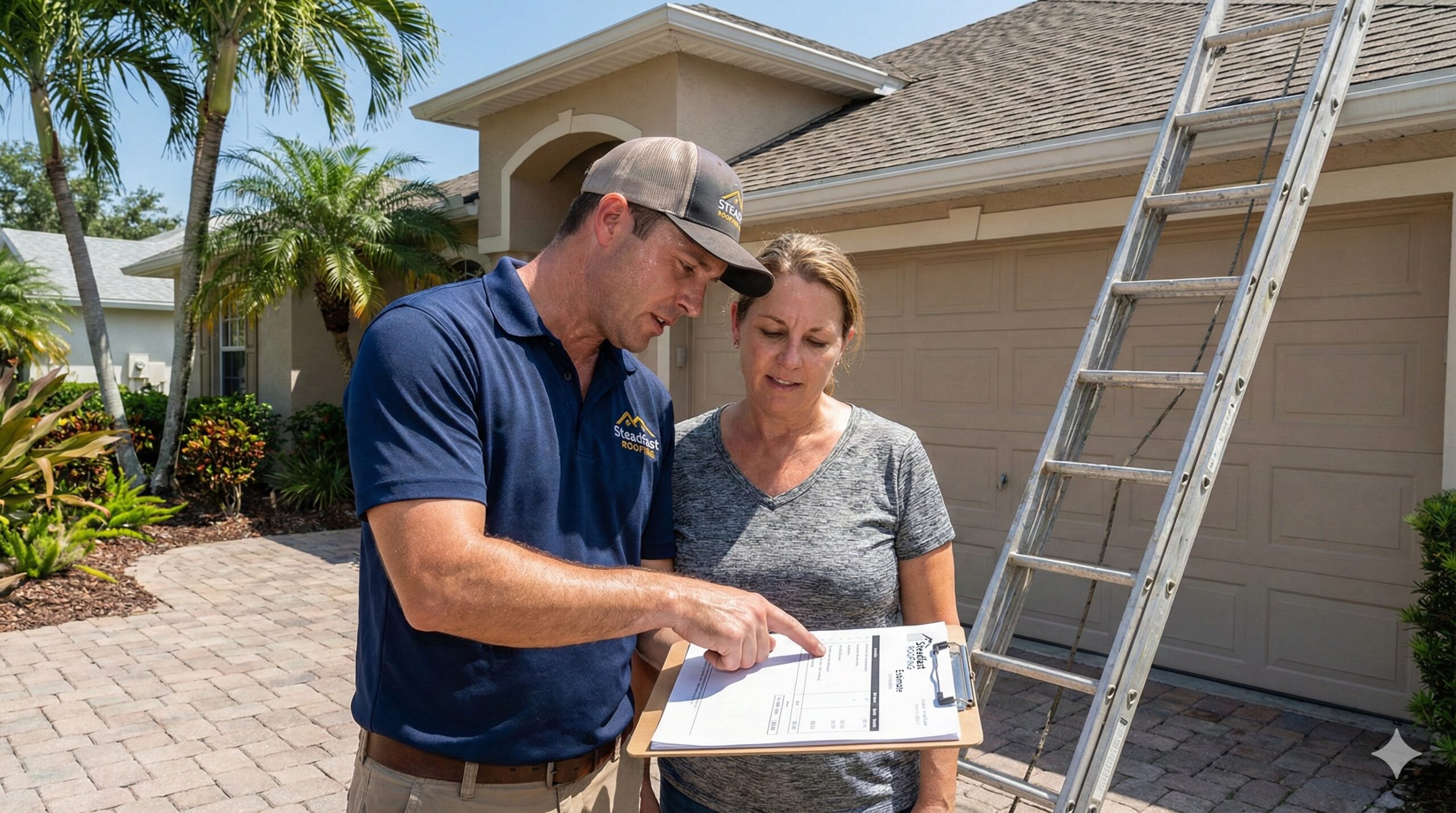
When your home sustains storm damage, the path toward a full recovery often begins with an insurance claim. A common misconception circulated by adjusters is that a homeowner must secure three separate estimates before work can begin. At Steadfast Roofing, we understand that navigating the complexities of insurance protocols in Tampa, FL, requires a partner who prioritizes your property’s integrity over arbitrary procedural hurdles. We recognize that the primary goal of your insurance policy is to return your home to its pre-loss condition using materials of like kind and quality. Relying on a single, highly qualified contractor ensures the scope of work is accurately defined from the outset, preventing underfunding that often occurs when homeowners are pressured into a “race to the bottom” with multiple low-bid estimates.
The Myth of the Three-Estimate Requirement
Many insurance agents or field adjusters suggest that obtaining three estimates is mandatory for the claims process. In reality, most standard homeowners’ insurance policies do not contain language requiring a specific number of estimates. The insurance company is contractually obligated to pay the “Replacement Cost Value” (RCV) for the damages covered under your policy, minus your deductible.
When you seek multiple bids, you inadvertently create a scenario in which the insurance provider may approve only the lowest estimate. This is problematic because the lowest bid rarely accounts for the high-quality materials, skilled labor, and adherence to local building codes necessary for a long-lasting roof. By choosing a single, reputable contractor who uses industry-standard estimating software, you align your project with the technical language the insurance company understands, ensuring a smoother approval process.
How the Insurance Claim Process Functions
To effectively manage a roof replacement through insurance, it is essential to understand the chronological steps involved. Once a claim is filed, the insurance company dispatches a field adjuster to inspect the damage. This adjuster creates a report based on their observations, which is then reviewed by a desk adjuster who determines the final payout.
However, adjusters are often generalists. They may miss nuanced roofing requirements, such as specific drip edge installations or localized code requirements for underlayment. If your contractor is not involved early, the initial insurance check may be significantly lower than the actual cost of a proper installation. We advocate that your chosen roofing professional be present during the adjuster’s inspection. This ensures that every damaged component is documented and included in the initial scope of work, reducing the need for lengthy supplements later in the project.
The Risks of Low-Bid Estimates in Roofing
The primary danger of the “three-estimate” approach is the potential for compromised quality. A contractor who provides a significantly lower bid than others is often cutting costs in areas not immediately visible to the homeowner. This could include:
- Substandard Underlayment: Using cheap felt paper instead of high-performance synthetic barriers.
- Reusing Old Components: Failing to replace flashing or vents to save on material costs.
- Labor Shortcuts: Utilizing inexperienced crews who may not follow manufacturer-specific installation guidelines, which can void your shingle warranty.
- Code Compliance: Overlooking updated local building codes that require specific fastening patterns or materials.
Your insurance policy is designed to cover the cost of a correct installation. Accepting a low-ball estimate simply saves the insurance company money while increasing your long-term risk of leaks and structural failure.
Utilizing Xactimate for Accurate Estimating
Professional roofing contractors who specialize in insurance claims use the same software as the insurance carriers: Xactimate. This platform uses localized, real-time data to determine the market price for labor and materials in a specific region.
By using Xactimate, your contractor provides a transparent, data-driven estimate. It eliminates the guesswork and the “haggling” often associated with home repairs. When the contractor’s estimate and the insurance company’s estimate are both generated using the same software, the discussion shifts from “how much will this cost” to “what items were missed.” This professional alignment is the most effective way to ensure your claim is funded adequately to cover a high-quality roof replacement.
Protecting Your Investment with a Single Expert Partner
Choosing one dedicated contractor allows for a relationship built on accountability. When a single firm handles the initial inspection, the documentation of damage, the meeting with the adjuster, and the final installation, there is no room for miscommunication. You benefit from a comprehensive warranty and the peace of mind that comes with knowing your roof was restored to professional standards.
Rather than spending days coordinating meetings with various companies for multiple bids, focus your energy on vetting a single contractor with a proven track record of insurance expertise. This streamlined approach reduces stress and ensures your home remains protected by a roof built to last, rather than one built to fit the lowest possible budget.
Take a moment to read one of our latest blogs: “House Flipping Roof Mistakes That Kill Profits and How to Avoid Them”.