
A roof should appear as a relatively straight, continuous plane. When shingles develop visible waves, ripples, raised lines, or dips, the roofing material is often revealing something happening underneath it. At Steadfast Roofing in Tampa, FL, we evaluate a wavy roof as a complete system—from the shingles and underlayment to the roof decking, attic moisture, ventilation, and structural framing—because the surface appearance alone does not identify the cause.
If changes in roof appearance are accompanied by unusual sounds, our guide to roof creaks and popping noises explains another issue to investigate.
Some roof waviness is temporary and cosmetic. Other patterns indicate roof decking buckling, moisture movement, installation defects, deteriorated sheathing, or structural displacement. The difference matters because replacing a few shingles will not correct a problem originating several layers below them.
Why Does My Roof Look Wavy?
When homeowners say their roof looks wavy, they may be describing several different conditions:
- Raised horizontal or vertical lines beneath the shingles
- Shingles that appear rippled instead of lying flat
- Localized humps between rafters or trusses
- Depressions or dips in one section of the roof
- Uneven roof planes visible most clearly in morning or evening light
- Shingles that visibly lift, buckle, or curl
The location, direction, and timing of the waviness provide important clues. A straight raised line corresponding with a roof-deck joint suggests a different problem than a broad depression spanning several feet.
If the pattern is new, becoming worse, or accompanied by leaking, an evaluation through a professional roof inspection in Tampa can determine which layer of the roofing system is actually moving.
Roof Decking Buckling Is a Major Cause of Wavy Shingles
Asphalt shingles follow the surface beneath them. If plywood or oriented strand board (OSB) roof sheathing becomes uneven, the finished roof can also appear uneven.
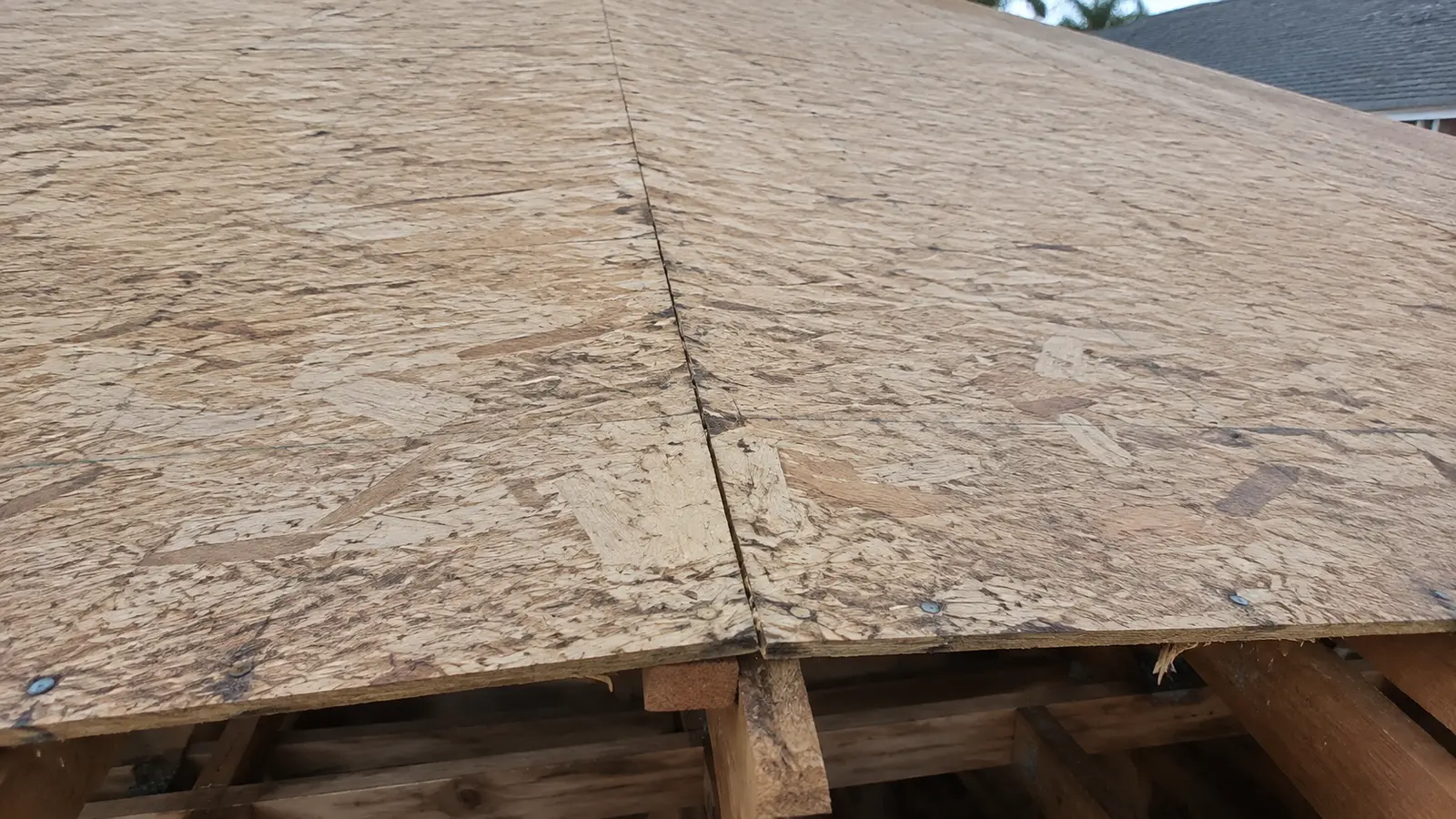
Wood-based structural panels naturally change dimensions as their moisture content changes. The APA—The Engineered Wood Association recommends approximately 1/8 inch of spacing at panel edge and end joints unless the manufacturer specifies otherwise. That space allows plywood or OSB to expand as moisture conditions change and reduces the possibility of panel buckling.
When panels are installed tightly against one another, moisture-related expansion can push adjacent sheets together. The resulting pressure may raise a panel edge or create a ridge beneath the underlayment and shingles.
Decking can also become uneven because of:
- Wet sheathing installed before it had sufficiently dried
- Panels exposed to rain during construction
- Deteriorated or delaminated plywood
- Inadequate fastening
- Unsupported panel edges
- Uneven rafters or trusses
- Previous water intrusion
Once the decking itself has changed shape, installing new shingles over the same surface generally reproduces the visible problem.
Florida Humidity and Moisture Can Make Roof Waviness Worse
Tampa’s hot, humid climate creates conditions where moisture management becomes especially important.
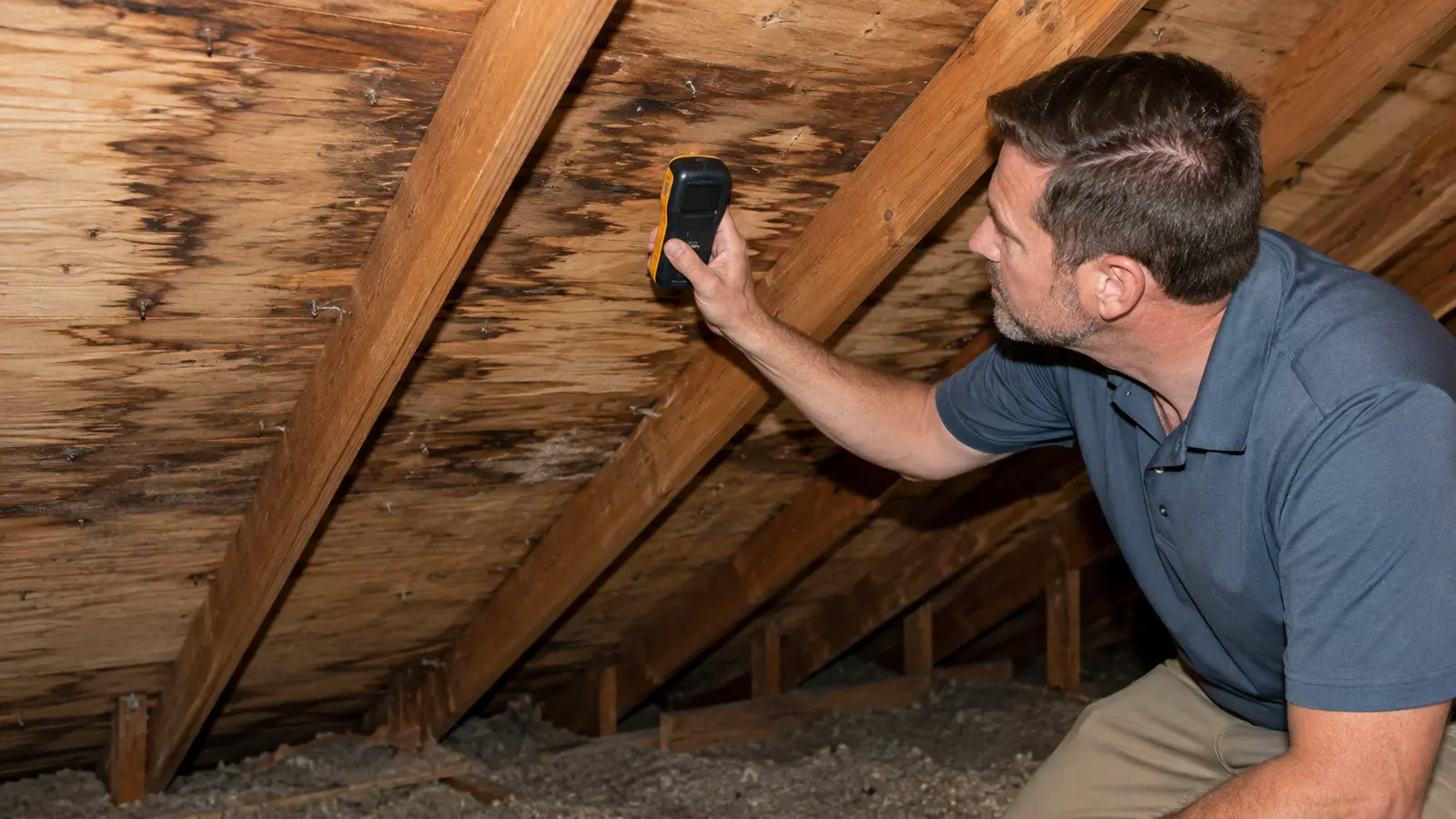
Roof sheathing can absorb moisture from humid air, condensation, construction exposure, or an active leak. As the moisture content increases, plywood and OSB can expand.
Research on hot-humid roof assemblies has documented intermittent shingle buckling caused by moisture movement through roof assemblies. Moisture absorbed by plywood or OSB can expand the sheathing, reduce the space between adjacent panels, and temporarily create visible buckling in the roofing above.
This helps explain why some homeowners notice their roof appears more uneven at particular times of day or during humid weather.
Persistent waviness, however, should not automatically be blamed on Florida humidity. A roof inspection should rule out leaks, deteriorated decking, fastening defects, and structural movement.
Can a New Roof Look Wavy After Installation?
Yes. Newly installed asphalt shingles do not always lie completely flat immediately.
Shingles contain asphalt that becomes more flexible as it warms. After installation, exposure to warm weather can help the shingles relax and the factory-applied sealing strips activate.
Temporary irregularities are generally less concerning when the roof is newly installed, the waviness is minor and uniform, and there are no leaks, raised decking joints, loose shingles, or obvious depressions.
Large ridges, isolated humps, persistent buckling, or waves that remain after extended warm-weather exposure deserve closer evaluation. A properly installed asphalt shingle roofing system depends on the condition of the deck as much as the shingles themselves.
Poor Shingle or Underlayment Installation Can Create Ripples
Not every wavy roof begins with the plywood.
Underlayment that wrinkles before the shingles are installed can telegraph irregularities through the finished roof surface. Installation mistakes can also create visible distortion when shingles are improperly aligned, inadequately fastened, overdriven, underdriven, or forced over an uneven substrate.
Problems may be concentrated around valleys, transitions, penetrations, repaired decking, or sections where old materials were not removed or prepared correctly.
The solution depends on the affected layer. Correcting a surface installation defect may require localized roof repair, while widespread decking or installation deficiencies may require removing a larger section of the roof.
Wavy Roof vs. Sagging Roof: Know the Difference
A wavy roof and a sagging roof are not the same condition.
Waviness usually describes smaller irregularities involving shingles, underlayment, sheathing joints, or localized decking movement.
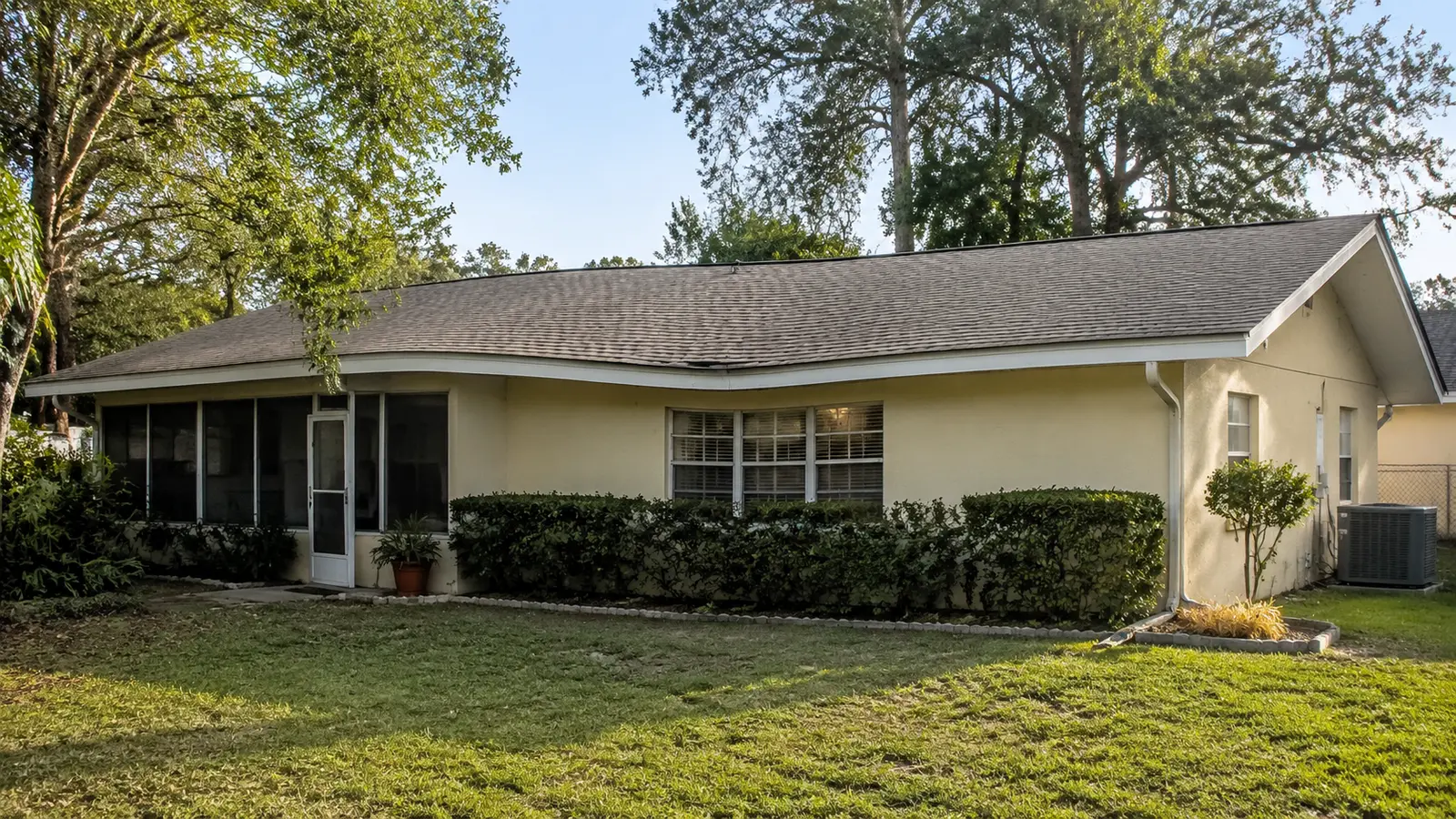
Sagging generally describes a broader depression or change in the roof plane. A sag may involve weakened decking, damaged framing, deteriorated rafters, truss problems, excessive loading, or long-term moisture damage.
A noticeable depression spanning multiple rafters should therefore receive more attention than a minor ripple limited to several shingles.
Never attempt to confirm a suspected soft or sagging area by walking on it. Deteriorated decking can fail under concentrated weight.
Warning Signs That Wavy Roof Shingles Need Attention
The visual wave becomes more significant when another symptom appears with it.
Schedule an inspection if you notice:
- Waves becoming progressively larger
- Soft or visibly sunken areas
- Raised seams beneath shingles
- Lifted, cracked, or displaced shingles
- Water stains on ceilings
- Damp attic insulation
- Darkened or deteriorated roof decking
- Musty attic odors
- Daylight visible through damaged decking
- Repeated leaks near the uneven section
- A roofline that has recently changed shape
These symptoms can indicate that the problem has moved beyond appearance and is affecting water resistance, fastening, decking integrity, or structural support.
What Happens If You Ignore a Wavy Roof?
A visually uneven roof does not automatically mean roof failure is occurring. The underlying cause determines the risk.
Moisture-damaged decking can continue deteriorating if the moisture source remains. Buckled sheathing can distort the roofing layers above it. Lifted shingles can become more vulnerable to wind-driven rain. A structural depression may continue changing as damaged materials lose strength.
The most expensive mistake is treating the visible shingle as the entire problem.
For example, replacing shingles over deteriorated plywood may improve appearance temporarily while leaving the damaged deck underneath. Proper diagnosis should identify whether the problem originates at the roof covering, underlayment, sheathing, ventilation system, or framing.
How We Diagnose a Wavy Roof
A useful inspection follows the problem through the complete roof assembly.
We examine the roof surface for the shape and direction of the waviness, shingle condition, fastener-related abnormalities, previous repairs, and visible decking joints. Where attic access permits, the underside of the deck can reveal moisture staining, deteriorated plywood, unsupported joints, fastening patterns, condensation, and framing irregularities.
We also compare exterior depressions with rafters or trusses below them. This helps distinguish a cosmetic shingle issue from a decking or structural condition.
The objective is not simply to confirm that the roof is uneven. It is to identify why it is uneven.
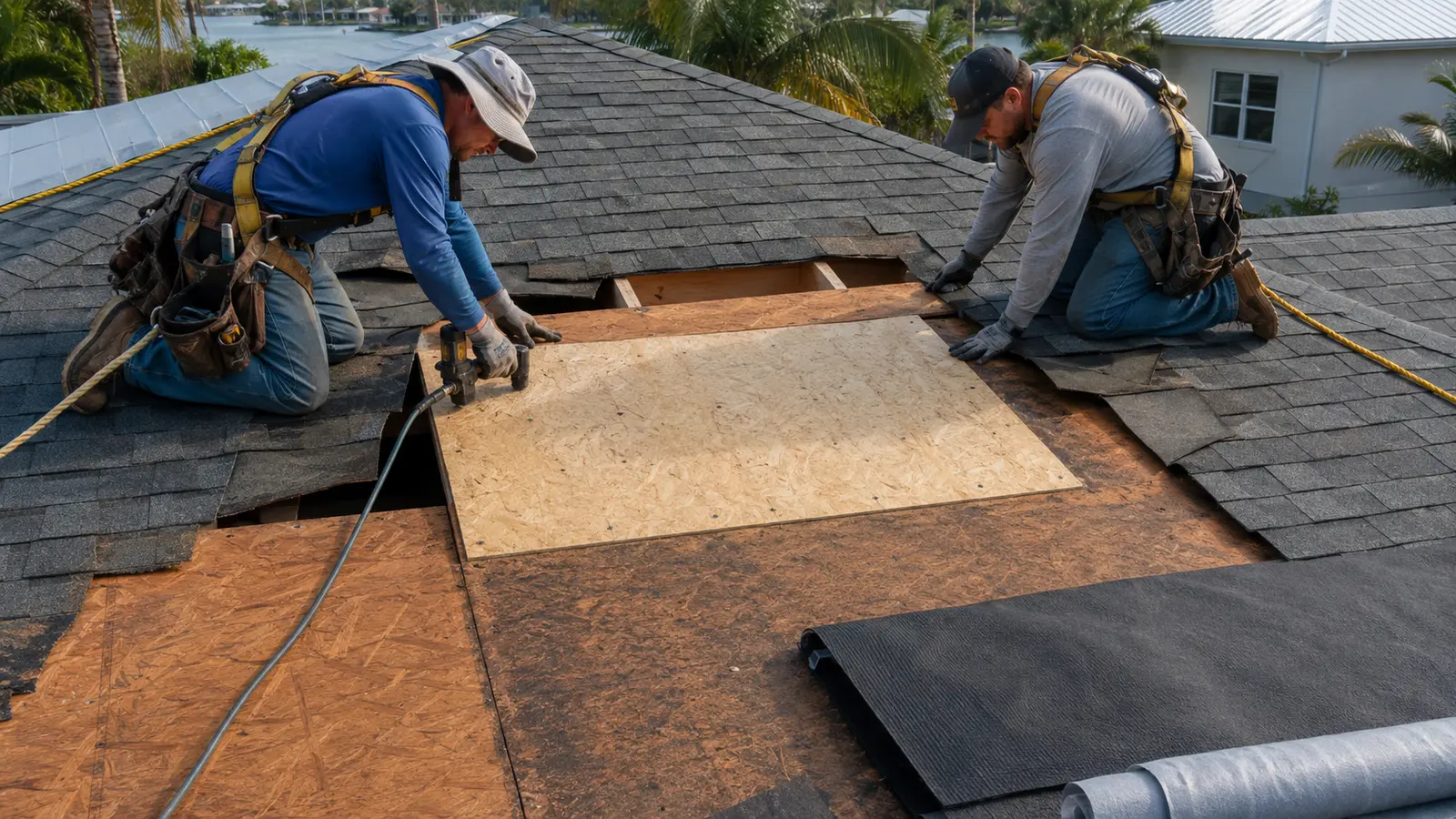
Can a Wavy Roof Be Repaired?
Yes, depending on the cause and extent of the damage.
Localized defects may be corrected by removing shingles and underlayment, replacing damaged decking, correcting the underlying condition, and reinstalling compatible roofing materials.
Moisture problems require identifying and correcting the moisture source rather than covering the evidence.
If decking deterioration, installation defects, or shingle failure affects a substantial portion of the roof, a complete roof replacement may provide a more reliable solution than repeated localized repairs.
The correct repair should restore the roof plane while addressing the condition that caused the distortion.
How to Prevent Roof Buckling and Waviness
Prevention starts before the first shingle is installed.
Roof decking should be sound, appropriately supported, dry enough for roofing installation, and installed according to panel and roofing manufacturer requirements. Underlayment must remain smooth. Damaged decking should be replaced rather than concealed beneath new roofing.
Ventilation and moisture control also matter because repeated moisture movement can affect wood sheathing.
Most importantly, a reroof provides the best opportunity to inspect the deck directly. Once the old roofing material is removed, damaged plywood, questionable panel joints, and uneven substrate conditions can be corrected before the new system covers them.
CONCLUSION
A roof that looks wavy may be showing harmless temporary shingle movement, but it can also expose roof decking buckling, trapped moisture, improper installation, deteriorated sheathing, or structural movement. The pattern should be evaluated based on its location, severity, age, and associated symptoms rather than appearance alone. If your roof has persistent waves, noticeable dips, leaks, or changing rooflines, contact our roofing team so the underlying cause can be identified before additional roofing or interior damage develops.
FAQ
Why does my shingle roof suddenly look wavy?
Sudden waviness can result from moisture-related expansion of plywood or OSB, underlayment movement, shingle distortion, storm-related damage, or changes in the roof deck. If the appearance changes noticeably over a short period, an inspection can determine whether moisture or structural movement is involved.
Will wavy roof shingles flatten out on their own?
Minor waviness on a newly installed asphalt roof may decrease as the shingles warm, relax, and seal. Persistent ridges, large waves, localized humps, or depressions generally should not be assumed to correct themselves because the problem may originate in the decking or installation beneath the shingles.
Does a wavy roof mean I need a new roof?
Not necessarily. A localized decking or installation problem may be repairable without replacing the entire roof. Replacement becomes more likely when the decking problem is widespread, shingles are already near the end of their service life, multiple areas are affected, or correcting the underlying defect requires removing most of the roofing system.