
Commercial roof types are not interchangeable in Florida. At Steadfast Roofing in Tampa, FL, we evaluate every commercial roofing system as a long-term protection plan for the building, not just a surface material. Sun exposure, humidity, thermal movement, ponding water, rooftop equipment, foot traffic, storm season, drainage design, and code requirements all affect which roof material makes sense for a specific property. The right choice can reduce leak risk, improve energy performance, simplify maintenance, and extend the service life of the building envelope.
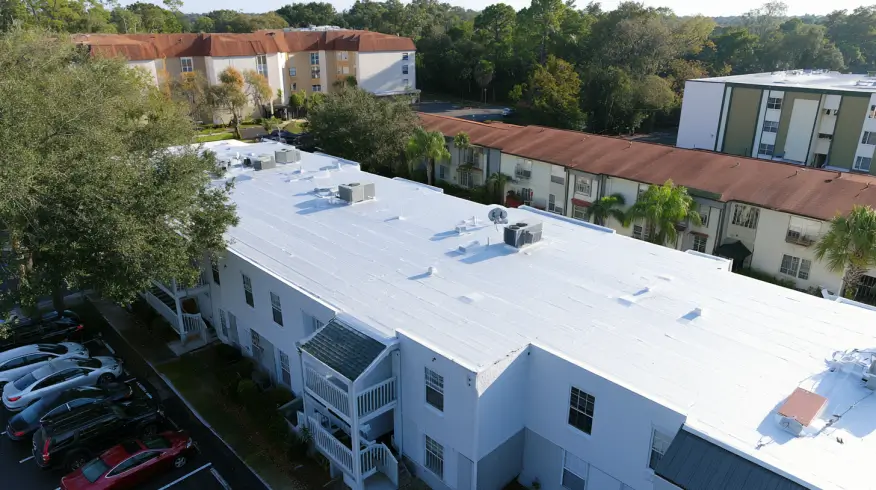
Most commercial buildings in Florida use flat or low-slope roofing systems because they are practical for large footprints, HVAC equipment, mechanical access, and efficient construction. The challenge is that low-slope roofs do not shed water like steep-slope roofs. They rely on membrane integrity, seam quality, flashing details, insulation design, drainage, and ongoing maintenance. For property managers, investors, business owners, churches, warehouses, retail centers, medical offices, restaurants, and multifamily buildings, understanding the main commercial roof materials helps turn a costly decision into a controlled, informed investment.
What Makes Florida Commercial Roofing Different?
Florida commercial roofs face a combination of stressors that shorten the life of poorly chosen or poorly installed systems. UV exposure dries, ages, and weakens many materials. High humidity can accelerate biological growth and moisture-related deterioration. Heavy summer rain tests seams, penetrations, drains, scuppers, parapet walls, and flashing transitions. Tropical storms and wind events can expose weak attachment, loose edge metal, and vulnerable roof sections. Salt air near coastal areas can also affect metal components, fasteners, and exposed hardware.
Energy performance matters as well. A reflective roof surface can lower roof temperatures and reduce heat transfer into the building. The U.S. Department of Energy notes that conventional roofs can reach 150°F or more on sunny afternoons, while reflective roofs under the same conditions may stay more than 50°F cooler. For commercial properties with large roof areas, that difference can affect comfort, cooling demand, and rooftop equipment performance.
Florida code considerations also matter when repair, replacement, or recovering is being discussed. Under Florida Building Code, Existing Building §706.1.1, roof repair, replacement, or recovering limits can affect whether a larger roof section must be brought into compliance. That is why a commercial roof inspection should look beyond the visible leak and identify how much of the system is affected.
TPO Roofing
Thermoplastic polyolefin, commonly called TPO, is one of the most common Florida commercial roof types for flat and low-slope buildings. It is a single-ply membrane usually installed in white or light colors to reflect sunlight. TPO is popular for retail buildings, warehouses, offices, schools, and multifamily properties because it balances cost, reflectivity, flexibility, and installation efficiency.
A TPO roof is typically mechanically attached, fully adhered, or induction welded over insulation or cover board. Seams are heat-welded, creating a bonded membrane surface that resists water intrusion when installed correctly. TPO performs well when the roof has proper slope, clean drainage paths, reinforced flashings, and carefully detailed penetrations around vents, curbs, pipes, skylights, and HVAC stands.
The strongest reasons to consider TPO are energy efficiency, broad availability, and strong performance on large roof areas. However, not every TPO installation is equal. Membrane thickness, manufacturer quality, substrate preparation, insulation layout, seam welding, edge securement, and flashing workmanship all influence long-term results. TPO is often a strong choice when the building owner wants a reflective, cost-effective, modern membrane system.
PVC Roofing
PVC roofing is another single-ply commercial membrane, but it has a different performance profile than TPO. PVC is known for chemical resistance, grease resistance, fire performance, and durable heat-welded seams. For restaurants, food processing spaces, commercial kitchens, certain manufacturing facilities, and buildings with rooftop exhaust containing oils or contaminants, PVC can be a better fit than TPO.
A PVC roof is especially valuable where rooftop conditions are more demanding than a standard office or warehouse. Grease and chemical exposure can degrade some roofing materials over time, especially near exhaust fans or service areas. PVC’s resistance to these contaminants makes it a practical material for businesses that cannot risk recurring membrane breakdown around rooftop equipment.
PVC usually costs more than basic TPO, but the added durability can justify the investment when the building’s use creates chemical or grease exposure. As with any single-ply system, installation quality matters. Heat-welded seams, proper flashing, compatible accessories, and regular inspection are essential for long-term performance.
Modified Bitumen Roofing
Modified bitumen is an asphalt-based commercial roofing system reinforced with modifiers that improve flexibility and strength. It is often installed in rolls using torch-applied, cold-applied, self-adhered, or mechanically attached methods. Modified bitumen is a familiar choice for flat and low-slope roofs because it provides a tough, layered surface with good resistance to foot traffic and routine service access.
There are two common categories: APP and SBS. APP modified bitumen is often valued for heat and UV resistance, while SBS modified bitumen offers strong flexibility and elasticity. In Florida, the right surface finish is important. Granulated cap sheets or reflective coatings can help protect the asphalt from UV exposure and reduce heat absorption.
Modified bitumen can be a good option for smaller commercial buildings, roofs with moderate foot traffic, and properties where a multi-layer asphalt-based system is preferred. It is also commonly used in repair and recover situations when the existing roof conditions allow it. The key is to verify deck condition, moisture levels, drainage performance, and compatibility before choosing it.
Built-Up Roofing
Built-up roofing, or BUR, is one of the oldest commercial roof types still in use. It is made from alternating layers of bitumen and reinforcing felts, finished with gravel, mineral cap sheets, or coatings. The main advantage of BUR is redundancy. Multiple layers can provide strong waterproofing protection, which is why built-up systems have been used for decades on commercial buildings.
BUR can perform well on flat roofs when installed over a properly prepared deck with good drainage. The system is durable, but it is also heavier than many single-ply options. Before installing or replacing a BUR system, the roof structure should be evaluated to confirm it can handle the load. Gravel-surfaced BUR can also make leak detection more difficult because water may travel between layers before showing inside the building.
For some properties, BUR remains a practical choice. For others, lighter modern membranes or coating restoration may offer a better lifecycle value. The decision depends on the structure, roof access, drainage, existing materials, budget, and long-term maintenance plan.
EPDM Roofing
EPDM is a synthetic rubber membrane used on many low-slope commercial roofs. It is flexible, durable, and known for long service life in many climates. Traditional EPDM is black, which can be a disadvantage in Florida because it absorbs more heat than white reflective systems. White EPDM and reflective coatings may be considered when heat gain is a concern.
EPDM can be fully adhered, mechanically attached, or ballasted, depending on the building and design. It handles movement well, which is useful on buildings that expand and contract under temperature changes. However, seam details, puncture resistance, and rooftop traffic should be carefully considered. On roofs with frequent HVAC service, walk pads and protection details are important.
EPDM is often best for owners who want a proven membrane and are prepared to maintain seams, flashings, and surface protection properly. In Florida, we typically compare EPDM against TPO, PVC, and coatings to determine whether its benefits fit the building’s heat exposure and use.
Commercial Metal Roofing
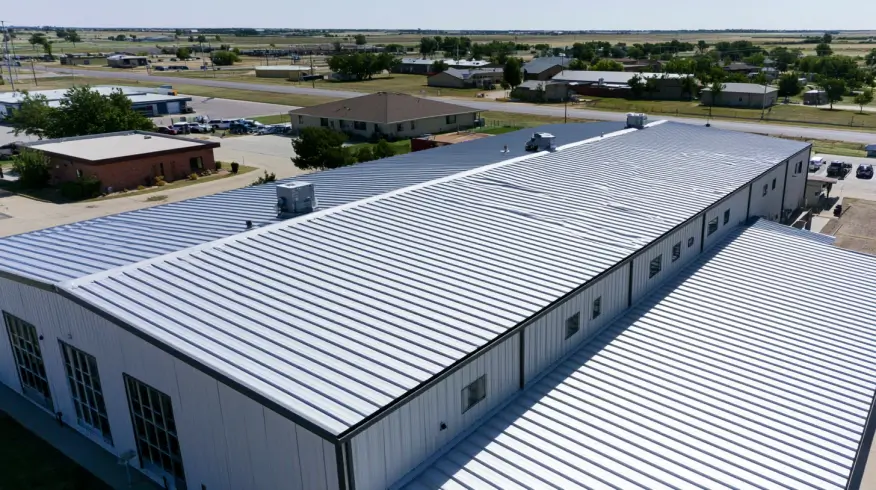
Commercial metal roofing is used on warehouses, agricultural buildings, retail properties, churches, industrial facilities, and steep-slope commercial structures. Standing seam metal roofs are especially valued because concealed fasteners reduce exposed penetration points. Corrugated and exposed-fastener systems may be more economical, but they require closer fastener maintenance over time.
Metal roofing offers strong durability, wind resistance, and long service potential when designed and installed correctly. It also pairs well with reflective finishes and coatings. For Florida properties, corrosion resistance is critical. Coastal exposure, salt air, dissimilar metals, cut edges, fastener quality, and coating integrity can all influence performance.
Metal is not limited to new construction. Existing commercial metal roofs can often be repaired, resealed, or restored with elastomeric or silicone coating systems when the panels are structurally sound. That can reduce disruption compared with full replacement while addressing seams, fasteners, oxidation, and minor leak paths.
Commercial Roof Coatings
Roof coatings are not a universal replacement for a failing roof, but they can be a smart restoration option when the existing roof is a good candidate. Acrylic, silicone, polyurethane, and other coating systems are applied over prepared roof surfaces to improve waterproofing, reflectivity, and weather resistance. Coatings are commonly used on metal roofs, modified bitumen, single-ply membranes, and certain flat roofing systems.
The most important step is the evaluation. A coating should not be used to hide trapped moisture, saturated insulation, major deck damage, active structural problems, or widespread membrane failure. The roof must be cleaned, repaired, reinforced at seams and penetrations, and prepared according to the coating manufacturer’s requirements.
Silicone coatings are often selected for ponding-water resistance. Acrylic coatings can be cost-effective and reflective but may not be ideal where standing water persists. Polyurethane coatings can add impact and traffic resistance in certain conditions. When a roof is still serviceable, professional roof coatings can extend performance and help delay full replacement.
How to Choose the Right Commercial Roof Material
The best commercial roof material depends on the building, not just the product name. We look at roof slope, deck type, drainage, insulation, rooftop equipment, interior use, foot traffic, wind exposure, surrounding trees, coastal conditions, existing roof layers, leak history, and budget. A restaurant may need PVC because of grease exposure. A warehouse may benefit from TPO for reflectivity and cost control. A metal building may be a strong candidate for coating restoration. An older low-slope roof with recurring leaks may need targeted flat roof repair before any larger decision is made.
Lifecycle cost is more important than installed price alone. A cheaper system that fails early, traps moisture, or requires frequent leak calls can become more expensive than a better system installed correctly. Owners should compare expected service life, maintenance requirements, repairability, energy performance, warranty terms, business disruption, and code implications.
When Repair, Coating, or Replacement Makes Sense
Commercial roof repair is usually appropriate when damage is isolated, the membrane is not broadly deteriorated, insulation is dry, drainage is functional, and flashings can be restored without rebuilding the system. Flat roof repair often focuses on seams, punctures, pipe penetrations, curb flashings, drains, scuppers, and ponding areas.
A coating system may make sense when the roof is aging but still structurally sound, dry, and compatible with restoration. Replacement is usually the better decision when there is widespread moisture, repeated leaks across multiple areas, failing insulation, severe membrane shrinkage, major seam failure, rusted structural metal, or code-driven replacement requirements.
For business owners comparing options, Steadfast Roofing can inspect the current roof, document conditions, explain repair versus replacement considerations, and recommend a system based on the building’s real performance needs. Our commercial roofing team focuses on practical solutions that match the property, the budget, and the long-term demands of Florida weather.
Conclusion
The most common commercial roof types in Florida include TPO, PVC, modified bitumen, built-up roofing, EPDM, metal roofing, and roof coating systems. Each material has a place, but the right choice depends on how the building is used, how the roof drains, what the existing system looks like, and how much heat, rain, wind, foot traffic, and rooftop equipment the roof must handle.
A successful commercial roof is built as a system. Membrane selection matters, but so do insulation, deck condition, slope, flashing, edge metal, penetrations, drainage, code compliance, and maintenance. When those details are handled correctly, a commercial roof can protect the property, reduce avoidable leaks, improve energy performance, and support the long-term value of the building.
FAQ
What is the best commercial roof type for Florida?
There is no single best commercial roof for every Florida building. TPO is often a strong option for reflective, cost-effective flat roofing. PVC is often better for restaurants and buildings exposed to grease or chemicals. Modified bitumen works well when a tough asphalt-based system is preferred. Metal roofing can be excellent for durability and long service life. Roof coatings can be valuable when the existing roof is sound enough for restoration. The best choice comes from inspecting the roof structure, drainage, existing materials, moisture conditions, and building use.
How long does a commercial roof last in Florida?
Commercial roof lifespan in Florida depends on material, installation quality, maintenance, storm exposure, drainage, and UV conditions. Many single-ply and modified bitumen systems can provide decades of service when properly installed and maintained, while metal systems may last longer with correct detailing and corrosion protection. Coatings can extend the life of a serviceable roof, but they do not turn a failing roof into a new system. Routine inspections, prompt repairs, clean drains, and reinforced flashings are critical to reaching the upper end of any expected lifespan.
Are roof coatings worth it for commercial buildings?
Roof coatings can be worth it when the existing commercial roof is dry, stable, compatible, and not at the end of its service life. A coating can improve reflectivity, seal minor surface wear, reinforce vulnerable details, and extend roof performance with less disruption than full replacement. However, coatings are not appropriate for roofs with saturated insulation, severe membrane failure, structural damage, or widespread active leaks. A professional inspection should confirm whether coating, repair, or replacement is the right path.