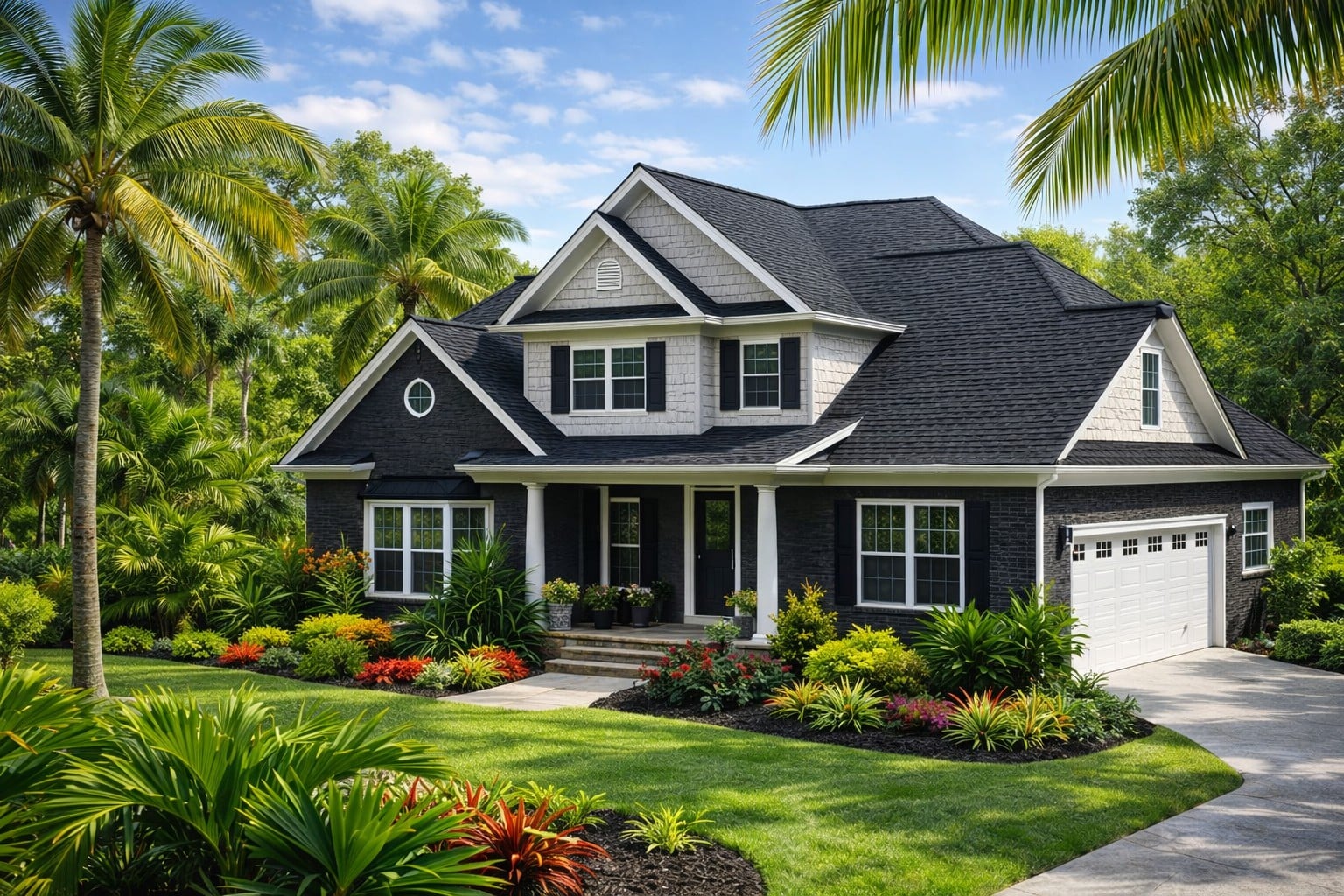
In Tampa, FL, Steadfast Roofing helps homeowners choose roofing materials that balance curb appeal, comfort, durability, and long-term performance in Florida heat. Black roof shingles can make the roof surface hotter because darker colors absorb more solar energy, but that does not automatically mean the inside of the house will become uncomfortably hot. The real answer depends on the entire roofing system: shingle color, solar reflectance, attic ventilation, insulation, duct sealing, roof deck condition, and how the home handles heat during Tampa’s long cooling season.
A black shingle roof will usually run hotter at the surface than a lighter gray, tan, white, or reflective roof. However, the temperature your family feels indoors is controlled by how much of that roof heat moves through the attic and into the living space. In many Tampa homes, poor attic airflow, blocked soffit vents, thin insulation, and leaky HVAC ducts create more comfort problems than the shingle color alone.
The Direct Answer: Yes, Black Shingles Absorb More Heat
Black asphalt shingles absorb more sunlight than lighter shingles. During peak afternoon sun, especially in late spring, summer, and early fall, a dark roof surface can become significantly hotter than a lighter roof surface. The U.S. Department of Energy explains that conventional roofs can reach 150°F or more on a sunny summer afternoon, while a reflective roof may stay more than 50°F cooler under the same conditions. You can review the Department of Energy’s explanation of cool roof performance for more detail.
That surface temperature matters because the roof is the first part of the home to take the hit from solar radiation. The darker the shingle, the more heat it typically absorbs. But the roof surface is only one layer in the system. Heat still has to move through the shingles, underlayment, roof deck, attic air, insulation, ceiling materials, and HVAC conditions before it affects the rooms below.
That is why two Tampa homes with black shingles can feel completely different. One may stay comfortable because it has strong attic ventilation and proper insulation. Another may feel hot upstairs because attic heat is trapped, ducts leak cooled air, and insulation coverage is uneven.
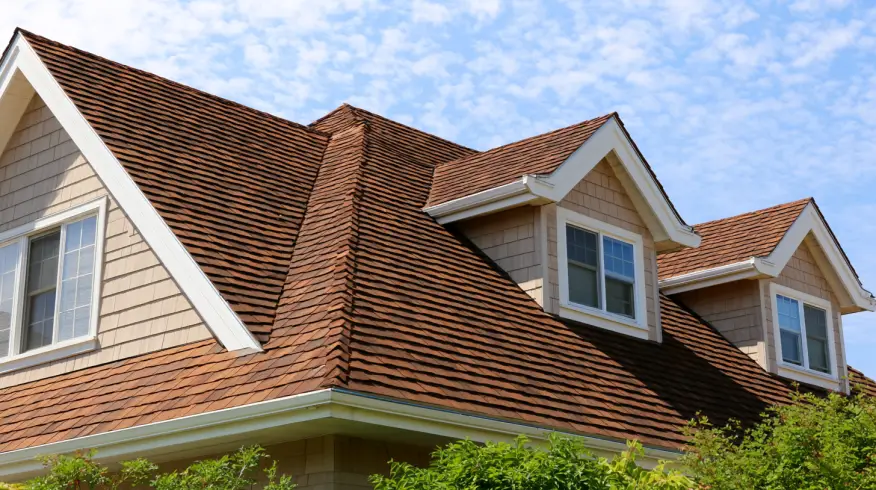
Roof Surface Temperature vs. Attic Temperature vs. Indoor Comfort
Homeowners often ask, “Will black shingles make my house hotter?” The better question is, “Will a black roof increase heat transfer into my living space?”
There are three temperatures to separate:
Roof Surface Temperature
This is the temperature of the shingle itself. Black shingles are most likely to increase this number because they absorb more solar energy. On a clear Tampa afternoon, the roof surface can become much hotter than the outdoor air temperature.
Attic Temperature
This is the temperature of the air under the roof deck. Attic temperature is affected by roof color, but also by ventilation, insulation, roof pitch, radiant heat, air leaks, and whether the attic has enough intake and exhaust airflow. A dark roof can add heat to the attic, but poor ventilation can trap that heat and make the problem much worse.
Indoor Temperature
This is what you actually feel. Indoor comfort depends on how well the attic is separated from the living area. Proper insulation slows heat transfer. Air sealing reduces hot air movement. Tight ductwork prevents cooled air from leaking into the attic. A well-built system can keep the living space comfortable even when the roof surface is hot.
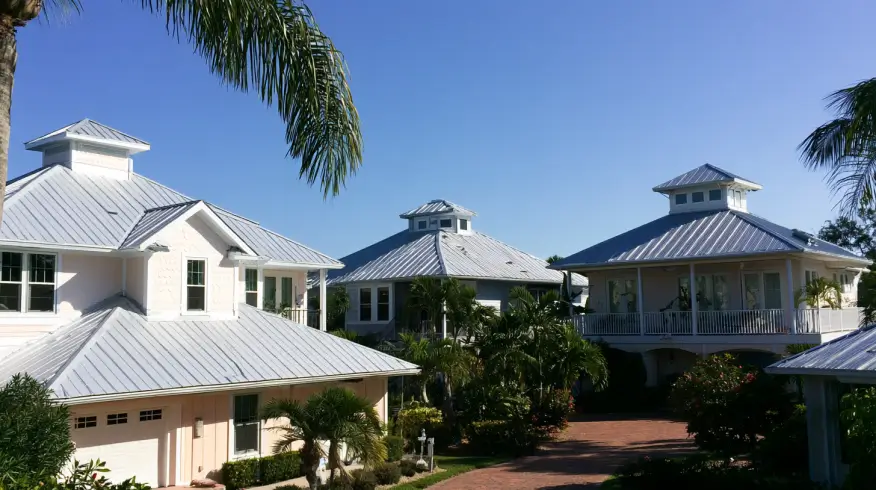
Why Tampa Homes Are More Sensitive to Roof Heat
Tampa is not a mild climate for roofing. Homes here deal with strong sun, humidity, heavy rain, storm exposure, and a long air-conditioning season. A roof in Tampa does more than shed water. It helps manage heat, moisture, airflow, and energy demand.
Black shingles may be a reasonable design choice in cooler climates where winter heat gain can be useful. In Tampa, the priority is different. Most homeowners want to reduce heat gain, manage attic temperatures, and keep the AC from working harder than necessary.
Tampa homes are especially affected by roof heat when they have:
- Full sun exposure for most of the day
- Large attic spaces with limited airflow
- Ductwork running through an unconditioned attic
- Older insulation or uneven insulation coverage
- Painted-over, blocked, or undersized soffit vents
- Mixed roof vents that interrupt airflow instead of improving it
- Upstairs rooms that already feel warmer than the rest of the house
When these conditions exist, the roof color can become a bigger factor. A black roof may not be the only cause of heat problems, but it can add more load to an attic system that is already struggling.
The Science Behind Roof Color: Solar Reflectance and Thermal Emittance
Two performance ratings matter when comparing roof colors and cool roof options: solar reflectance and thermal emittance.
Solar reflectance measures how much sunlight a roofing material reflects away from the roof. Higher solar reflectance means less solar energy is absorbed as heat.
Thermal emittance measures how well the roof releases absorbed heat as infrared energy. Higher thermal emittance helps the roof shed heat more efficiently.
The EPA explains that cool roofs absorb and transfer less heat because they use higher solar reflectance and thermal emittance to reduce roof temperature and heat movement into the building. Their guidance on using cool roofs to reduce heat islands also notes that cool roofs can help improve indoor comfort and reduce air-conditioning use.
For Tampa homeowners, this means color is important, but it should not be judged by appearance alone. Some shingles that look dark are engineered to reflect more near-infrared solar energy than traditional dark shingles. These are often called “cool-colored” shingles or reflective shingles.
Can You Choose Black Shingles Without Overheating the House?
Yes, black shingles can still work on some Tampa homes. The key is to avoid choosing roof color in isolation. A black roof is more likely to perform well when the home has a complete heat-control strategy.
A black or very dark shingle roof is usually more practical when:
- The attic has balanced intake and exhaust ventilation
- Soffit vents are open, clean, and properly sized
- Ridge vents or other exhaust vents are installed correctly
- Insulation is deep, even, and continuous
- Air leaks between the attic and living space are sealed
- HVAC ducts in the attic are sealed and insulated
- The roof has some shade from trees or neighboring structures
- The homeowner chooses a performance shingle instead of a basic dark shingle
If those details are ignored, a black roof can contribute to higher attic temperatures and more AC runtime.
Attic Temperature: The Hidden Comfort Factor
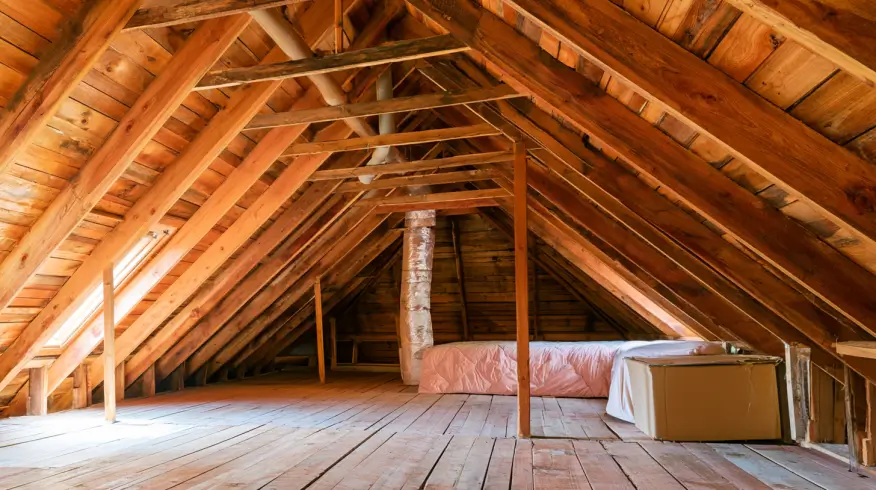
Attic temperature is where many roofing comfort problems begin. In Tampa, an attic can become a heat reservoir during the day. Once heat builds up, it can continue radiating downward after sunset, especially if ventilation and insulation are weak.
A properly ventilated attic pulls cooler outside air in through intake vents, usually at the soffits, and releases hotter air through exhaust vents near the upper roof area. This movement helps reduce heat buildup under the roof deck.
The problem is that many homes appear to have ventilation but do not have balanced ventilation. Exhaust vents cannot work correctly without enough intake. Ridge vents cannot pull air efficiently if soffits are blocked by insulation, paint, debris, or poor construction. Adding more exhaust vents does not automatically fix the problem and can sometimes disrupt airflow if different vent types compete with each other.
For a Tampa roof, we look at the ventilation system as a whole. The right question is not, “Do I have vents?” The right question is, “Is the attic airflow balanced from intake to exhaust?”
Insulation and Air Sealing Matter More Than Many Homeowners Expect
Insulation is the barrier that slows heat transfer from the attic into the rooms below. If insulation is thin, compressed, missing in areas, or pulled away from ceiling penetrations, heat can move into the home more easily.
Air sealing is just as important. Small openings around recessed lights, attic access panels, plumbing chases, wiring penetrations, and ceiling gaps can allow hot attic air to leak into the living space. Even excellent shingles cannot solve comfort issues caused by a poorly sealed attic floor.
Ductwork is another major factor. Many Tampa homes have HVAC ducts in hot attics. If those ducts leak, the system may lose cooled air into the attic while pulling in hot, humid air. That can make rooms harder to cool and increase AC strain. Before blaming a black roof for comfort problems, homeowners should consider whether attic ducts are sealed, insulated, and properly connected.
Color Choice: Black, Charcoal, Gray, Tan, and Reflective Shingles
Roof color affects both appearance and performance. Black shingles create a bold look and often pair well with white, gray, brick, and modern exterior palettes. Charcoal shingles provide a similar high-contrast style but may offer slightly different heat behavior depending on the product. Medium gray, weathered wood, tan, driftwood, and lighter brown shingles usually absorb less heat than deep black options.
For Tampa homes, the best color choice often comes down to four questions:
- How much direct sun does the roof receive?
- Does the attic already run hot?
- Are there upstairs comfort complaints?
- Is the homeowner willing to choose a cool-colored shingle if they want a dark look?
A homeowner who loves the appearance of black shingles does not always need to abandon that style. The better approach is to compare actual shingle product ratings, ventilation conditions, and attic performance before making the final decision.

Shingle Brands and Product Selection in Tampa
Major asphalt shingle manufacturers offer a wide range of dark, light, architectural, and performance-focused options. Tampa homeowners commonly compare brands such as Owens Corning, GAF, CertainTeed, TAMKO, and IKO, depending on availability, warranty structure, profile, color selection, and contractor recommendations.
Brand matters, but the best roof is not determined by the logo on the wrapper alone. A strong asphalt shingle roofing system includes the right underlayment, starter shingles, hip and ridge components, ventilation details, flashing, fasteners, and installation practices. A premium shingle can underperform if installed over a weak ventilation plan or poor roof deck conditions.
For black or dark shingles, homeowners should ask about:
- Solar reflectance or cool roof ratings where available
- Architectural vs. 3-tab construction
- Wind performance ratings
- Algae-resistance features for humid Florida conditions
- Manufacturer-approved ventilation requirements
- Compatibility with the home’s roof pitch and attic design
- Warranty coverage and installation requirements
Steadfast Roofing can help homeowners compare shingle colors and materials through a practical lens: how the roof will look, how it will perform in Tampa heat, and what supporting details are needed for long-term results.
When a Lighter Roof Color Is the Smarter Choice
A lighter roof color may be the better choice if the home already struggles with heat. If upstairs bedrooms stay warm, the AC runs constantly, or the attic feels extreme during afternoon hours, a lighter shingle or cool-colored shingle may reduce the heat load.
Lighter colors can be especially helpful on homes with large south-facing or west-facing roof slopes, limited shade, older attic insulation, or ductwork in the attic. They can also be a smart option for homeowners who prioritize energy efficiency over a dramatic exterior contrast.
That does not mean every Tampa home needs a white or light-colored roof. The goal is not to choose the lightest shingle automatically. The goal is to select the right shingle color and roof assembly for the home’s comfort needs, exterior style, neighborhood setting, and long-term maintenance expectations.
Roof Replacement Is the Best Time to Solve Heat Problems
The best time to address roof heat is before a roof replacement, not after the shingles are installed. Once the old roof is removed, the contractor can evaluate roof deck condition, ventilation pathways, flashing details, underlayment needs, and potential problem areas.
During a Tampa roof replacement, homeowners should ask for a material consultation that covers more than color. The discussion should include shingle type, attic ventilation, roof slope, underlayment, storm performance, moisture control, and whether the attic system supports the chosen roof color.
This is also the right time to consider whether asphalt shingle roofing in Tampa is the best fit or whether another material, such as metal roofing or tile roofing, may better match the homeowner’s goals.
Practical Checklist Before Choosing Black Roof Shingles
Before choosing black shingles in Tampa, homeowners should review these items:
- Inspect soffit vents to confirm intake airflow is open and not blocked
- Confirm the exhaust ventilation strategy is properly designed
- Avoid mixing vent types that can short-circuit attic airflow
- Check insulation depth and look for missing or compressed areas
- Seal obvious attic air leaks around penetrations and access points
- Inspect ductwork for leakage, disconnections, or poor insulation
- Compare black shingles with charcoal, gray, driftwood, and cool-colored options
- Review shingle product specifications, not just sample boards
- Consider how roof orientation and shade affect heat exposure
- Schedule a professional material consultation before signing a replacement contract
A black roof can be attractive and appropriate, but it should be chosen with full awareness of how the home manages heat.
Schedule a Roofing Material Consultation in Tampa
If you are deciding between black shingles, charcoal shingles, reflective shingles, metal roofing, or another roofing material, the most useful next step is a roof-specific consultation. We can evaluate the existing roof, attic ventilation, roof slope, sun exposure, and material options before recommending a path forward.
For homeowners comparing style, comfort, and performance, contact our Tampa roofing team to schedule a material consultation or roof replacement estimate. Steadfast Roofing can help you choose a roof system built for Tampa weather, not just a color that looks good on a sample board.
Conclusion
Black roof shingles can make a roof surface hotter in Tampa, FL because dark shingles absorb more solar energy than lighter or reflective options. However, a hotter roof surface does not automatically mean the living space will become hotter. Indoor comfort depends on how much heat moves into the attic and how well the home blocks that heat from entering conditioned rooms.
For many Tampa homes, attic ventilation, insulation quality, duct sealing, roof deck conditions, and shingle performance ratings matter as much as color. Black shingles can work when the roof system is properly designed, but lighter shingles or cool-colored dark shingles may be better for homes with high sun exposure, hot upstairs rooms, or weak attic performance.
The best decision is not simply “black or light.” It is choosing the right roof assembly for the home. A professional material consultation can help compare color, brand, reflectivity, ventilation, and long-term performance before installation begins.
FAQ
Do black shingles increase attic temperature in Tampa?
Black shingles can contribute to higher attic temperatures because they absorb more solar energy than lighter shingles. However, attic temperature is also controlled by ventilation, insulation, air sealing, roof pitch, shade, and duct conditions. A black roof over a well-ventilated attic may perform better than a lighter roof over an attic with blocked soffits, poor insulation, and leaky ducts.
Are cool-colored dark shingles worth it in Florida?
Cool-colored dark shingles can be worth considering for Tampa homeowners who want a dark roof appearance without choosing the hottest traditional shingle option. These products are designed to reflect more solar energy, especially in parts of the spectrum the eye does not see. They are not the same as a white cool roof, but they may help reduce heat absorption compared with conventional dark shingles.
What is the best roof shingle color for a hot Tampa home?
The best shingle color depends on the home’s sun exposure, attic performance, exterior design, and comfort goals. Light gray, tan, driftwood, and other medium-to-light colors usually absorb less heat than black. Charcoal or black may still be appropriate if the attic is properly ventilated and insulated. For homes with upstairs heat problems or heavy afternoon sun, a lighter or reflective shingle is often the smarter choice.