
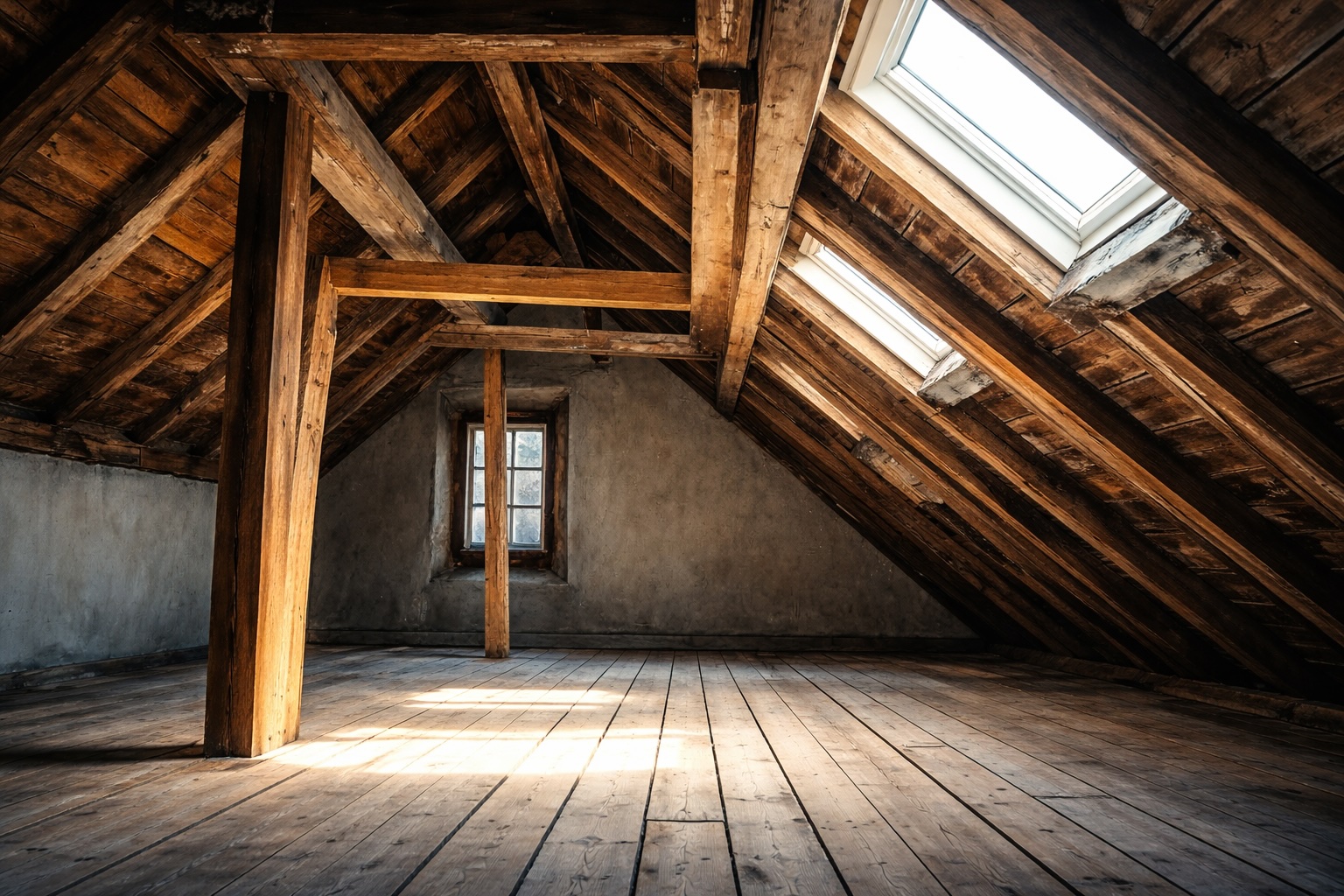
In Tampa, heat and humidity are not “seasonal.” They are a lifestyle. That’s why Steadfast Roofing treats attic ventilation like a roof system, not an afterthought: balanced airflow that moves hot, wet air out before it cooks shingles, warps decking, and turns your AC into a full-time employee.
Why Tampa Attics Get Brutal Fast
Tampa’s long warm season, daily summer thunderstorms, and consistently humid air create an attic environment that swings between “oven” and “sauna” on the same day. NOAA climate summaries for Tampa International Airport highlight the dominant summer thunderstorm pattern and warm-season character that drives heat load and moisture movement through homes.
That combo matters because attics are where:
- Solar heat loads build up above your insulation
- Moisture from indoor air and outside air can accumulate
- Roof components quietly degrade when the attic can’t “exhale”
A properly vented attic helps move super-heated air out in summer and helps manage moisture, which protects roof materials and supports a more stable indoor temperature.
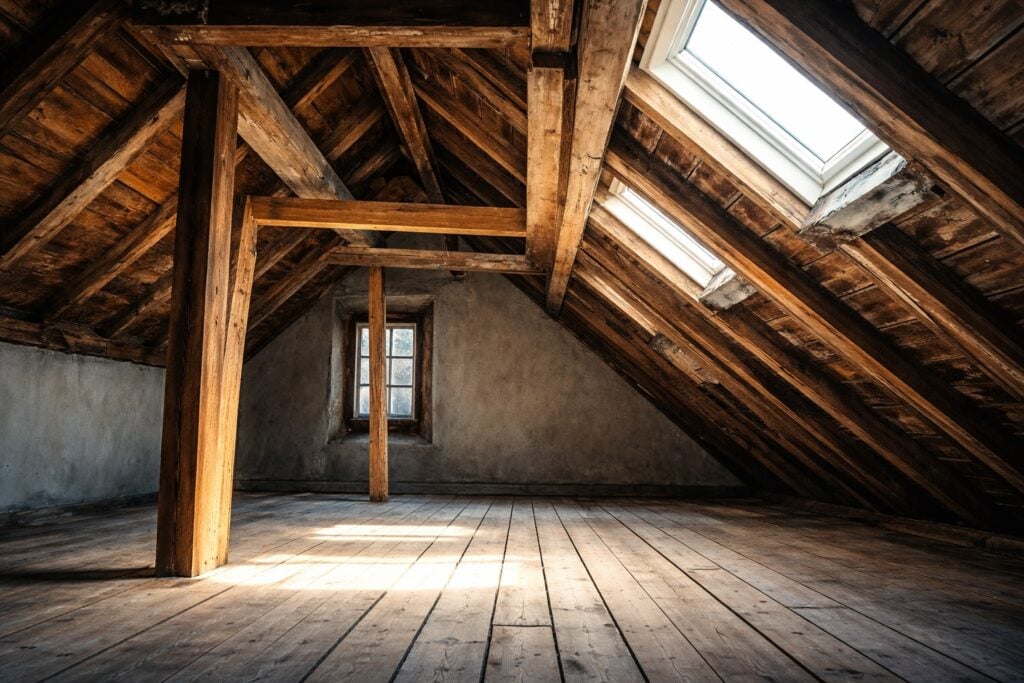
The Real Job of Attic Ventilation: Heat Out, Moisture Out, Balance Always
Attic ventilation is not “more vents = better.” It’s about balanced intake and exhaust that creates continuous, predictable airflow.
Intake (usually at soffits) brings in outside air at the lowest point.
Exhaust (ridge vents, roof vents, gable vents, etc.) releases hot air at the highest point.
When the balance is right, airflow sweeps the underside of the roof deck, carrying heat and moisture out rather than letting them linger and soak into the materials.
ENERGY STAR’s attic ventilation guidance puts it plainly: in summer, natural airflow in a well-vented attic moves super-heated air out, helping protect roof shingles and remove moisture.
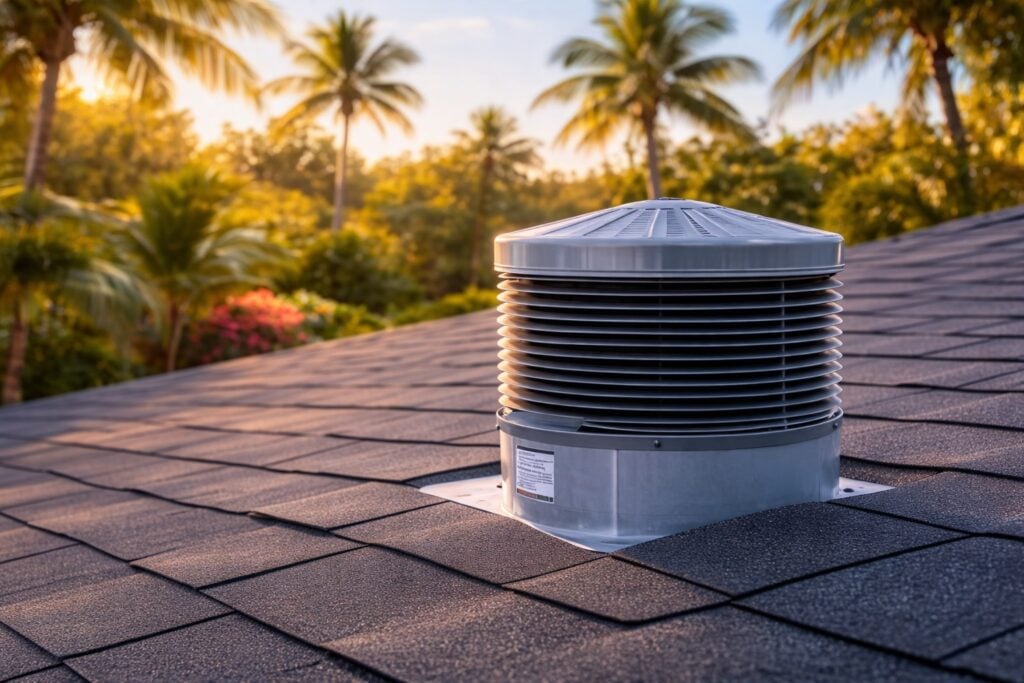
What Poor Attic Ventilation Does to Roof Systems in Florida
A weak ventilation setup can cause problems that show up as “roof issues,” even when the shingles are fine.
Common roof-health impacts from a trapped-hot, trapped-wet attic:
- Premature shingle aging: hotter roof deck temps can accelerate wear, especially on sun-facing slopes.
- Decking stress and fastener movement: repeated heat cycling expands and contracts materials, loosening things over time.
- Moisture-driven wood deterioration: persistent dampness is a recipe for rot and microbial growth.
- Insulation performance collapse: insulation that gets damp or compressed stops doing its job, and your house feels it.
Even if you never see a drip, a “stuffy” attic slowly taxes the whole system.
How Attic Ventilation Impacts Energy Efficiency in Tampa Homes
In Tampa, your biggest energy fight is cooling. Heat that builds up in the attic doesn’t politely stay up there. It radiates downward into your living space, forcing your AC to run longer and harder.
A well-vented attic helps reduce the attic’s heat buildup, lowering the heat transfer into the home, which means the air conditioner doesn’t have to work as much to maintain set temperature.
The key idea is simple:
- Lower attic temperature
- Less heat pushing into the ceilings
- Lower cooling demand
- More stable comfort
The Code Baseline: Net Free Vent Area and the 1:150 Rule
Ventilation is measured using Net Free Vent Area (NFVA), meaning the actual open area that allows air to pass (screens and louvers reduce it). Building codes set minimums to prevent under-ventilated attic spaces.
The International Residential Code (IRC) baseline requirement commonly cited is:
- 1 square foot of net free ventilation area per 150 square feet of attic floor area (1:150) with an exception that can allow 1:300 under specific conditions.
That sounds mathy, but it’s the difference between “this attic can breathe” and “this attic is basically Tupperware.”

A Practical Ventilation Sizing Shortcut Homeowners Can Understand
If you want a quick reality check for a typical vented attic, the asphalt roofing industry has published rule-of-thumb shortcuts to help estimate intake and exhaust needs in square inches of NFVA. Their guidance includes:
- Attic square footage ÷ 2 = exhaust NFVA (sq in) and intake NFVA (sq in) for the 1:150 minimum shortcut approach.
This is not a substitute for a proper evaluation, but it’s a good “are we even in the ballpark?” test.
Balanced Ventilation: The Make-or-Break Detail Everyone Misses
Many attic vent setups fail because they have exhaust without enough intake.
Here’s what happens:
- Exhaust vents pull air from wherever they can get it
- If the soffit intake is blocked or insufficient, the attic pulls conditioned air from the house
- That means higher energy bills and more moisture moving into the attic from indoors
Balanced airflow is what keeps the attic from stealing your cooled air.
Vent Types That Actually Work Well in Tampa’s Climate
There are a bunch of vent styles, but the goal is always the same: intake low, exhaust high, and a clear airflow path.
Soffit vents (intake)
- The workhorse for most Tampa homes
- Must stay clear of insulation baffles and debris
- Often under-installed or blocked by paint, insulation, or pest screens that are too restrictive
Ridge vents (exhaust)
- Continuous exhaust along the peak
- Works best paired with continuous soffit intake
- Great for even airflow across the underside of the roof deck
Static roof vents (box vents)
- Can work well when properly placed
- More penetrations through the roof surface
- Needs correct spacing and total NFVA calculations
Gable vents
- Can help on certain homes, but can also short-circuit airflow if mixed poorly with ridge/soffit systems
- Best used intentionally, not randomly added because “more venting”
Wind turbines
- Can move air well in breezy conditions
- Performance varies by placement and wind exposure
- Not a magic fix if intake is weak
Powered attic fans
- Can help in some setups, but can also depressurize the attic and pull air from the house if intake is insufficient
- Needs careful design, not guesswork
Why “More Exhaust” Can Backfire
If your attic has a big exhaust capacity but a weak intake, you can create a vacuum effect that:
- Pulls cooled air from your living space through ceiling leaks
- Increases humidity movement from indoors into the attic
- Adds load to your AC because you’re literally venting your paid-for air
ENERGY STAR notes that insulation and air sealing work together with ventilation to prevent heat and moisture from moving into the wrong places.
Translation: ventilation is not a solo act. It has to play nice with air sealing and insulation.
Tampa-Specific Moisture Reality: It’s Not Just “Condensation”
People hear “moisture” and picture droplets on nails in winter. Tampa moisture problems are often sneakier:
- Humid outdoor air enters the attic
- Warm, damp air meets cooler surfaces (especially after rain-cooled evenings or heavy AC use)
- Moisture lingers because airflow is weak or blocked
That can lead to musty odors, staining, microbial growth, and long-term wood degradation.
Warning Signs of a Poorly Ventilated Attic in Florida
If any of these sound familiar, the attic likely needs attention:
- The attic feels dramatically hotter than the outside air on sunny days
- Musty smell upstairs or in closets near the ceiling
- Rust on metal components in the attic (nails, straps, HVAC parts)
- Dark staining on the roof decking or around penetrations
- Insulation looks damp, matted, or compressed
- AC struggles most during late afternoon, even with a “fine” thermostat setting
Common Installation Mistakes That Kill Vent Performance
Ventilation often “exists” but doesn’t function because of simple problems:
- Soffits blocked by insulation (no baffles or baffles crushed)
- Painted-over soffit perforations
- Mixed systems that short-circuit airflow (like strong gable vents + ridge vent + weak soffits)
- Exhaust too low on the roof (heat stays trapped above it)
- Not calculating NFVA (installer guesses, attic suffers)
If airflow can’t travel from the low intake to the high exhaust without obstacles, it’s not ventilation. It’s decoration.
How Ventilation Supports Shingle Longevity and Roof Performance
Roof systems in Tampa take a daily beating:
- high UV
- heat cycling
- afternoon storms and wind-driven rain
- long humid stretches
Ventilation can’t stop a hurricane, but it can reduce attic heat buildup and moisture stress that can quietly shorten the life of roof components. ENERGY STAR specifically notes that a well-vented attic moves superheated air out, protecting roof shingles.
Ventilation and “Cool Roof” Strategy in Florida
Ventilation is one side of the heat equation. The other side is how much heat the roof absorbs in the first place.
The U.S. Department of Energy explains that conventional roofs can reach very high temperatures on sunny afternoons, and cool-roof strategies reduce the amount of solar energy absorbed.
In Tampa, combining:
- smart shingle color choices (where appropriate)
- proper underlayment strategy
- balanced attic ventilation can reduce heat stress across the roof system and improve comfort.
A Field-Proven Process for Evaluating Attic Ventilation (Without Guessing)
A real evaluation should include more than “yep, you’ve got vents.”
A thorough attic ventilation check looks at:
- Attic floor square footage and required NFVA targets
- Intake NFVA vs exhaust NFVA balance
- Whether intake is actually open and unobstructed
- Exhaust placement and whether airflow paths are clear
- Evidence of moisture (staining, odor, rust) and heat stress
- Insulation depth/condition and whether baffles maintain intake paths
- Air leakage points from the home into the attic (can lights, top plates, bath fans)
Ventilation should be designed, not improvised.

Frequently Asked Questions About Attic Ventilation in Tampa, FL
How much attic ventilation does a typical Tampa home need?
Code baselines commonly use the 1:150 NFVA rule for vented attics, with limited exceptions that can reduce to 1:300 under specific conditions. The exact amount depends on attic size, roof design, and whether intake pathways are clear.
Is ridge vent plus soffit vent the best setup?
It is one of the most consistently effective designs because it supports uniform low-to-high airflow across the roof deck. It only works well when soffit intake is continuous, unobstructed, and sized correctly relative to the ridge exhaust.
Do powered attic fans help in Florida?
Sometimes. They can also be a problem if intake is insufficient, because the fan can pull conditioned air from the home. The decision should be based on intake capacity, attic air sealing, and measured heat/moisture conditions, not vibes.
Can attic ventilation lower cooling costs?
A well-vented attic reduces heat buildup above insulation and lowers the strain on cooling systems by limiting heat transfer into the home. ENERGY STAR notes that natural airflow in a well-vented attic moves super-heated air out in summer.
What’s the fastest way to tell if soffit vents are blocked?
From inside the attic, look at the eave line. If insulation is packed tightly into the corners with no baffles and no visible air channel, intake is likely restricted. Also check outside for paint, debris, or coverings over soffit perforations.
CONCLUSION
In Tampa, attic ventilation is not a “nice upgrade.” It is part of keeping a roof system stable under constant heat and humidity. When intake and exhaust are balanced, sized to NFVA targets, and kept unobstructed, the attic runs cooler, manages moisture better, and stops punishing shingles, decking, insulation, and HVAC performance. A roof can look fine from the street while an under-ventilated attic quietly shortens its lifespan, so ventilation should be evaluated as carefully as shingles, flashing, and underlayment.
Read our blog: “Do Black Roof Shingles Make a House Hotter in Tampa, FL?”