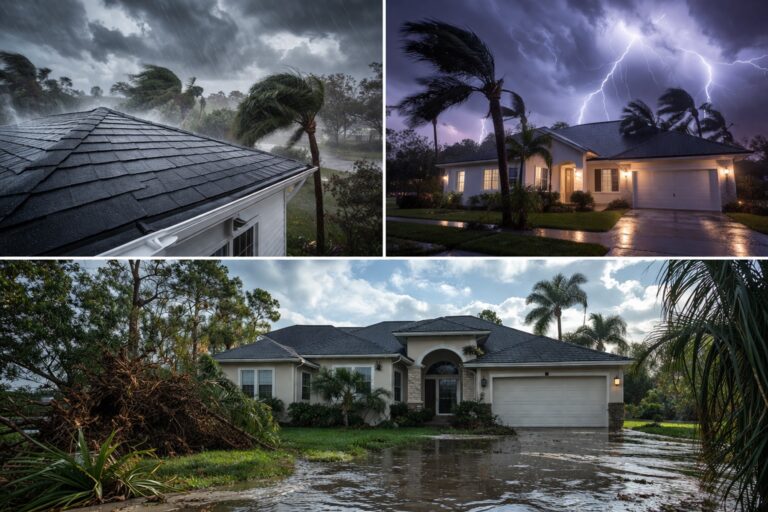
In the storm-prone regions of Florida, hurricanes are more than seasonal events—they’re constant stress tests for roofing systems. Here’s how repeated exposure to wind, rain, and debris shortens a roof’s useful life and how homeowners can counter those effects…especially when hiring a quality roofing company like the team here at Steadfast Roofing.
The Hidden Effects of Hurricane Wind Stress
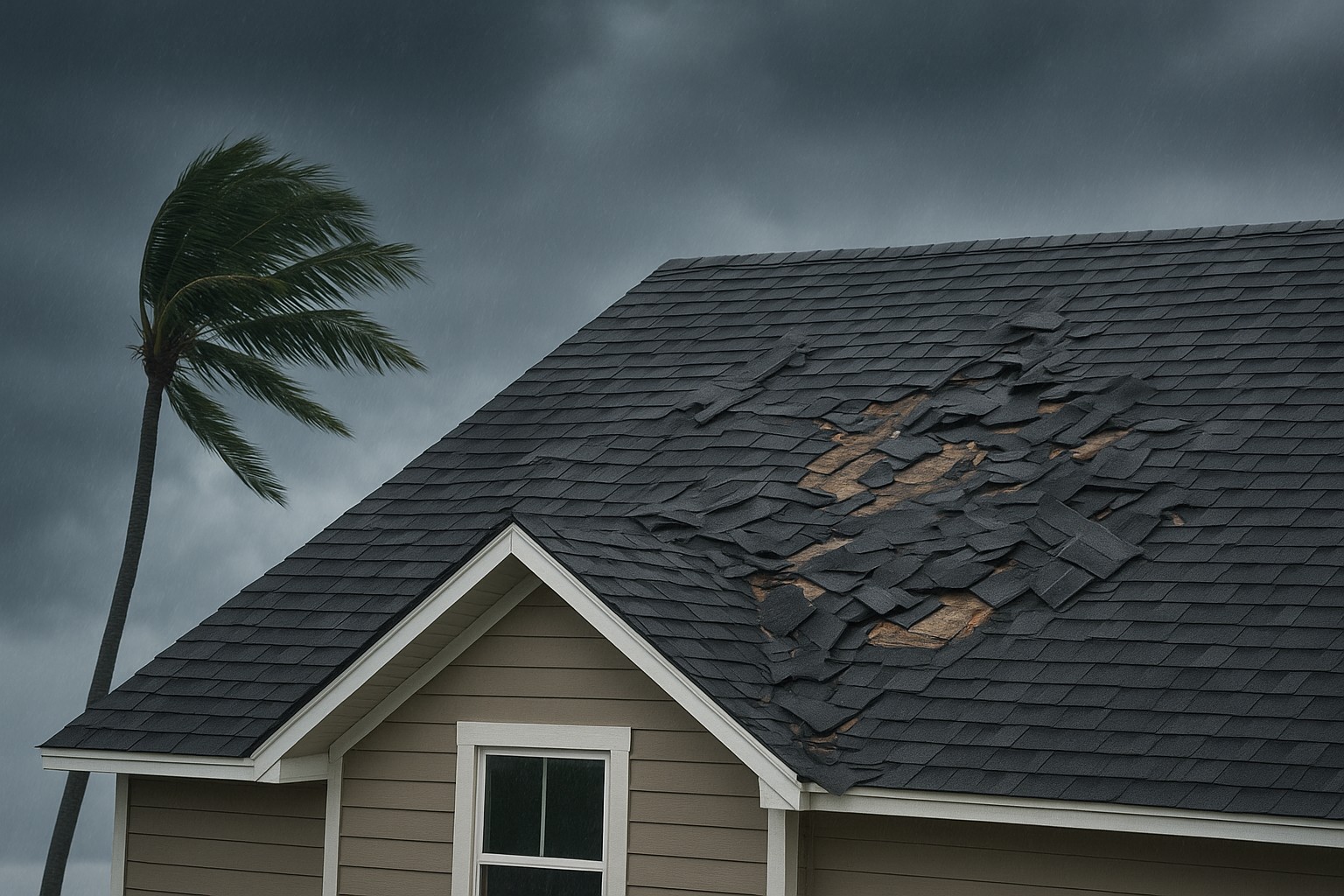
- Uplift fatigue over time: Even when a storm doesn’t rip off shingles, hurricane-force gusts repeatedly pull upward on the roofing system. This chronic uplift weakens fasteners, loosens sealants, and strains connections between roofing layers.
- Micro-separation and shingle delamination: Tiny separations between shingles or underlayment may form gradually over time. Over several storms, these gaps widen, allowing wind to lift or peel back larger areas of the surface.
- Granule loss and material degradation: High winds carry abrasive dust, sand, and debris, which erode the granule surface of asphalt shingles. Without their protective coating, shingles lose their UV resistance and age more quickly.
Water Intrusion: The Silent Roof Killer
- Compromised flashing and junctions: Flashing around chimneys, vents, skylights, and roof penetrations often becomes a weak point. Hurricanes drive water under edges and joints, where flashing may not provide a full seal.
- Underlayment breach and deck saturation: When water reaches beneath the shingle layer, the underlayment becomes the first line of defense against water intrusion. Over time, saturation can lead to rot in the roof deck and structural weakening.
- Hidden leaks can turn structural: A small leak that remains unnoticed for weeks or months can warp sheathing, degrade insulation, promote mold growth, and necessitate more extensive repairs.
Debris Impacts and Their Long-Term Consequences
- Punctures and dents: Branches, rooftop equipment, or airborne objects can strike shingles or penetrate materials, creating direct paths for water infiltration.
- Cracking and fractures: Impact stress might not immediately dislodge roofing components, but can cause microfractures or damage that becomes problematic in future storms.
Roof Restoration vs. Replacement: When Repair Isn’t Enough
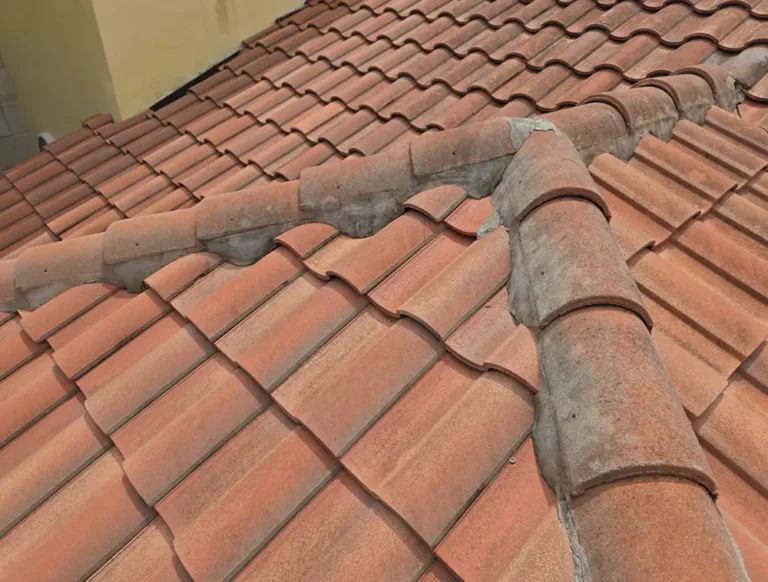
- Age and cumulative damage: A roof over 10 to 15 years old that has weathered multiple hurricanes is likely to have compromised integrity beyond what patchwork repairs can reliably fix.
- Widespread granule loss or saturation: If large swaths of shingles have lost their granules or the roof deck shows signs of water damage beneath, a full replacement is more prudent.
- Hidden structural compromise: If attic inspections reveal sagging rafters, light penetration, or warped decking, replacement is often the safer investment.
Resilient Roofing Strategies for Storm-Prone Regions
1. Choose hurricane-resistant materials
Impact-rated shingles (Class 4), polymer-modified asphalt, laminated systems, or metal roofing with concealed fasteners perform significantly better under wind and debris stress.
2. Strengthen structural connections
Install hurricane straps or clips that anchor roof trusses to wall framing. Use ring-shank or ring-drum nails for increased holding power.
3. Secondary waterproofers
Use self-adhered membranes (peel-and-stick) beneath roofing materials—especially along eaves, valleys, penetrations, and vulnerable junctions.
4. Reinforce flashing and transitions
Ensure flashing is mechanically fastened and sealed with high-quality elastomeric compounds, and incorporate continuous barrier layers.
5. Post-storm inspection protocols
Utilize drone imaging, thermal scanning, moisture meters, and attic inspections to detect hidden damage early.
Lifecycle Protection: Maintenance & Pre-Season Care
- Inspect before hurricane season (April–May): Check flashing, sealants, shingles, and attic ventilation.
- Clear debris and gutters: Accumulated leaves, branches, and granules reduce drainage and increase the risk of standing water.
- Trim trees and secure loose items: Prevent projectiles from becoming roof threats during high winds.
- Documentation and baseline assessment: Establish a record of pre-storm conditions for potential insurance claims.
Local Relevance & Contractor Expertise
In Florida’s Tampa Bay region, storms are not occasional—they are predictable. The intense wind, rain, humidity, and occasional salt spray require roofing systems designed for endurance, not just aesthetics. When selecting a local contractor like Steadfast Roofing for roofing evaluations, insist on storm-resilient designs and storm inspection protocols to prolong roof life through repeated hurricane exposure.
Conclusion
Hurricanes don’t just damage roofs—they speed up their aging process through repeated mechanical stress, moisture infiltration, and impact damage. Proactive material selection, structural reinforcement, diligent maintenance, and expert post-storm inspections form the best defense. Homeowners who take these steps can significantly extend their roof’s lifespan and avoid premature replacement costs.
Take a moment to read one of our latest blogs: “Types of Roofs Most Likely to Fail During Hurricanes and How to Avoid Them“.