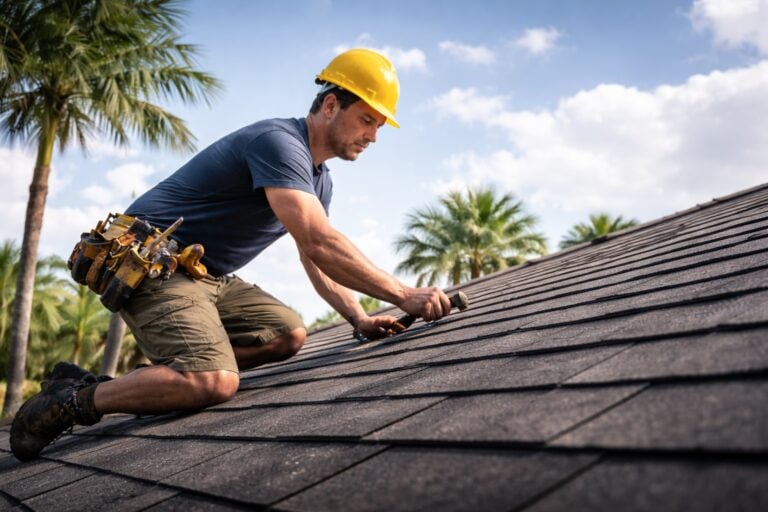
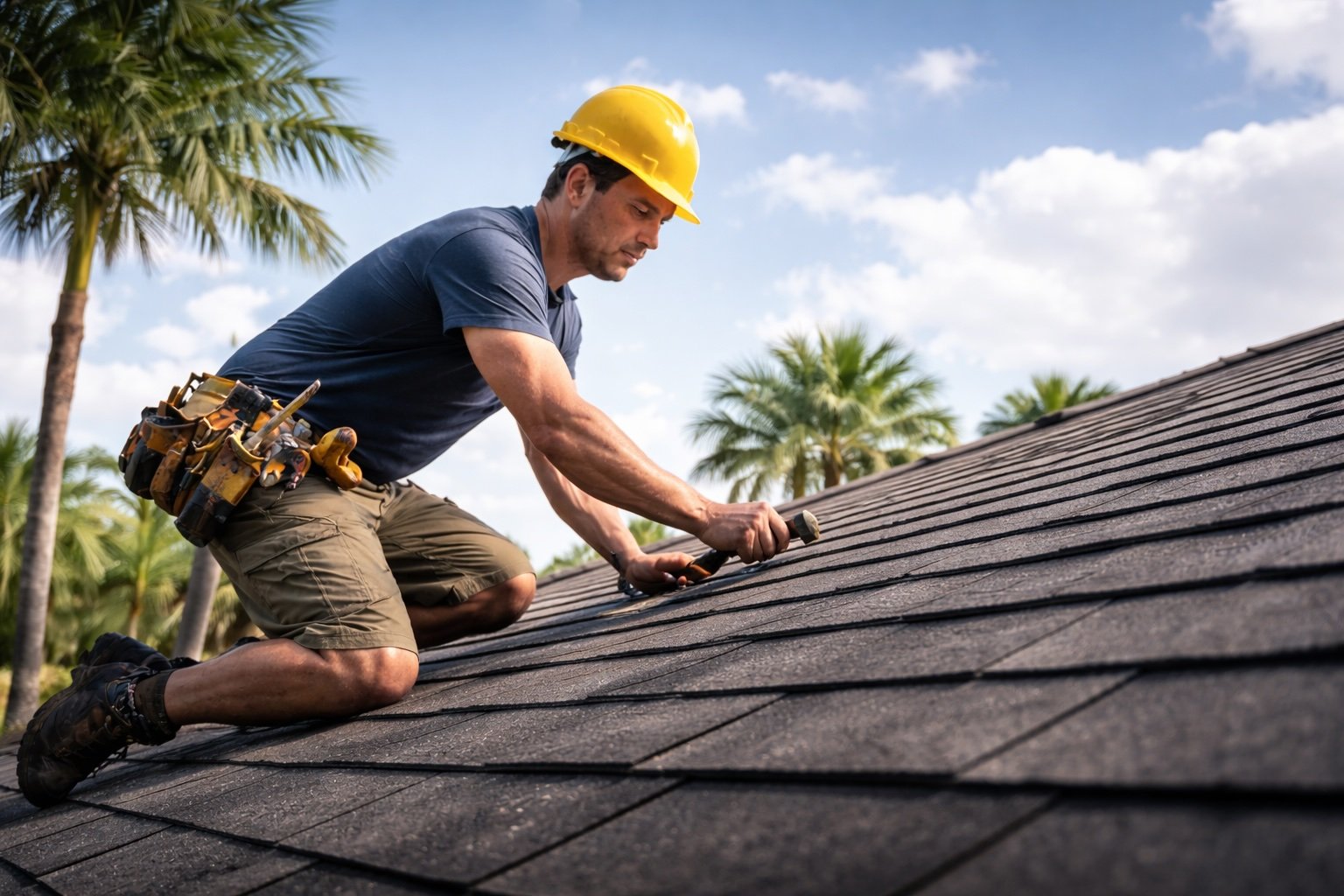
In Tampa, hurricane season is not a “maybe,” it’s a calendar event. When we’re asked to help homeowners get ready, we focus on the roof system, not just the shingles. That’s why Steadfast Roofing approaches hurricane prep like a checklist, a timeline, and a set of failure points that Tampa storms love to exploit.
Tampa Hurricane Roof Prep Basics for 2026
The Atlantic hurricane season runs from June 1 through November 30.
Tampa Bay homeowners should treat “hurricane prep” as two tracks:
- Pre-season hardening (the work you do when you still have time and contractors aren’t slammed)
- Short-fuse actions (what you do when a storm is on the map and everyone suddenly remembers their gutters exist)
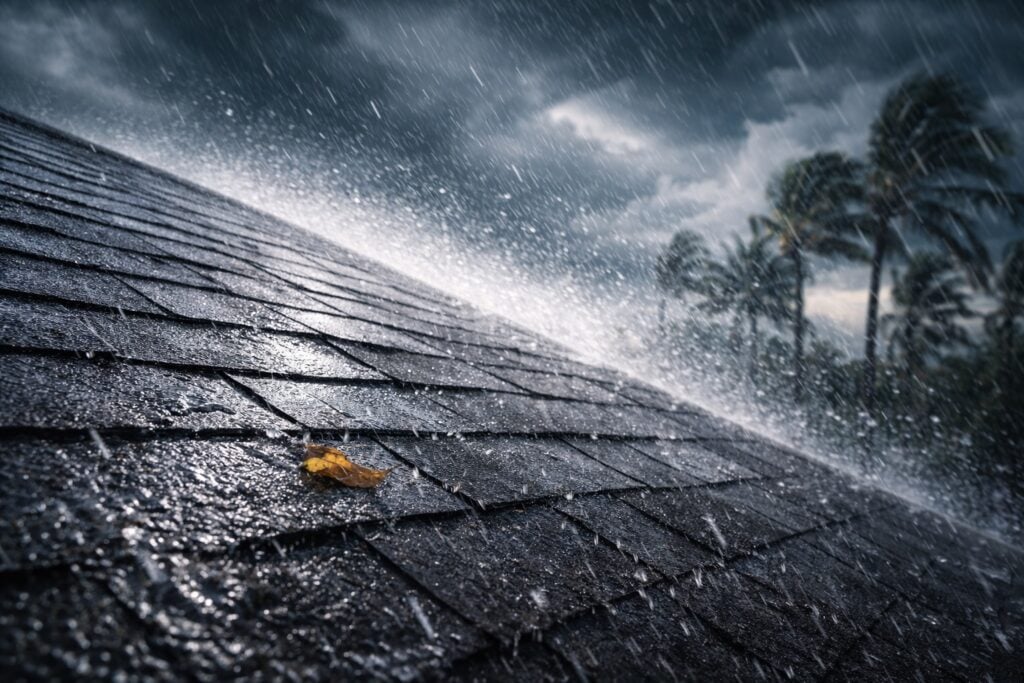
How Hurricanes Actually Damage Roofs in Tampa
Wind and water don’t politely take turns. They work as a team.
- Wind uplift: Hurricanes begin with 74 mph sustained winds (Category 1 starts there), and uplift pressure can peel roof materials from edges, ridges, and weak adhesive bonds. (Source: National Hurricane Center)
- Wind-driven rain: Water gets pushed up and under laps, into tiny flashing gaps, and through penetrations, even if “nothing looks missing” from the street.
- Debris impact: Tree limbs and loose backyard items punch holes, crack tiles, and deform metal panels.
- Cascade failures: Once the edge lifts, the next rows follow. Then the underlayment gets exposed. Then the deck gets wet. Then everything gets expensive.
The Tampa Timeline That Actually Works
Tampa’s weather gives you plenty of warning to do this right if you start early.
- March to April 2026: Full roof inspection, attic check, ventilation check, fix small issues while scheduling is sane.
- May to early June 2026: Complete repairs, secure flashing, tune drainage, trim trees.
- Mid-season (July to September): Expect delays, higher demand, and fewer “quick fixes.”
- After any named storm or major wind event: Document, inspect, and address damage while it’s still minor. (Source: FLDFS)
Roof Inspection Checklist Tampa Homeowners Can Use Before Hurricane Season
If this feels like a lot, good. A roof is a system. Systems fail at the seams.
- Shingles or tiles: Look for lifted corners, missing pieces, cracks, soft spots, excessive granule loss, and uneven color patches that indicate past repairs.
- Ridges and hips: Ridge caps, ridge vents, and hip tiles are common failure points because they are exposed to wind from multiple directions.
- Roof edges: Eaves and rakes are where uplift starts. Loose drip edge, weak starter rows, and sloppy edge metal are red flags.
- Valleys: Valleys are water highways. Any cracked sealant, exposed fasteners, or debris buildup is a problem waiting for a downpour.
- Flashing: Step flashing, chimney flashing, skylight curbs, and wall transitions should be tight and properly lapped, not “caulked into submission.”
- Penetrations: Pipe boots, vent stacks, and mechanical curbs should be sealed, seated, and not sun-baked into brittleness.
- Gutters and downspouts: Overflowing gutters push water where it doesn’t belong, including behind fascia and into soffits.
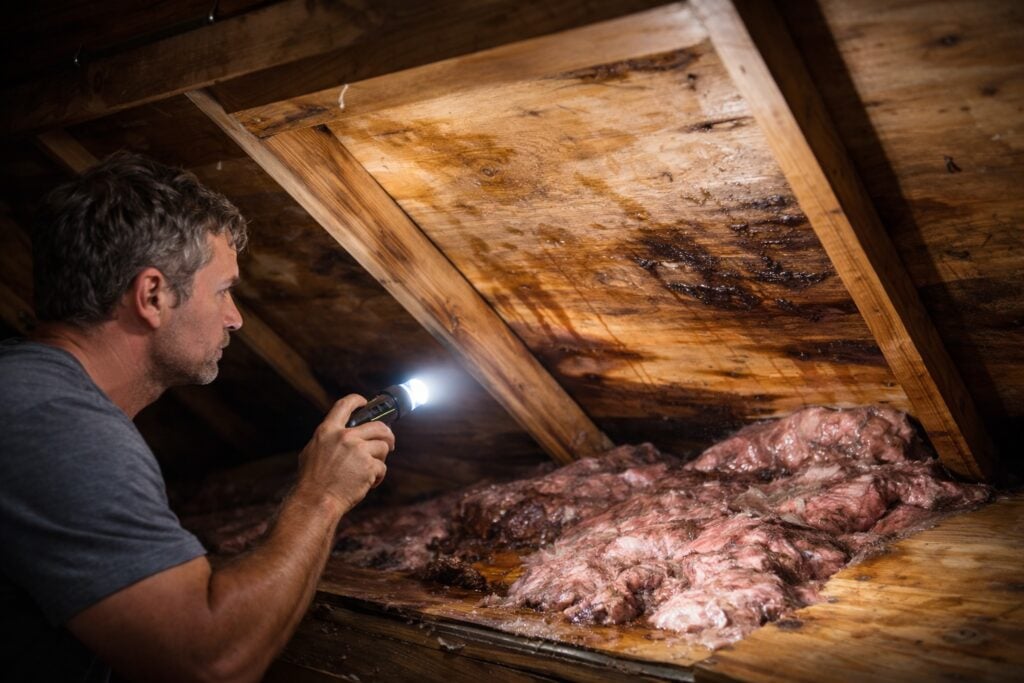
- Attic signs Include Stains, damp insulation, rusty nail heads, musty odors, and daylight where it shouldn’t be.
Tampa Roof Reinforcements That Matter in High Wind
A hurricane-ready roof is less about fancy buzzwords and more about boring, correct details.
- Edge strength: Reinforced edge metal and proper starter courses reduce the chance of the first peel.
- High-wind-rated roof covering: Wind-rated shingles and proper nailing patterns help the roof behave as one unit, not 10,000 individual tabs.
- Secondary water-barrier approach (when reroofing): Florida code and mitigation guidance often emphasize secondary water-barrier concepts during reroofing of existing homes.
- Tight, layered flashing: Mechanical laps and correct fastening beat “one more bead of caulk” every day of the week.
- Ventilation that doesn’t invite water: Proper intake and exhaust balance reduces pressure issues, moisture buildup, and weird attic conditions that accelerate failure.
Florida Building Code and Tampa Wind Reality Checks
Tampa sits in a region where wind design and uplift resistance aren’t theoretical. Even if a roof “passed inspection” years ago, age, repairs, and prior workmanship can leave the system weaker than it appears.
If you’re reroofing, pay attention to:
- Roof deck attachment
- Underlayment strategy and secondary water barrier provisions
- Flashing details at transitions
- Vent and edge detailing
Florida building code resources and related retrofit guidance provide detailed descriptions of these mitigation items and their definitions. (For example, see Florida Building Commission resources on secondary water barrier concepts and reroof mitigation provisions.)
The “Before Storms Are Forming” Hurricane Roof Prep Plan
This is the part most people skip because it’s not dramatic. It’s also the part that saves you.
- Book a professional inspection early and address anything that could create an opening.
- Repair small leaks immediately. Tampa’s humidity turns “small” into “mold” fast.
- Clear and test drainage: Run a hose, confirm that downspouts discharge away from the foundation, and ensure water doesn’t back up at the valleys.
- Seal only what should be sealed: random caulking can trap water and conceal failure points.
- Trim trees away from the roofline: focus on limbs that could hit the roof or scrape shingles in the wind.
- Secure outdoor items: Patio furniture, grills, potted plants, trampolines… hurricanes love free projectiles.
The “72 Hours Before Landfall” Roof Prep Plan for Tampa
When a storm is tracking toward the Gulf, do the high-impact moves.
- Pick up all items outside that could become airborne. If you can lift it, wind can throw it.
- Clean gutters and roof drains to ensure water has a clear exit path.
- Walk the interior and attic: Look for active drips, damp insulation, and staining that could worsen under wind-driven rain.
- Take pre-storm photos and video: Wide shots of each roof slope from the ground, plus close-ups of any existing issues.
- Stage emergency supplies: Not a roof replacement kit. Just what helps you limit interior damage if something goes wrong.
Emergency Roof Supplies Tampa Homeowners Should Have Ready
You’re not trying to become a roofer overnight. You’re trying to prevent the “waterfall in the hallway” situation.
- Heavy-duty plastic sheeting
- Buckets and towels
- A wet/dry shop vac (if you already have one)
- Flashlights and headlamps
- Batteries and portable chargers
- Basic PPE (gloves, eye protection)
- A printed list of emergency contacts and your insurance claim number
If you suspect damage, do not climb on the roof during or after storms. Wet tiles, soft decking, and hidden punctures are a bad mix with gravity.
After the Storm: What to Do If You Suspect Roof Damage
This is where homeowners either win the week or lose three months.
- Document immediately: Photos and video before you move anything.
- Report damage promptly: Florida insurance guidance commonly advises notifying your insurer and documenting damage with photos/video.
- Look for subtle signs: ceiling stains, wet insulation, dripping at soffits, new, musty odors, bubbling paint, and “mystery” drywall cracks.
- Don’t delay temporary protection if needed: If water is entering, temporary measures (safely and professionally installed) can prevent secondary damage from spreading.
Wind Mitigation and Insurance: The Roof Features That Can Help in Florida
In Florida, wind mitigation documentation can affect insurance discounts and underwriting decisions. State guidance notes that inspections document wind mitigation features using standardized forms and photos. (Source: FLDFS)
Common items that often matter:
- Roof-to-wall connections
- Roof deck attachment
- Secondary water barrier presence (when applicable)
- Roof covering type and rating
- Opening protection considerations (not roof-only, but tied to pressure and envelope performance)
If the roof is older, repeatedly patched, or showing wear, hurricane season is when insurers and storms are less forgiving.
Tampa-Specific Trouble Spots That Deserve Extra Attention
Some roof details are more susceptible to damage in Tampa’s mix of heat, sun, salt air (near the bay), and sudden summer storms.
- Sun-baked sealants and boots: UV damage makes rubber and sealants brittle.
- Low-slope transitions: Porch tie-ins, lanais, and dead valleys can trap water.
- Improperly attached flashing: Water intrusion often begins at a wall line rather than at the middle of a roof field.
- Ventilation imbalances: Heat buildup and moisture can accelerate deterioration from the inside.
Conclusion
Hurricane roof prep in Tampa is about removing weak points before the wind finds them. Start early, inspect like you mean it, fix the small failures, and document your roof’s condition before and after storms. When the season gets loud, the homeowners who already handled the boring stuff are the ones sleeping through the rain.
Read our blog: “Metal Roof vs. Shingle Roof in Tampa, FL: Which Roof Is Better for Florida Homes?”