
A missing drip edge can turn the narrow perimeter of a roof into a recurring water-entry point. At Steadfast Roofing, based in Ruskin, FL, we inspect roof edges for missing, loose, undersized, corroded, or incorrectly layered metal because the defect can damage fascia, roof decking, starter shingles, and gutter attachment points before an interior ceiling stain appears.
What Is a Roof Drip Edge?
Drip edge is corrosion-resistant metal flashing installed along the eaves and gable/rake edges of a shingle roof. Its horizontal flange extends onto the roof while the vertical leg projects over the edge. This shape directs runoff away from exposed sheathing and fascia instead of allowing water to curl backward beneath the roofing. Florida’s residential code specifically requires drip edge at the eaves and gables of shingle roofs.
The component sits at a critical transition where roof covering, underlayment, fascia, gutters, and the deck edge meet. If that transition is wrong, wind-driven rain and routine runoff can repeatedly wet materials that were never intended to stay saturated. FEMA guidance for sloped roofs specifically identifies drip edges as part of roof-edge metal systems.
Why a Missing Drip Edge Causes Roof Damage
Water Can Reach the Roof Deck Edge
Shingles shed bulk water, but they do not waterproof the roof edge by themselves. Without correctly positioned edge metal, runoff can follow the underside of the shingle or starter course and wet the sheathing edge. Repeated exposure can create localized deterioration that remains concealed beneath the roof covering.
Fascia and Gutter Areas Stay Wet
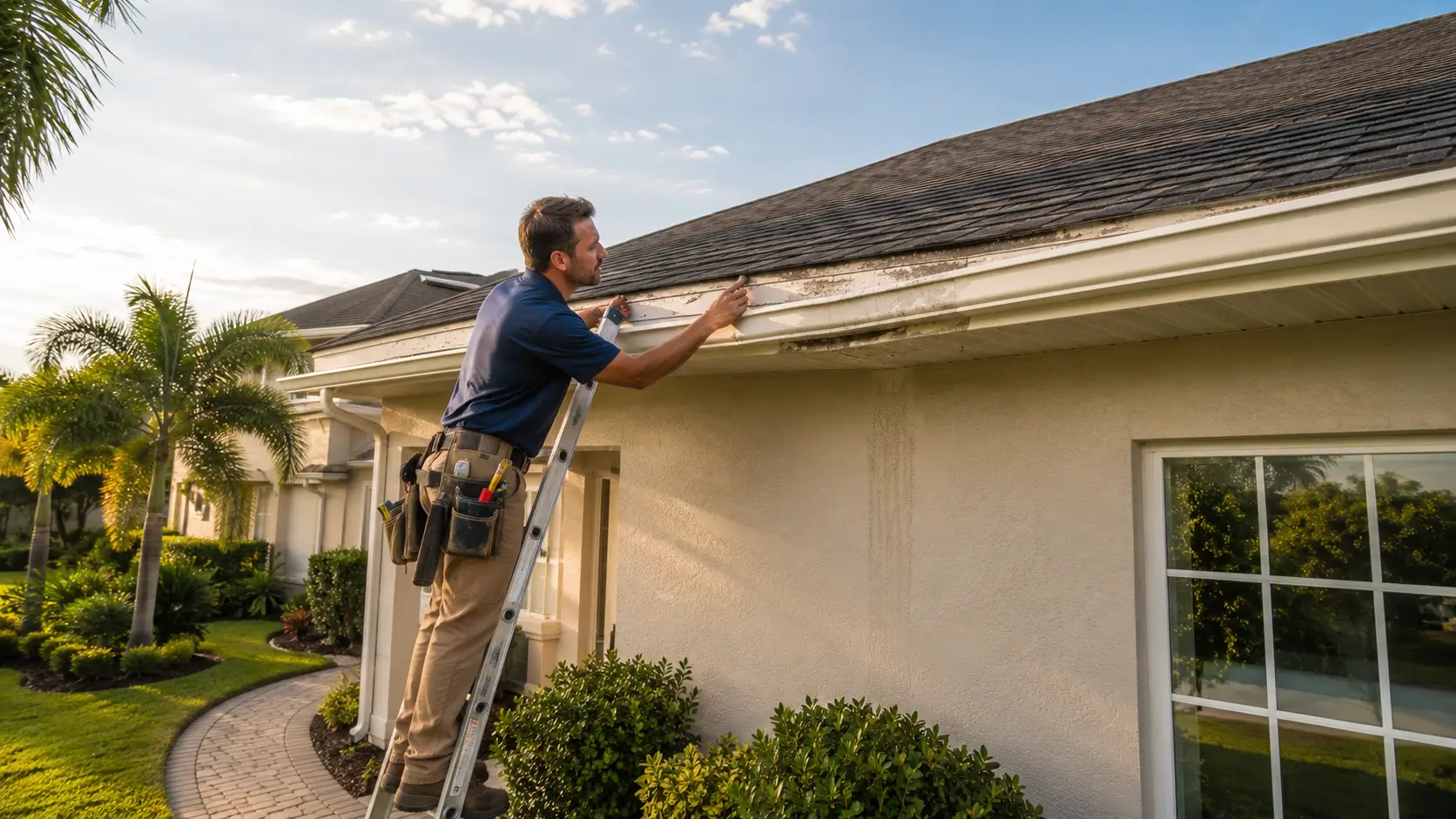
At an eave, drip edge helps project water outward. When it is absent or too short, water can track behind the gutter or down the fascia. Typical warning signs include peeling coatings, dark staining, softened fascia, rusted fasteners, and loose gutter attachment. Replacing a gutter without correcting the roof-edge detail leaves the moisture path in place.
Roof-Edge Shingles Become More Vulnerable
Roof perimeters are highly exposed during strong winds. Missing, loose, or poorly fastened edge metal can leave the starter course and perimeter assembly less controlled. Drip edge does not replace correct shingle fastening, but the edge metal, starter strip, shingles, and deck attachment must function as one system. FEMA likewise treats roof-edge components as part of the sloped-roof assembly requiring attention in wind-resistant construction.
Florida Drip Edge Code Requirements for Shingle Roofs
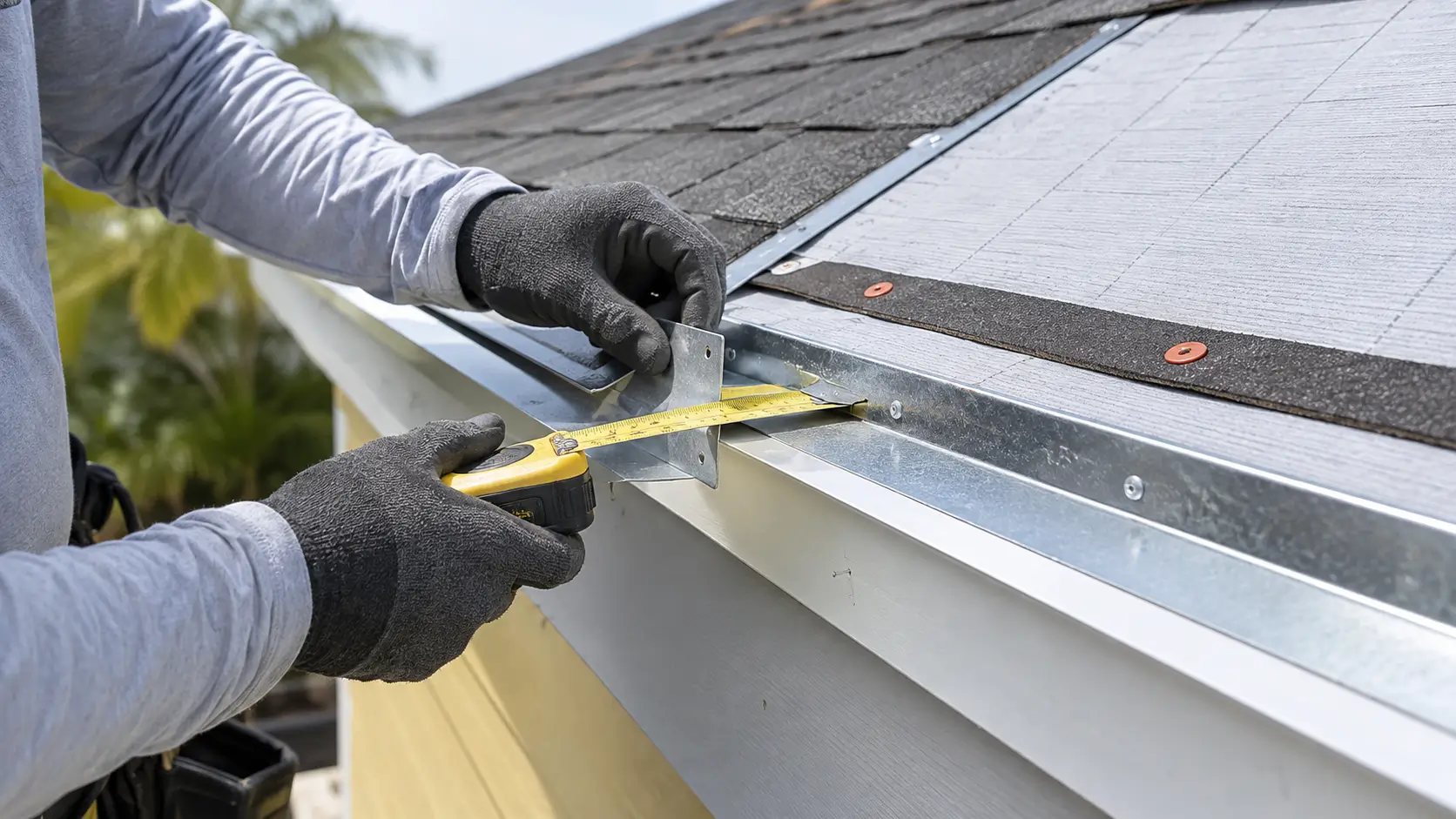
Florida’s 8th Edition (2023) Residential Code remains the current statewide code in August 2026. Section R905.2.8.5 requires drip edge at the eaves and gables of shingle roofs. The Florida Building Code drip-edge provision includes measurable requirements:
- Adjacent sections must overlap at least 3 inches.
- At eaves, the metal must extend at least 1/2 inch below the sheathing and at least 2 inches back onto the roof.
- Drip edge must generally be mechanically fastened no more than 12 inches on center.
- Under specified higher-wind or taller-roof conditions, maximum fastener spacing tightens to 4 inches on center.
- Current provisions also address how drip edge interfaces with underlayment, roof cement, and self-adhering ASTM D1970 underlayment.
Florida’s official analysis of the 8th Edition documents a significant revision to Section R905.2.8.5, including changes to the drip-edge and underlayment interface and the use of self-adhering underlayment over a primed drip-edge flange. Older roofs should therefore be evaluated against the code cycle and approved installation detail applicable to the permitted work rather than assuming an older layering method remains current.
Signs a Roof May Be Missing Drip Edge
A roof-edge defect is often visible from ground or ladder level, but confirmation should include the shingle edge, underlayment, decking, fascia, and gutter relationship. We look for exposed sheathing, no visible edge metal, water streaks behind gutters, deteriorated fascia, lifted starter shingles, corroded fasteners, inadequate overlaps, and metal installed incorrectly within the roof assembly.
A professional roof repair assessment is especially important once staining or wood deterioration appears. The visible symptom may not be located directly below the point where water first entered.
Can Drip Edge Be Added to an Existing Roof?
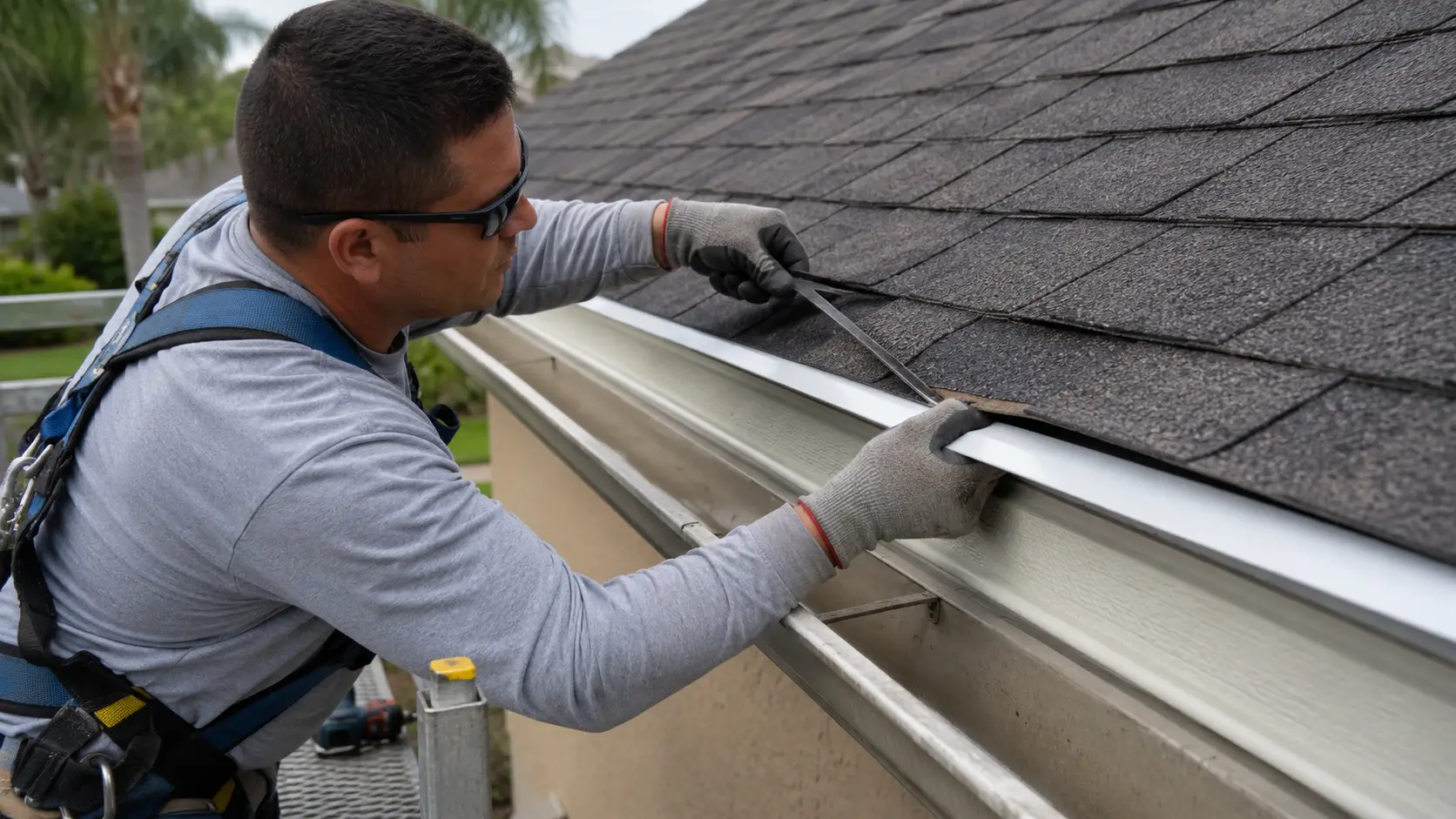
Yes, but the repair method depends on roof age, shingle flexibility, fastening, underlayment placement, and deck-edge condition. Simply sliding metal beneath finished shingles without evaluating those conditions can leave existing damage or incorrect roof-edge details unresolved.
Retrofit When the Existing Roof Is Still Serviceable
On a younger, flexible asphalt shingle roof, a controlled retrofit may be possible. The starter or edge shingles may need to be released, the correct metal fitted and mechanically fastened, the underlayment transition restored, and disturbed shingles properly resealed.
Remove and Rebuild the Damaged Roof Edge
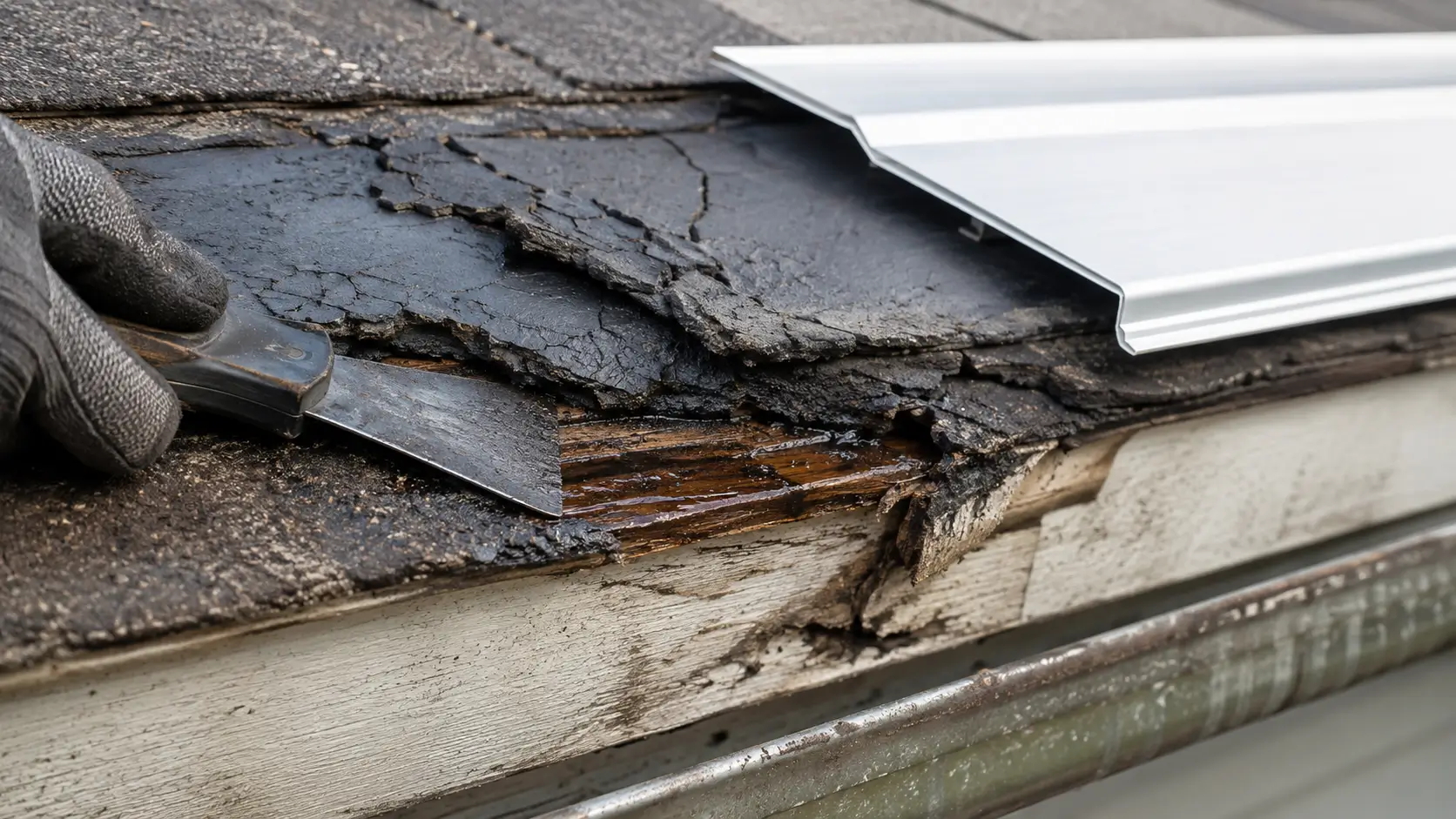
If the first course is brittle, incorrectly fastened, or too difficult to lift without damage, we may need to remove a narrow section of roofing and rebuild the perimeter. This provides access to damaged decking, deteriorated fascia, failed underlayment, and incorrect starter-strip details that cannot be corrected by inserting new metal alone.
Replace the Roof Only When the Defect Is Part of a Larger Failure
Missing drip edge alone does not automatically justify full roof replacement. Replacement becomes reasonable when the roof is approaching the end of its service life, perimeter deterioration is extensive, shingles cannot be repaired reliably, decking damage is widespread, or multiple installation defects exist. With residential roofing services, the edge metal, underlayment, starter course, flashing, and roof covering can be rebuilt as one coordinated assembly when broader replacement is warranted.
Why Caulk Is Not a Permanent Drip Edge Fix
Sealant can close a small joint, but it cannot recreate the geometry, overlap, mechanical attachment, or water-shedding path of properly installed flashing. Heavy roof-cement patches may also conceal the condition of the wood underneath. We treat sealants as part of specific approved details when required—not as a substitute for missing edge metal.
Conclusion
A missing drip edge is a roof-system defect, not a cosmetic trim issue. The permanent fix is a continuous, correctly sized, overlapped, mechanically fastened edge integrated with the underlayment, shingles, deck, fascia, and gutter line. When staining, rot, lifted shingles, or questionable edge flashing is visible, contact our roofing team before repeated wetting turns a localized repair into deck or fascia replacement.
FAQ
Can a roof pass inspection without drip edge in Florida?
For shingle roofs subject to the current Florida Residential Code, drip edge is required at eaves and gables. Existing roofs may have been constructed under earlier code cycles, so the permit date, applicable code, and scope of subsequent roofing work should be reviewed before determining compliance.
How much of the roof must be removed to install missing drip edge?
There is no universal amount. A clean retrofit may require access beneath only the starter and first shingle course, while brittle shingles, damaged decking, deteriorated fascia, or incorrect underlayment can require removal and reconstruction of a wider perimeter section.
Should drip edge go behind or into the gutter?
The vertical leg should create a water-shedding transition that directs runoff toward the gutter while protecting the fascia and roof-deck edge. Exact geometry depends on the gutter position and approved roof-edge detail; water should discharge cleanly rather than track behind the gutter or back onto exposed wood.