
Living in Tampa means your roof has to handle more than everyday sun and rain. Hurricane season brings high winds, wind-driven rain, flying debris, and long periods of heavy moisture. That is why choosing the right roofing material matters, but it is also important to understand one key point: no roof is completely hurricane-proof.
The best hurricane-resistant roof is not just a metal roof, tile roof, or shingle roof. It is a complete roofing system. The roof covering, deck attachment, underlayment, fasteners, edge metal, flashing, ventilation, and installation method all work together. If one part of that system is weak, the entire roof can be more vulnerable during a storm.
For Florida homes, homeowners should also make sure the roofing products being installed have valid Florida Product Approval documentation. The official Florida Product Approval system allows contractors and homeowners to check roofing products by code version, category, approval status, impact resistance, and design pressure. As of the current Florida Product Approval search, the listed code version is the 2023 Florida Building Code, which became effective December 31, 2023.

What Makes a Roof Hurricane-Resistant?
A hurricane-resistant roof is designed to reduce three main risks: wind uplift, water intrusion, and damage from debris. Wind uplift happens when strong winds try to pull the roof covering away from the structure. Water intrusion happens when rain gets under damaged shingles, tiles, panels, or membranes. Debris damage can occur when branches or loose objects hit the roof during a storm.
This is why the visible roofing material is only part of the decision. IBHS FORTIFIED Roof guidance focuses on stronger roof edges, sealed roof decks, and better roof deck attachment. IBHS notes that sealed roof decks help reduce water intrusion if the roof covering is damaged, and that ring-shank nails installed in an enhanced pattern can nearly double roof strength against wind forces.
Metal Roofing
Metal roofing is one of the strongest options for many Tampa homeowners. A properly installed standing seam or concealed-fastener metal roof can offer strong wind performance, long service life, and good resistance to Florida heat and moisture.
However, not every metal roof performs the same way. The panel system, clips, fasteners, underlayment, and edge details must be approved for the home’s required wind pressures. For hurricane resistance, homeowners should ask for the Florida Product Approval number, the design pressure rating, and the approved installation method.
Metal roofing is often a good choice for homeowners who want a long-term roof system and are comfortable with a higher upfront investment. It can be especially attractive for homes where durability, storm resistance, and lower long-term maintenance are priorities.
Architectural Asphalt Shingles
Architectural asphalt shingles remain one of the most popular roofing choices in Florida because they are more affordable than metal or tile and come in many styles. For hurricane-prone areas, homeowners should avoid choosing shingles based only on price.
A better option is a high-wind-rated architectural shingle installed according to the manufacturer’s high-wind instructions. Nail placement, starter strips, drip edge, underlayment, and deck condition all affect performance. Even a strong shingle can fail early if it is installed incorrectly.
Asphalt shingles can be a practical choice for Tampa homeowners who want a balance of cost, appearance, and storm performance. They may not last as long as metal or tile, but with the right product and installation, they can provide reliable protection for many homes.
Concrete and Clay Tile Roofing
Tile roofing is common in Florida because it offers strong curb appeal, long service life, and good durability. Concrete and clay tile can perform well in high-wind areas, but only when the home can support the roof weight and the tiles are properly secured.
Weight alone does not make a tile roof hurricane-resistant. Tiles can crack, shift, or detach if the fastening system is not correct. Hip and ridge tiles are especially important because those areas are exposed to strong wind pressure.
Tile roofing can be a good option for homeowners who want a premium Florida look and a long-lasting roof. Before choosing tile, homeowners should confirm the fastening method, underlayment system, structural weight capacity, and product approval documentation.
Low-Slope and Flat Roof Systems
Some Tampa homes have flat or low-slope roof sections over porches, lanais, garages, additions, or commercial-style areas. These sections should not be treated the same way as steep-slope roofs.
For low-slope areas, modified bitumen, TPO, PVC, EPDM, or other membrane systems may be appropriate. The most important details are membrane attachment, edge securement, drainage, flashing, and resistance to wind uplift. Poor drainage or weak perimeter details can cause serious problems even when the membrane itself is high quality.
A low-slope roof system can perform well in Florida storms when it is designed for the correct uplift pressures and installed with strong edge and flashing details.
What Matters More Than the Material
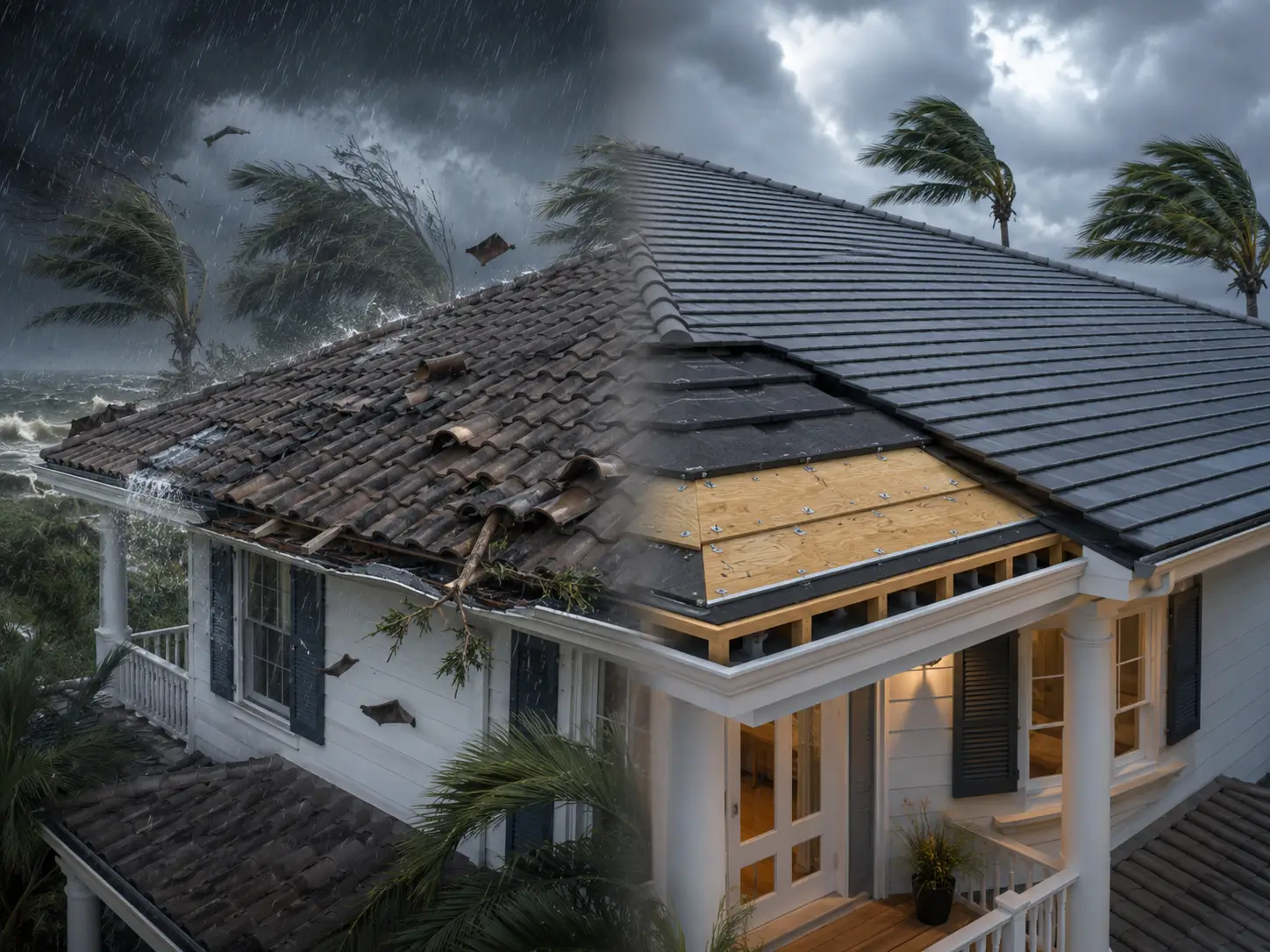
The best roofing material will not protect a home if the roof deck, underlayment, or edges are weak. During a hurricane, roof damage often begins at vulnerable edges or areas where wind can get underneath the roof covering.
A strong roofing system should include a properly attached roof deck, quality underlayment, sealed deck or secondary water barrier where appropriate, secure drip edge, correct fasteners, and strong flashing around vents, walls, skylights, and chimneys.
This is also why roof replacement is often a good time to discuss wind mitigation. Features such as roof deck attachment, secondary water resistance, roof-to-wall connections, and roof shape may affect insurance documentation. Homeowners should keep permits, product approvals, inspection records, and photos of the completed installation.
Which Roofing Material Is Best for Your Tampa Home?
There is no single best answer for every home. Metal roofing is often best for long-term durability and strong storm performance. Architectural shingles are usually best for homeowners who want a more affordable roof replacement. Tile is a strong option for homes that can support the weight and where appearance and lifespan are priorities. Low-slope membrane systems are best for flat or low-slope roof sections where shingles or tile are not appropriate.
The right choice depends on your roof slope, structure, budget, neighborhood, insurance goals, and long-term plans. A professional roof inspection can help determine which system makes the most sense for your home.
Final Thoughts
When preparing for hurricane season, do not think only about the roof covering. Think about the full roof system. A hurricane-resistant roof depends on the right material, approved products, strong deck attachment, quality underlayment, secure edges, proper flashing, and professional installation.
At Steadfast Roofing, we help Tampa Bay homeowners choose roof systems built for Florida weather. Whether you are comparing metal roofing, asphalt shingles, tile roofing, or a low-slope system, our team can inspect your roof and recommend the right option for your home.
Contact Steadfast Roofing to schedule a roof inspection or request a roof replacement estimate.
FAQ
What is the best roofing material for hurricanes in Tampa, FL?
The best roofing material depends on the home. Metal roofing, properly fastened tile, and high-wind-rated architectural shingles can all be strong options. For flat or low-slope areas, a membrane roof system may be more appropriate.
Is metal roofing better than shingles for hurricane protection?
Metal roofing can offer excellent wind performance when installed as an approved system. However, high-wind-rated architectural shingles can also perform well when installed correctly. Metal usually lasts longer, while shingles are usually more affordable.
Are tile roofs good for hurricanes?
Tile roofs can perform well in hurricane-prone areas when properly installed and fastened. The structure must support the weight, and the underlayment, fastening system, and hip and ridge details must be installed correctly.
What should homeowners verify before replacing a roof in Florida?
Homeowners should ask for the Florida Product Approval number, design pressure information, underlayment type, installation method, permit documentation, warranty details, and whether the roof may support updated wind mitigation documentation.
Are flat roofs good for hurricanes in Florida?
Flat and low-slope roofs can perform well when designed correctly. The key details are membrane attachment, edge securement, drainage, flashing, and wind uplift resistance.
Does a new roof help with wind mitigation discounts?
A new roof may help, but discounts are not automatic. Insurance credits depend on documented features such as roof covering, roof deck attachment, secondary water resistance, roof-to-wall connections, roof shape, and opening protection.