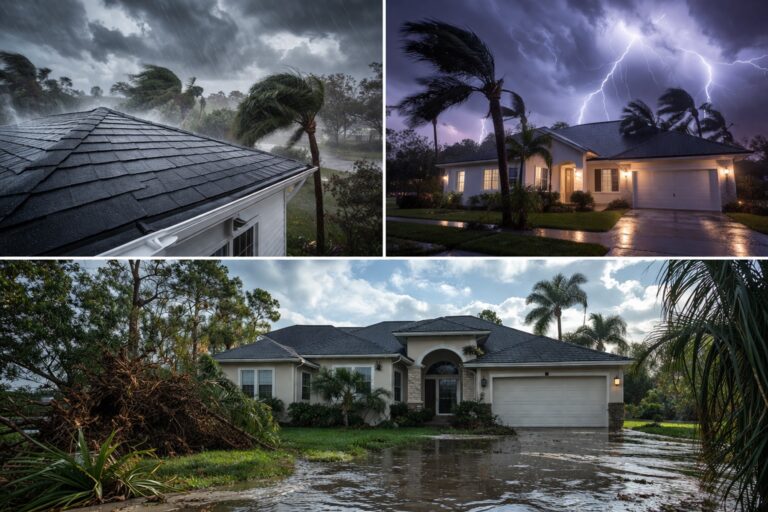
When living in hurricane-prone areas like Florida, the strength of your roof determines the safety of your home. At Steadfast Roofing in Riverview, FL, we’ve seen firsthand how certain roof types buckle under storm pressure — and how choosing the right materials and installation can make all the difference.
Roof Types Prone to Hurricane Damage
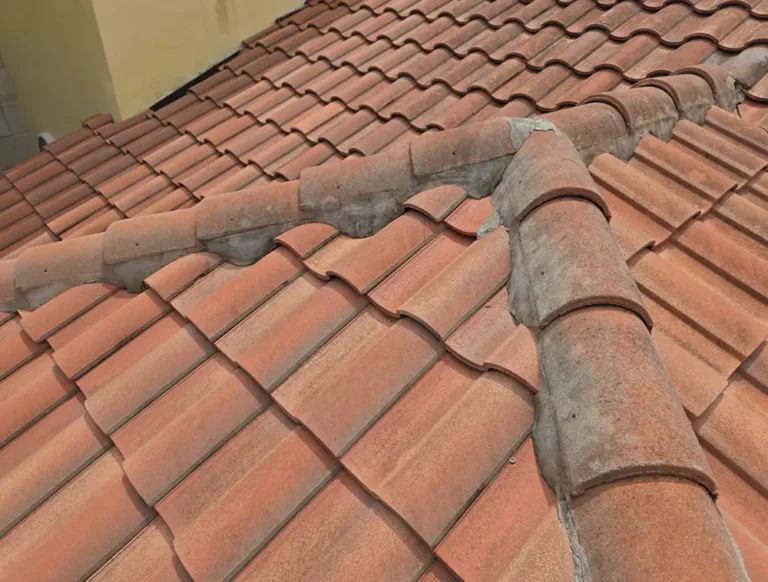
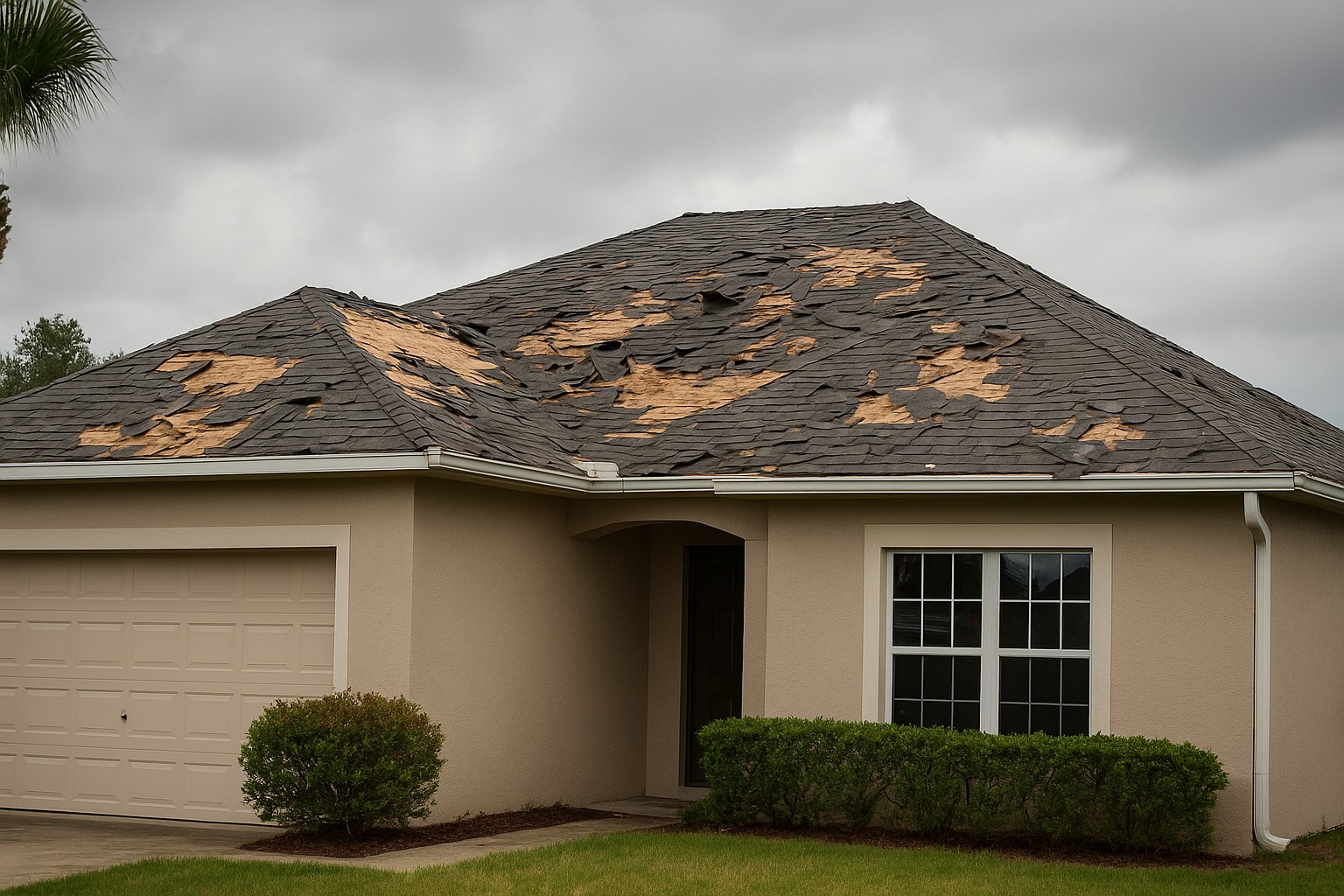
Flat and low-slope roofs trap wind and water, thereby increasing the risk of uplift. Basic 3-tab shingles and lightweight metal panels often fail at wind speeds of 60–80 mph, detaching easily. Poorly fastened clay or concrete tiles can become dangerous airborne projectiles.
Design Flaws That Amplify Wind Damage
Roofs with multiple gables, wide overhangs, or lacking hurricane straps are often prone to catastrophic failure. Wind entering soffits or seams can lift roof sections, causing them to separate from the walls.
Best Roofing Options for Hurricane Resistance
Impact-rated architectural shingles, standing seam metal roofs, and mechanically fastened tile systems are proven performers. These materials can resist winds from 130–150 mph when installed to Florida hurricane standards.
Importance of Proper Installation
Even the strongest materials fail if installed incorrectly. Secure fasteners, high-quality underlayment, and edge sealing prevent wind intrusion and structural separation.
Conclusion
The key to surviving Florida’s hurricanes is a roof built to withstand the elements. Choose durable materials, sound design, and expert installation to protect your home — and trust proven professionals who understand how to make for the storm.
Take a moment to read one of our latest blogs: “The Definitive Guide to Debunking Common Residential Roof Replacement Myths“.