

A tile roof in Florida commonly provides 25 to 50 years of dependable service as a complete roofing system, although well-made clay or concrete tiles may remain usable far longer. At Steadfast Roofing, located in Ruskin, FL, we evaluate the entire assembly—not only the visible tiles—because underlayment, flashing, fasteners, roof decking, installation quality, and storm exposure usually determine when repair or replacement becomes necessary.
Average Tile Roof Lifespan in Florida
The most accurate answer depends on whether we are discussing the roof covering or the whole system. Clay and concrete tiles are durable, noncombustible materials that resist rot and insect damage; the Tile Roofing Industry Alliance describes both materials as highly resistant to rain, weathering, and moisture absorption. However, tile is primarily a water-shedding surface. The underlayment beneath it provides critical secondary protection when wind-driven rain passes through joints, valleys, penetrations, or damaged areas.
| Tile roof component | Practical Florida service range |
| Concrete tile roof assembly | About 25–50+ years |
| Clay tile roof assembly | About 40–75+ years |
| Individual quality tiles | Often longer than the underlayment |
| Underlayment, flashing, and fasteners | Frequently the first major renewal point |
These ranges are planning benchmarks, not expiration dates. A 30-year-old roof with sound underlayment and limited repairs may remain serviceable, while a much newer roof can leak if it was installed incorrectly or damaged by a hurricane.
Why Florida Tile Roofs Often Fail Before the Tiles
Underlayment deterioration
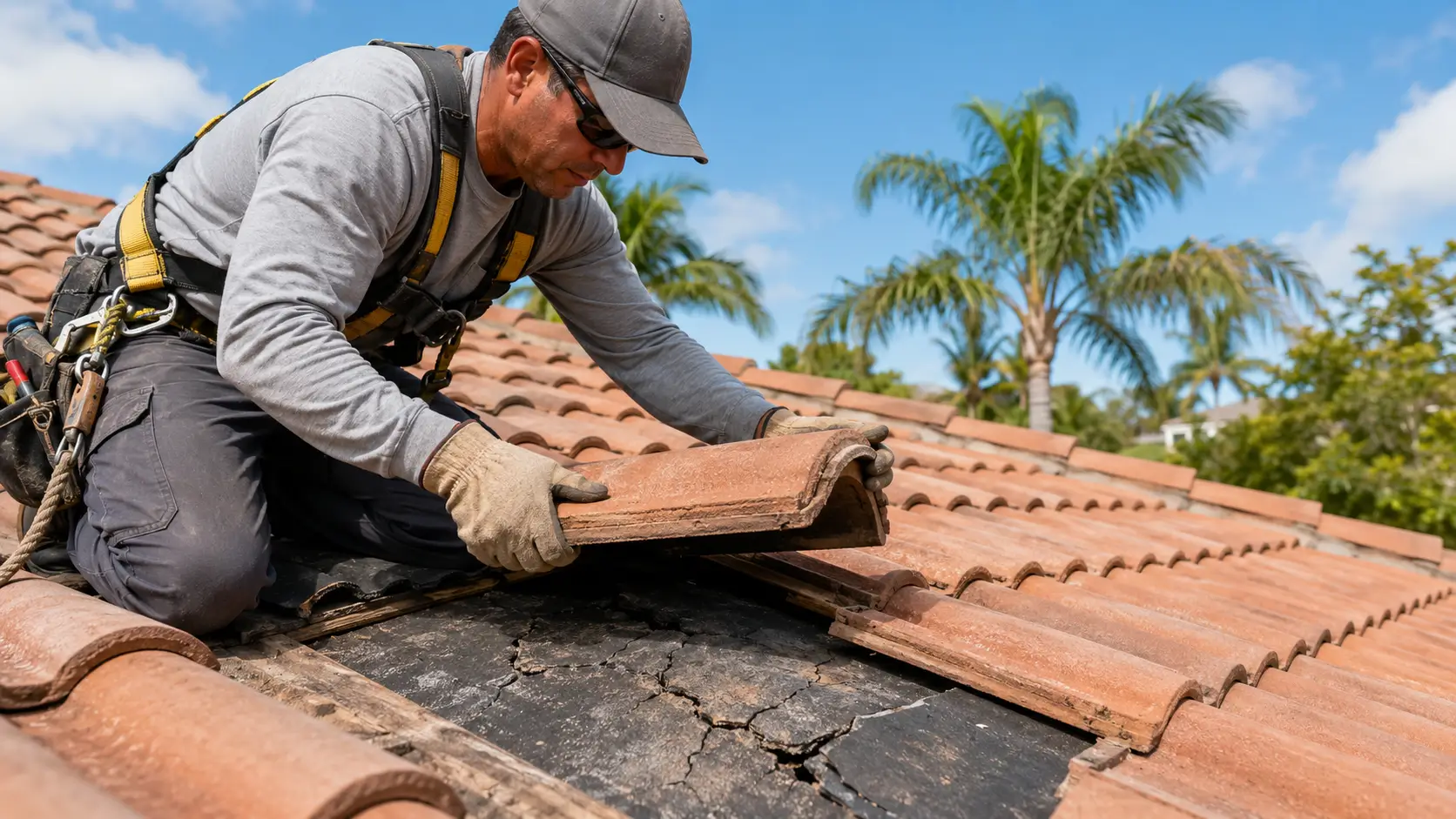
Underlayment is the concealed water-control layer installed over the roof deck. Florida heat, trapped moisture, fastener penetrations, installation defects, and repeated thermal movement can weaken it over time. Leaks may first appear around valleys, walls, skylights, vents, chimneys, or plumbing penetrations rather than through the center of an intact tile field.
Homeowners comparing reroof specifications should understand the differences among synthetic, seam-taped, and self-adhered systems. Our guide to Florida roof underlayment options explains how each approach manages wind-driven rain.
Broken, slipped, or improperly fastened tiles
Tile is strong under normal weather exposure but can crack under concentrated impact or careless foot traffic. A broken tile does not automatically require replacement of the whole roof, but it can expose the underlayment to direct sunlight and water. Slipped tiles may indicate failed adhesive, corroded fasteners, incorrect fastening, or movement within the assembly.
Florida tile installations must comply with approved product documentation and applicable high-wind installation requirements under the Florida Building Code. Correct fastening patterns, perimeter detailing, underlayment selection, and flashing integration are therefore central to long-term performance.
Flashing and metal corrosion
Flashings direct water away from roof-to-wall intersections, valleys, vents, chimneys, and other transitions. Coastal salt exposure can accelerate corrosion of incompatible or inadequately protected metal components. Once flashing fails, replacing nearby tiles alone will not correct the leak.
Roof deck damage
Persistent leaks can soften plywood or OSB, corrode fasteners, and create localized structural deterioration. Deck damage cannot be measured reliably from the ground and may not be fully visible until tiles and underlayment are removed. We explain the repair thresholds in our guide to when roof decking needs replacement.
Clay vs. Concrete Tile Roof Longevity
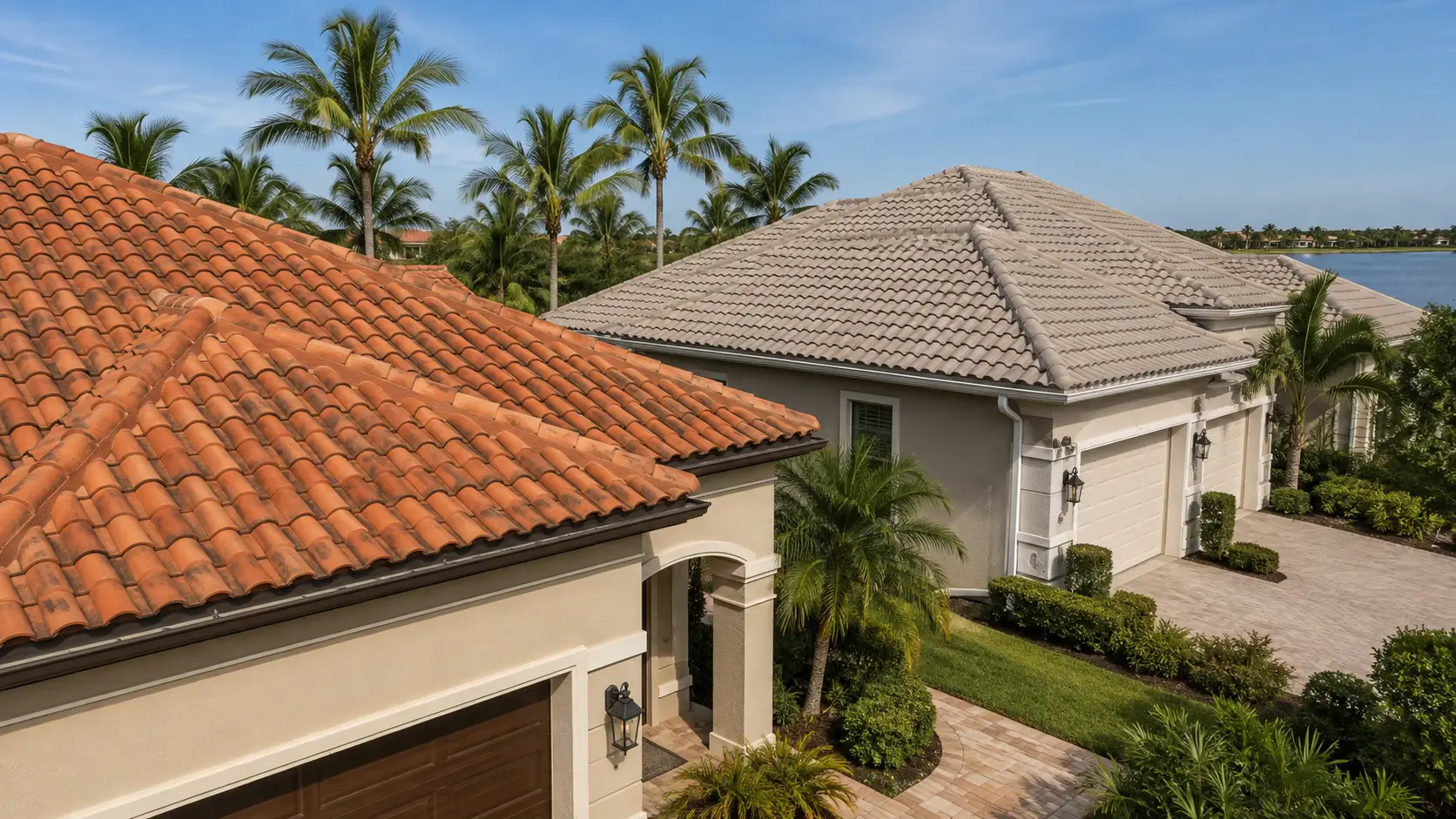
Concrete tile is the most common tile option on many Florida homes. It offers strong weather resistance and can remain serviceable for decades, but surface color may fade and individual tiles can become more brittle with age and repeated foot traffic. Fading alone is cosmetic; it does not prove that the roof has failed.
Clay tile generally offers greater color permanence and can deliver exceptional longevity when properly installed. Its limitations are brittleness, replacement cost, and the difficulty of matching discontinued profiles or colors. Older clay tiles may be reusable during an underlayment replacement if testing confirms they remain sound.
A coating or sealant should not be treated as a substitute for failing underlayment. Some coatings change appearance or reduce surface absorption, but they cannot repair concealed flashing defects, rotten decking, poor fastening, or deteriorated membranes.
Factors That Shorten Tile Roof Life in Florida
Florida tile roofs age fastest when several stresses occur together:
- Hurricanes and severe thunderstorms: Wind uplift can loosen perimeter tiles, displace ridge components, and drive rain beneath the covering.
- Salt air: Coastal exposure can accelerate corrosion of fasteners, flashings, and accessories.
- Tree impact and debris: Falling limbs, coconuts, and storm debris can crack tiles or damage ridges.
- Poor drainage: Blocked valleys and gutters can hold water where roof sections intersect.
- Improper cleaning: Aggressive pressure washing and untrained foot traffic can break tiles or force water beneath overlaps.
- Delayed leak repair: Small flashing or tile defects can eventually damage underlayment, insulation, ceilings, and decking.
After a major weather event, a professional storm damage roof inspection can identify displaced tiles and concealed leak paths before interior staining appears.
How to Extend the Life of a Florida Tile Roof
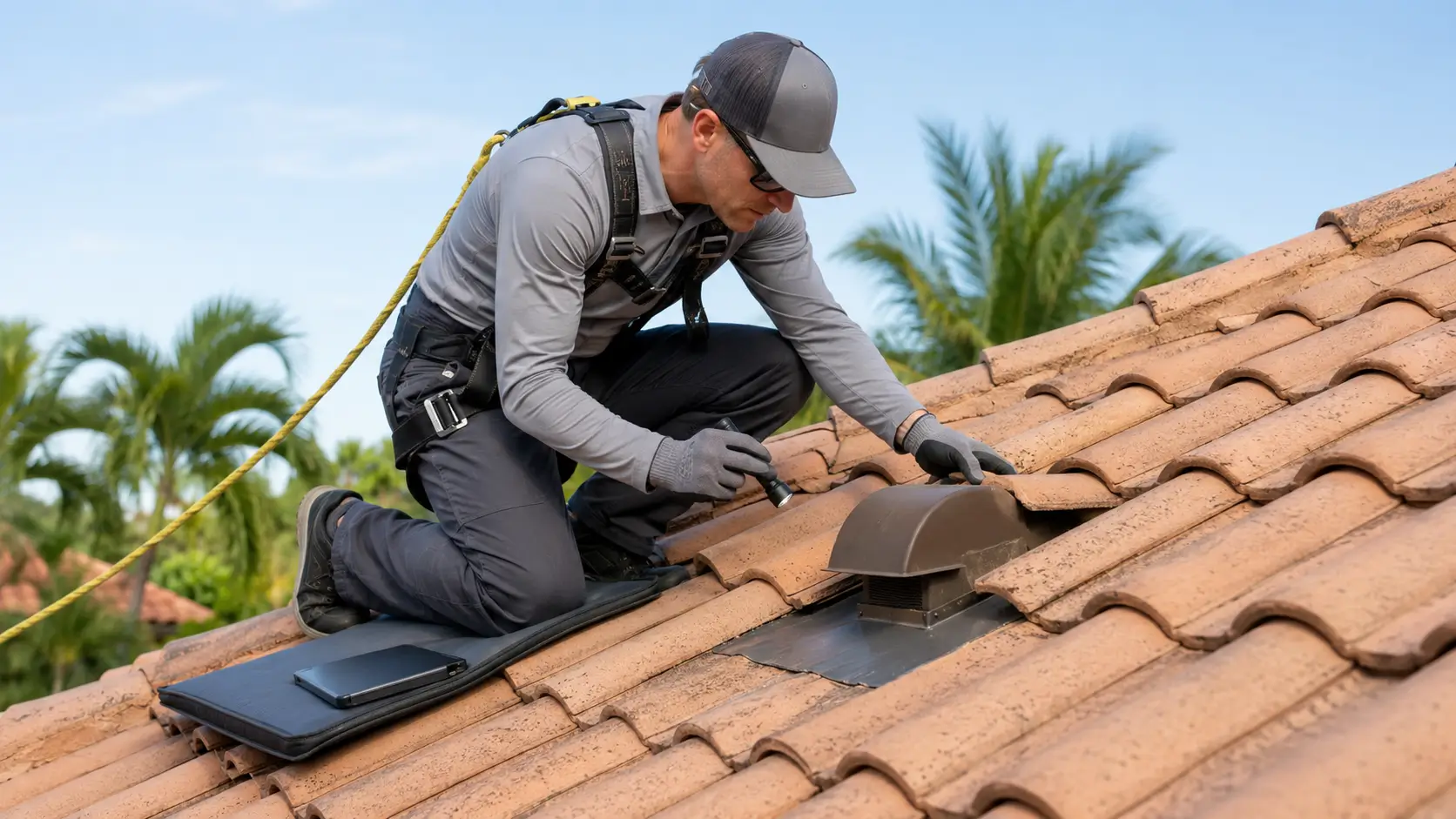
We recommend a professional inspection at least annually, after major storms, and before purchasing or selling a home with an older tile roof. The inspection should document cracked or slipped tiles, ridge and hip conditions, flashings, valleys, penetrations, drainage, visible underlayment exposure, attic moisture, and prior repairs.
Repairs should use compatible replacement tiles and preserve the designed water-shedding pattern. Avoid allowing pressure-washing crews, solar installers, pest-control technicians, or other trades to walk on tile without proper access methods and responsibility for breakage. Keep tree limbs away from the roof, maintain gutters and valleys, and address ceiling stains or musty attic odors immediately through qualified roof repair services.
Repair, Underlayment Replacement, or Full Reroof?
A localized repair is usually appropriate when damage is limited to a small number of tiles or a specific flashing detail and the surrounding underlayment remains functional.
An underlayment replacement—sometimes called a lift-and-reset—may be viable when the tiles are still serviceable but the concealed waterproofing layer has reached the end of its useful life. Tiles are removed, stored, and reinstalled after deck repairs, new underlayment, flashing, and attachment components are completed. Feasibility depends on tile breakage, availability of matching replacements, code requirements, and labor cost.
A full tile reroof becomes more practical when leaks are widespread, decking is deteriorated, tiles are extensively cracked, the fastening system is deficient, matching tiles are unavailable, or repeated repairs no longer provide reliable protection. Our tile roofing services include evaluation of both repairable damage and full-system replacement needs.
Conclusion
Tile roofs are among the longest-lasting roofing systems available for Florida homes, but the visible tile is only one part of their lifespan. Underlayment, flashing, fastening, deck condition, storm history, and workmanship determine whether a roof lasts closer to 25 years or continues performing for several additional decades. Steadfast Roofing evaluates these components together so homeowners receive a condition-based recommendation rather than an age-based sales pitch. To determine the remaining service life of an existing tile roof, contact our team for a professional assessment.
Frequently Asked Questions
How long does a concrete tile roof last in Florida?
A concrete tile roof commonly provides approximately 25 to 50 years of service as a complete Florida roofing assembly. Individual tiles may remain usable longer, but underlayment, flashings, fasteners, and storm damage often control the actual replacement timeline.
Can a 30-year-old tile roof be repaired?
Yes. Age alone does not determine whether repair is appropriate. A 30-year-old roof may be repairable when damage is localized, replacement tiles are available, the deck is sound, and the underlayment still performs. Repeated leaks or widespread concealed deterioration may make reroofing more economical.
How often should a tile roof be inspected in Florida?
We recommend at least one professional inspection each year, plus an additional inspection after hurricanes, hail, falling debris, or signs of leakage. Earlier detection reduces the chance that a small tile or flashing problem will damage the underlayment and roof deck.