Tampa’s heat, humidity, and storm seasons take a toll on roofs quickly. If you want an exact, code-aligned number for your home (not a random internet guess), Steadfast Roofing can walk the roof, confirm your layers/decking, and price it accurately for your neighborhood and wind exposure.
Tampa Roof Replacement Cost in 2026: The Numbers Homeowners Actually See
Most Tampa homeowners replacing an asphalt shingle roof in 2026 land in a mid four-figure to mid five-figure total, with many projects clustering around the “normal range” you see in local market estimates. Recent Tampa-specific pricing data commonly cited puts the average around the low-to-mid $13k range, with many jobs falling roughly between $9k and $18k, depending on roof size, pitch, layers, and system choice. (Angi’s Tampa roof cost breakdown covers a typical local spread.)
The statewide and national context is broader because it encompasses both small, simple roofs and large, complex ones. General “roof replacement cost” datasets commonly reference a broad range that can start under $6k and increase significantly for premium materials, steep/complex geometry, or structural work. (Angi’s national overview is one example of that wide range.)
Cost Per Square in Tampa: A Fast Way to Sanity-Check Quotes
Roofers price a lot of work in “squares” (1 square = 100 sq ft of roof surface). Tampa homes vary, but the sanity-check method stays the same:
- Step 1: Estimate roof surface area (not just living square footage).
- Step 2: Convert to squares (roof sq ft ÷ 100).
- Step 3: Apply a realistic installed-per-square range based on system complexity and code requirements.
A basic, cut-up roof (lots of valleys/hips) can cost more than a larger, simple gable. Same house size, different roof geometry, different bill.
The Biggest Price Drivers in Tampa (The Stuff That Quietly Adds Thousands)
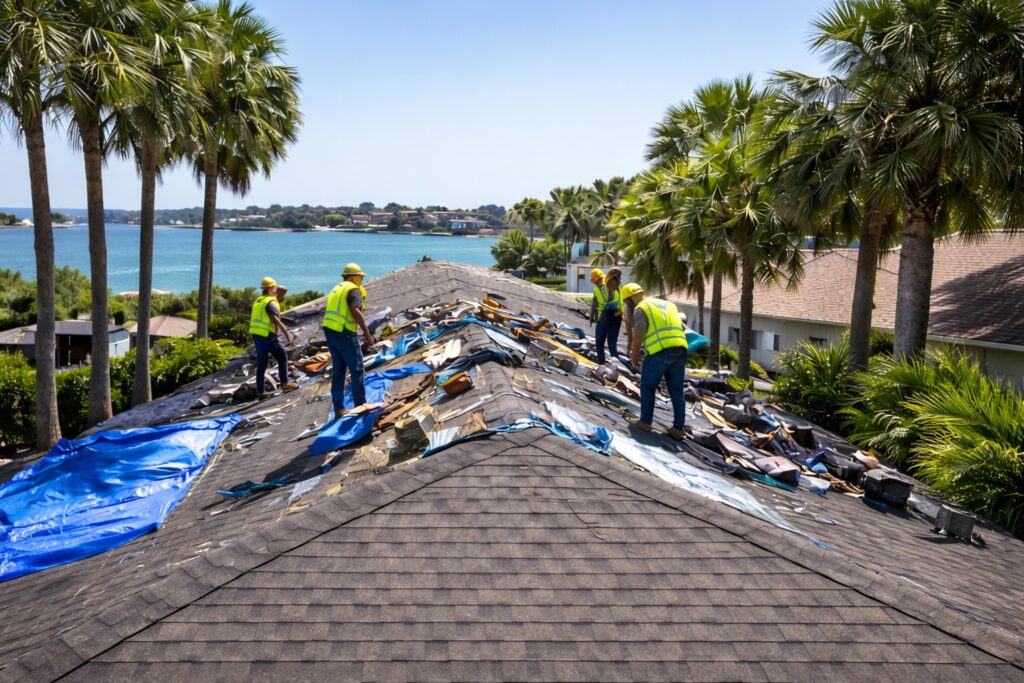
Roof quotes swing because “a roof” is really a stack of components and labor steps. The big drivers:
- Roof pitch and height: Steeper and higher = slower work, more safety setup, more labor.
- Complexity: Valleys, dormers, skylights, chimneys, dead valleys, cricket work, and tie-ins add time and materials.
- Existing layers: More layers = more tear-off, more disposal, more surprises.
- Decking condition: Rotten/soft plywood is common in leaky sections. Re-sheeting adds cost fast.
- Edge metal and flashing scope: Drip edge, step flashing, counterflashing, wall flashing, kickout flashing, chimney flashing.
- Ventilation upgrades: Ridge vent, off-ridge vents, intake corrections. Bad ventilation cooks shingles in Tampa.
- Code and inspection requirements: Permits, progress checks, final inspections, and documentation.
Tampa Wind, Debris Regions, and Why “Roofing to Code” Isn’t Optional
Tampa roof systems are built around wind resistance and storm performance, not just “looks good from the street.”
Florida’s wind-borne debris and wind speed rules are tied to where the home sits and what the mapped wind speeds are. If your property falls within a wind-borne debris region or a higher wind-speed zone, this affects the underlayment approach, fastening patterns, and rated assemblies. The Florida Building Code references thresholds such as an ultimate wind speed (Vult) of 140 mph for certain wind-borne debris definitions and proximity-to-coast rules for debris regions.
For homeowners who prefer receipts, the City of Tampa wind speed map is publicly available.
Permits and Inspections in Hillsborough County: What a Legit Re-Roof Usually Includes
In Tampa/Hillsborough, a proper re-roof typically includes permitting and required inspections. The county even publishes specific guidance on re-roof inspections and roof mitigation checkpoints tied to the permit process. (Hillsborough County re-roof inspection information spells out what’s expected.)
Translation: if a quote feels “too easy” and the paperwork is fuzzy, that’s not a deal. That’s a future problem with interest.
Material Choices in Tampa: Price Bands and What You’re Paying For
Material is the headline, but the system is the story. Here’s how the common Tampa options usually break down:
Asphalt shingles (architectural)
- Typically the most budget-friendly path to full replacement.
- Faster installation, many color/style options.
- Performance depends heavily on the full system: starter, underlayment, flashings, ventilation, and fastening patterns.
Impact-rated shingles
- Higher upfront cost than standard architectural shingles.
- Designed to take hits from debris better, which matters when storms get spicy.
- Can be helpful when paired with proper documentation for mitigation/insurance conversations.
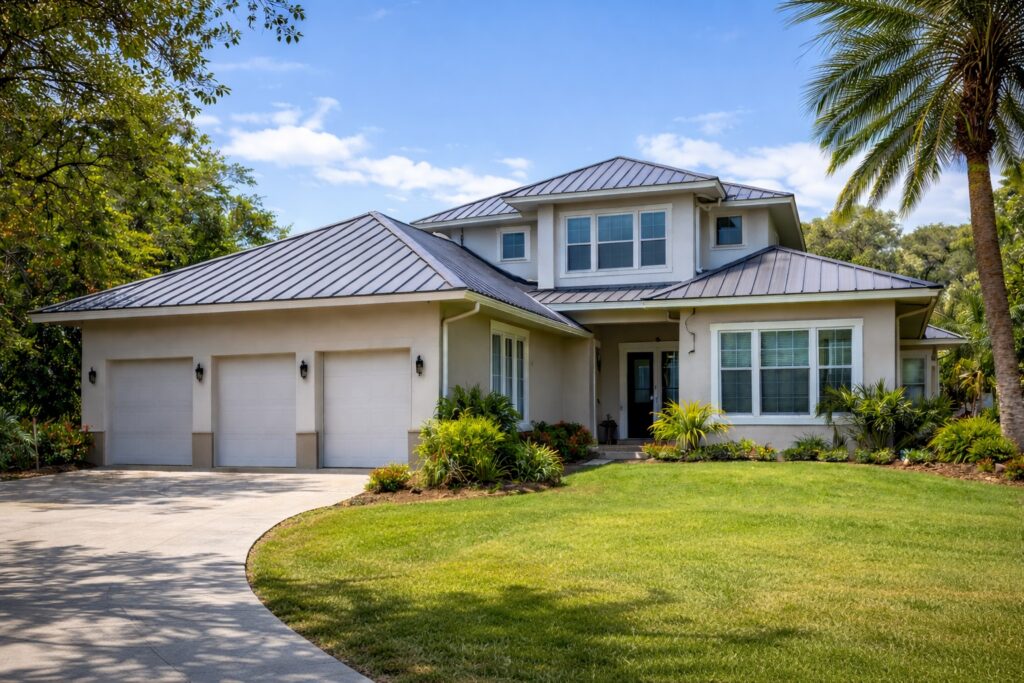
Metal roofing
- Often higher upfront costs, with strong wind performance when installed correctly.
- Tampa metal roof cost estimates typically vary widely based on panel type, thickness, attachment method, and roof shape. (Example: Angi’s Tampa metal roof cost page)
Tile roofing
- Material is durable, but the system is complex: underlayment strategy, fastening/foam, flashings, and sometimes structural considerations.
- Repairs can be more specialized, and replacements can be labor-heavy.
What “Installed Cost” Should Include (If It Doesn’t, It’s Not Comparable)
When two quotes are thousands apart, it’s usually because one is missing line items. A complete Tampa roof replacement scope commonly includes:
- Tear-off and disposal
- Decking inspection and allowance for replacement sheets if needed
- Code-compliant underlayment system
- Flashing package (valleys, walls, chimneys, penetrations)
- Drip edge and edge metal details
- Starter strip and field shingles (or metal/tile system)
- Ridge cap/hip & ridge (for shingle systems)
- Ventilation components and corrections where needed
- Permit, required inspections, and close-out documentation
- Cleanup (magnets, haul-off, property protection)
If a quote is missing any of these, it’s not “cheaper.” It’s incomplete.
Tampa-Specific Adders That Commonly Surprise Homeowners
These are the “oh…that’s a thing?” items that show up a lot locally:
- Decking rot near valleys, chimneys, and behind gutters
- Improper bathroom/kitchen vent terminations (common in older homes)
- Bad flashing at stucco wall transitions
- Hidden soffit intake issues causing attic heat buildup
- Multiple layers from past re-roofs increasing tear-off and dump costs
Roof Repair vs Replacement in Tampa: A Practical Cost Rule
If repairs are stacking up, a simple math check helps:
- If the repair scope is approaching 30–50% of the full replacement cost, it’s time to seriously consider replacement.
- If underlayment, decking, or widespread fastener/installation issues are involved, replacement is typically the better long-term choice because it fixes the system, not just the symptom.
(And yes, patching a tired roof right before storm season is basically inviting chaos to dinner.)
Insurance and Wind Mitigation: How a New Roof Can Change the Conversation
Florida uses a standardized wind mitigation form to document features that may affect insurance premiums. The state’s wind mitigation resources reference the OIR-B1-1802 framework and note updates effective April 1, 2026.
Key point: mitigation credits depend on documented features and verified installation attributes, not vibes.
How to Compare Tampa Roofing Quotes Like a Pro (Without Becoming One)
Use this quick checklist:
- Scope matches: Same tear-off, same underlayment approach, same flashing scope, same ventilation plan.
- Decking language is clear: Is there an allowance? Per-sheet pricing? What triggers replacement?
- Permit included: If it’s “optional,” that’s a red flag.
- Wind and fastening details: Ask how the roof is being built to handle local wind demands.
- Warranties: Separate material warranty vs workmanship coverage. Confirm what conditions apply.
- Timeline and staging: How long will your home be exposed? What’s the weather plan?
Roof Replacement Cost FAQs for Tampa Homeowners (2026)
How much is a roof replacement in Tampa in 2026?
Many Tampa projects fall within the $9k–$18k range, with an average in the low-to-mid $13k range, but roof size, pitch, layers, decking, and material choice can push that up or down.
What makes Tampa roofing more expensive than in other places?
Storm exposure, code expectations tied to wind performance, labor demand, and the reality that “installed right” means more than shingles on plywood.
Do permits and inspections really matter?
Yes. Hillsborough County publishes re-roof inspection guidance and permit expectations. Legit work tracks with that process.
Is metal always more expensive than shingles?
Upfront, often yes. But the range is wide and depends on panel type, thickness, and roof complexity.
Can a new roof help with insurance?
It can, especially when wind-mitigation features are documented using the standard Florida framework, which was updated effective April 1, 2026.
CONCLUSION
Tampa roof replacement pricing in 2026 depends on roof size and complexity, existing conditions, material selection, and the extent of the system’s rebuild to meet local wind and permitting requirements. The best quotes clearly spell out scope, code alignment, decking contingencies, ventilation, and close-out documentation, so the number is real, and the roof is built to withstand Tampa weather.
Read our blog: “How to Prep Your Roof for Hurricane Season 2026 in Tampa, FL”.